
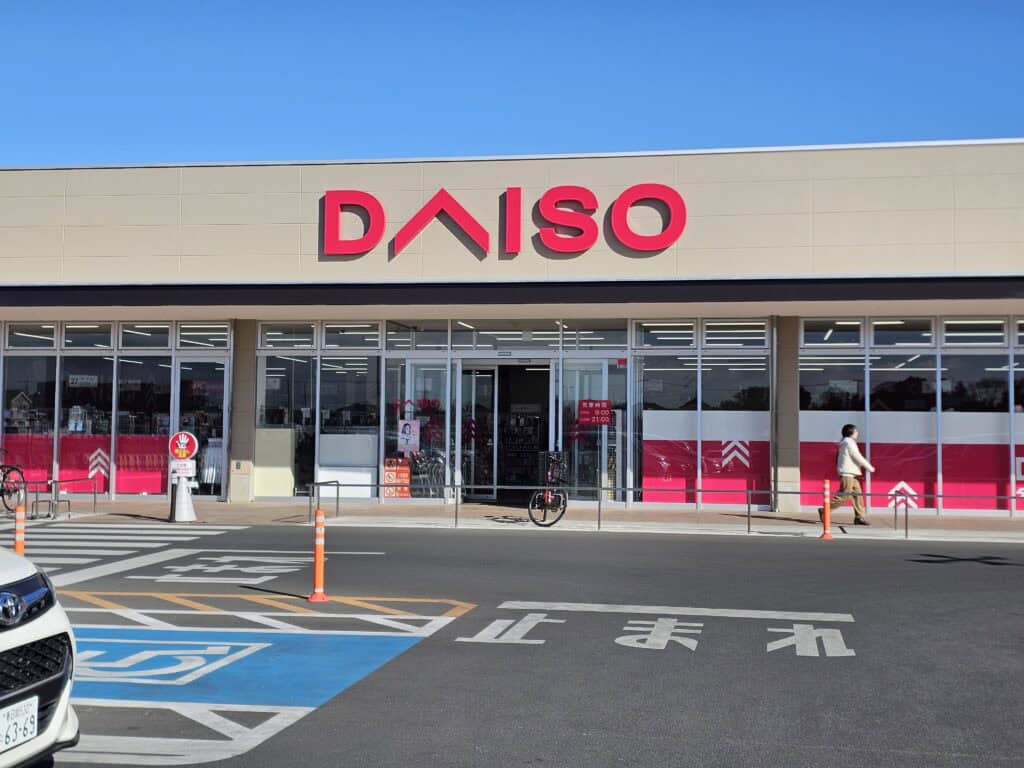
What Is a 100 Yen Shop?
If you’re visiting Japan, you’ll quickly notice something unusual:
A store where almost everything costs just 100 yen (about $1).
From kitchen tools to travel items, snacks to electronics—
it feels almost too good to be true.
But here’s the real question:
👉 How can these stores survive?
This article breaks it down in a simple, practical way—
so you don’t just shop, but understand what you’re seeing.
Why 100 Yen Shops Don’t Go Out of Business
The secret is not one trick.
It’s a combination of psychology, design, and strategy.
1. They Sell What You Want, Not Just What You Need
People don’t just buy “cheap.”
They buy things they like.
- Cute items
- Character goods
- Stylish everyday tools
Even at 100 yen, emotional value drives purchases.
2. Constant New Items = Constant Curiosity
100 yen shops don’t stay the same.
- Tens of thousands of products
- Hundreds of new items every month
This creates a powerful loop:
👉 “Maybe there’s something new today.”
And that keeps people coming back.
3. The Price Itself Is the Advertisement
No complicated pricing.
No discounts. No sales.
Just:
👉 “Everything is 100 yen.”
That simplicity spreads naturally:
- Social media
- Word of mouth
- Everyday visibility (near stations, supermarkets)
They don’t need heavy marketing.
4. Smart Cost Control (Without You Noticing)
Not all products are equal.
Some items:
- Cost very little → high profit
- Cost more → little or no profit
This is called a margin mix.
👉 The store doesn’t make money on every item—
it makes money overall.
They also adjust:
- Quantity (e.g., fewer items per pack)
- Materials
- Packaging
All to hit that 100 yen price.
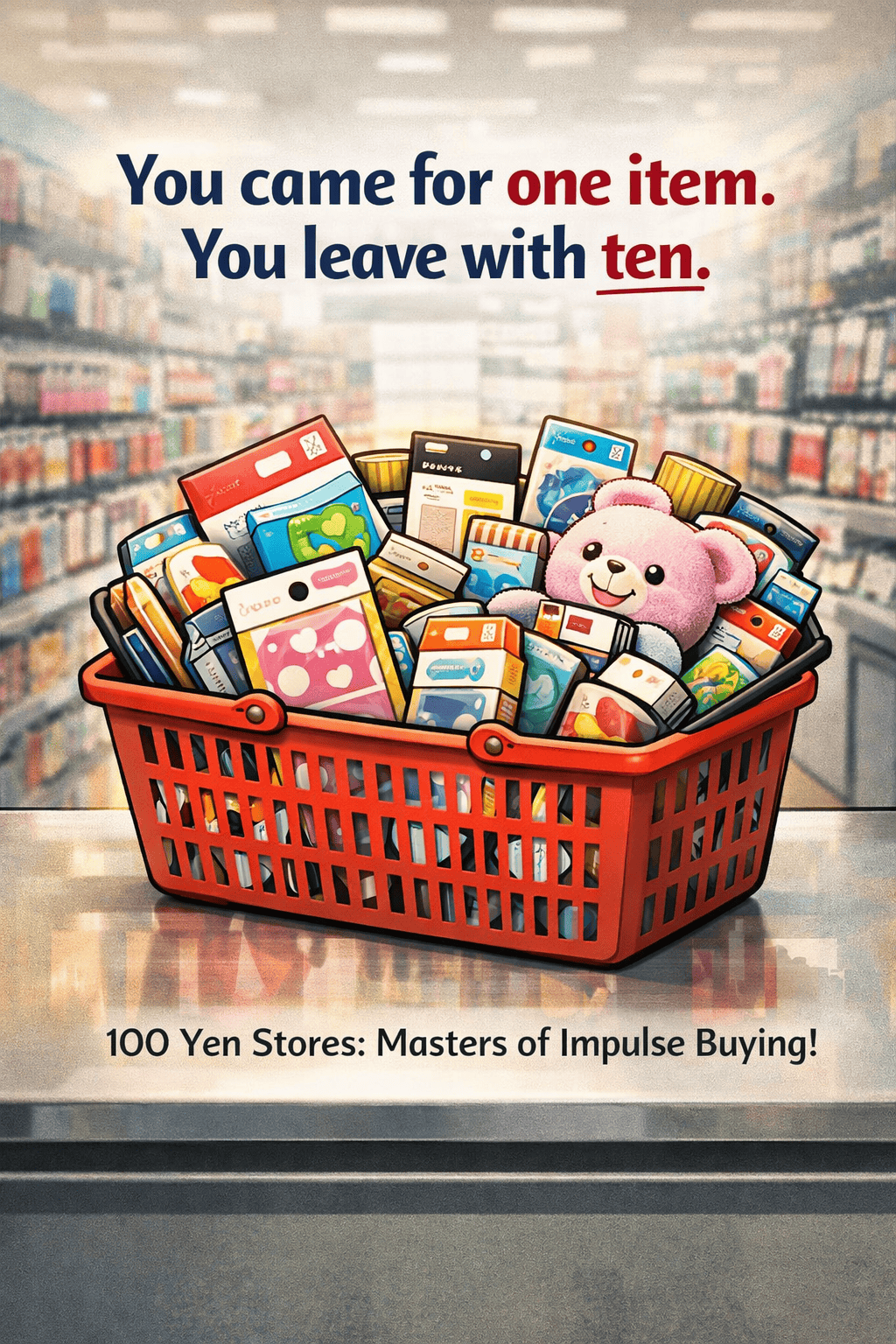
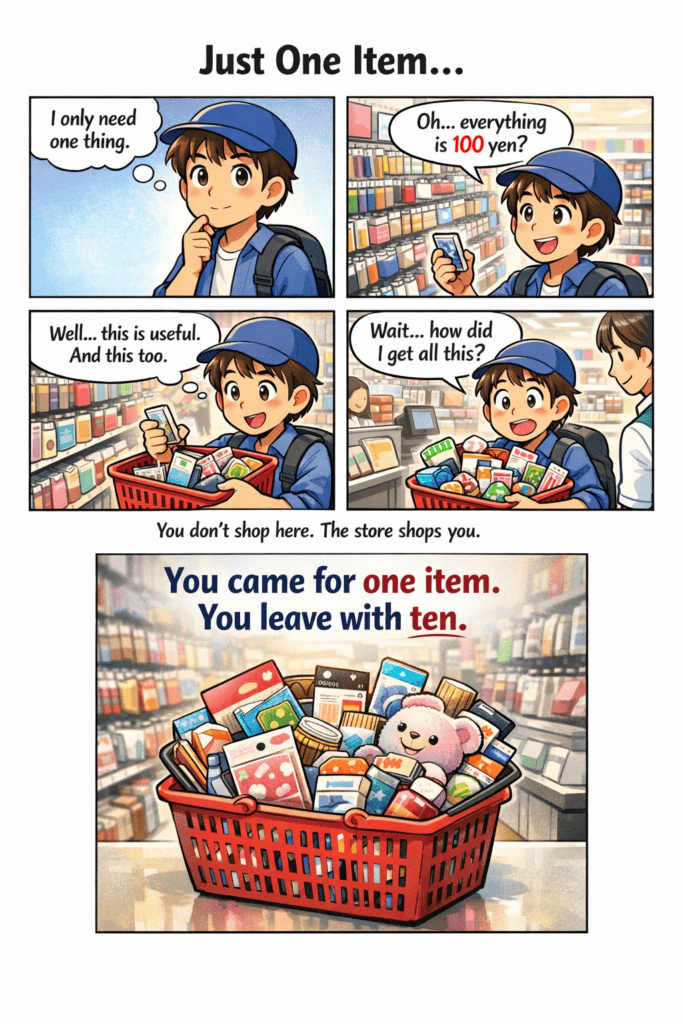
5. Designed for Impulse Buying
Look carefully inside the store:
- Related items placed together
- Small items near the checkout
- Easy-to-grab displays
Example:
- Lunch box → next to chopsticks → next to bag
👉 You came for one item… and leave with five.
6. Massive Scale Behind the Scenes
This is where the real “magic” happens.
- Huge bulk production (millions of units)
- Direct factory-to-store supply chains
- Overseas manufacturing
- Minimal middlemen
Even saving 1 yen per item becomes massive at scale.
The Hidden Strategy: Some Items Lose Money
Yes, really.
Some products:
- Cost close to (or more than) 100 yen
- Are used to attract customers
These are called loss leaders.
They bring you in.
Other items make the profit.
Why Online Shopping Doesn’t Replace Them
You might think:
👉 “Why not just buy online?”
But for 100 yen items:
- Shipping costs more than the product
- Waiting feels unnecessary
So physical stores still win.
How to Use 100 Yen Shops Smartly
Here’s where this becomes useful for you as a traveler.
✔ Check Here Before Buying Anywhere Else
You’ll often find:
- Travel goods
- Chargers
- Storage items
…for a fraction of the price.
✔ Don’t Overbuy
New items appear constantly.
👉 Buying too much = wasted luggage space.
✔ Compare Quality for Bigger Items
Not everything is a good deal.
- Simple items → great value
- Durable products → sometimes better elsewhere
✔ Watch How the Store “Guides” You
This is fun.
Pay attention to:
- Item placement
- Bundled displays
- Checkout area
👉 You’ll start to see the strategy in action.
A Cultural Insight: Why This Works in Japan
There’s also something deeper.
Japan has a long tradition of:
- Maximizing function within constraints
- Finding beauty in simplicity
That mindset fits perfectly with the 100 yen model.
Final Thought
A 100 yen shop is not just a cheap store.
It’s:
👉 A perfectly designed system of psychology, logistics, and scale
Once you understand it,
your shopping experience changes completely.
You’re no longer just buying things—
👉 You’re seeing how modern retail really works.