
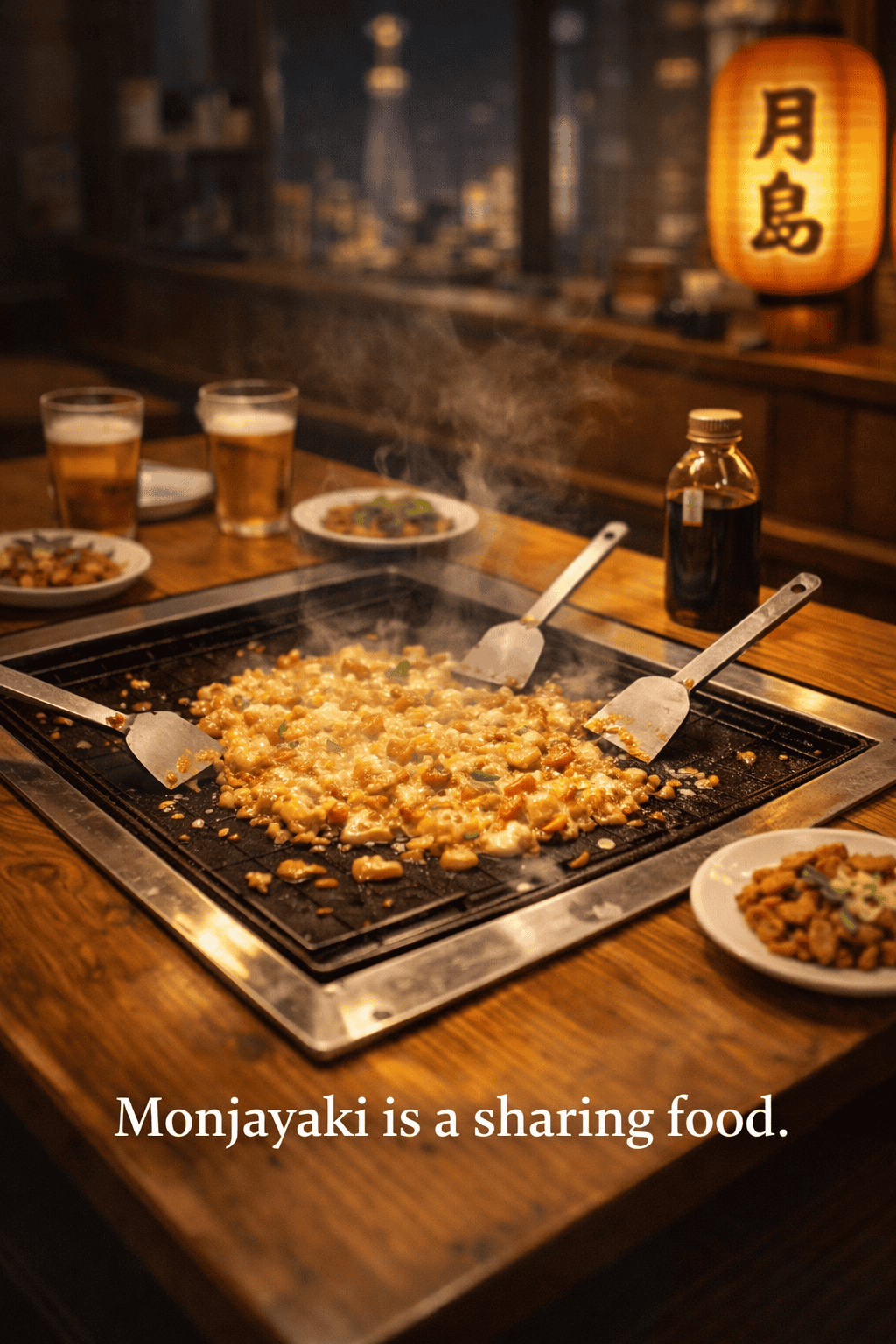
👁️ Kajino’s Eye
Let me confess something: I haven’t set foot in Tsukishima’s Monja Street in over 20 years. Why? Because monjayaki carries the curse of being a “group activity food” in a city where eating alone has become an art form. While ramen shops welcome solo diners with open arms, walking into a monja restaurant alone feels like showing up to a wedding without a date – technically possible, but socially awkward.
My real monja memories aren’t from Tsukishima’s tourist-packed streets, but from the back rooms of shitamachi candy stores in Asakusa and Ueno. Back when monja was children’s street food, not adult entertainment. We’d clutch our pocket money, gather around the hotplate in some tiny shop, and the candy store obaachan would bring us batter mixed with dried squid, curry powder, quail eggs, and senbei – all ingredients we’d bought from her store. That was the real monja: cheap, communal, and wonderfully unpretentious.
The truth about Tsukishima’s “Monja Street”? It’s where Tokyo’s childhood snack got a corporate makeover and became a tourist attraction. Whether that’s progress or loss depends on whether you’re holding a child’s pocket money or a tourist’s guidebook.
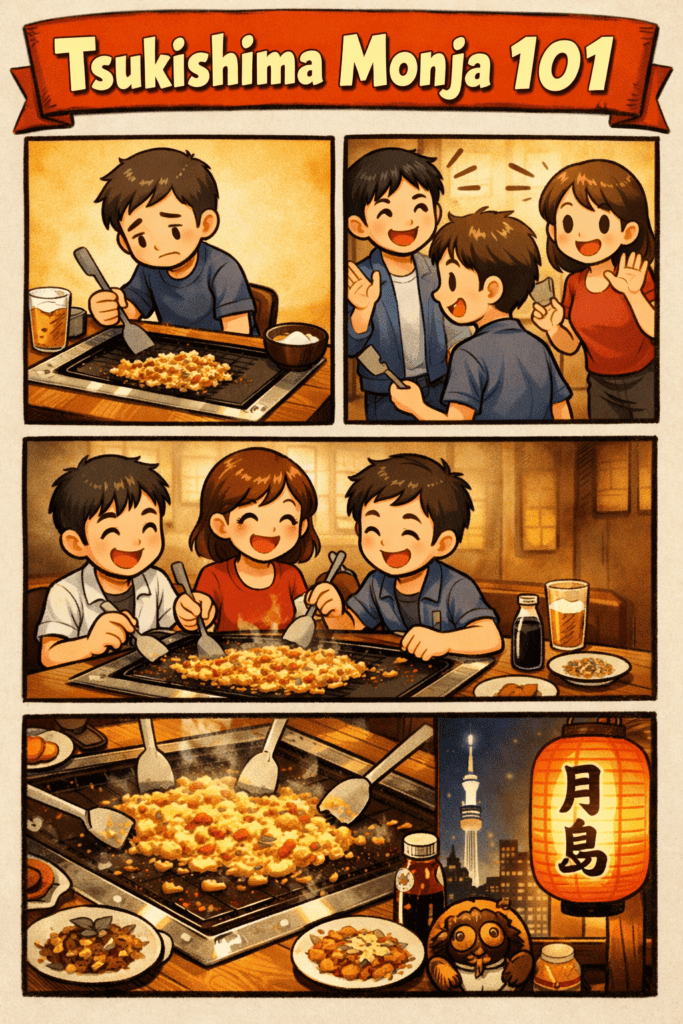
🍳 What is Monjayaki? (Tokyo’s “Liquid Pancake”)
Monjayaki is Tokyo’s answer to Osaka’s okonomiyaki, but with a crucial twist: it’s intentionally soupy. The name comes from children in the Meiji era calling it “monja-monja” – a playful term for something sticky or gooey.
The DIY Ritual:
- Toppings First: Ingredients are stir-fried on the hotplate
- Create the “Dote”: Form a circular wall with ingredients
- Pour the Batter: Add watery flour mixture to the center
- The Scrape: Constantly scrape and spread as it cooks
- The Eat: Enjoy directly from the hotplate with tiny spatulas
Pro Tip: The crispy burnt bits (“koge”) are the best part – never leave them behind!
📍 Tsukishima Monja Street: The 20-Year Gap Reality
<details> <summary>⚠️ Kajino’s Disclaimer</summary>
Important Note: My last visit was over 20 years ago. Monjayaki has always been a “group activity” food, making solo visits challenging. Consider this a guide from someone who remembers monja’s candy store origins more vividly than its current tourist incarnation.
</details> <details> <summary>🗺️ Tsukishima Essentials</summary>
Location: Tsukishima, Chuo Ward, Tokyo
The Street: Nishinakadori Shopping Street (通称: 月島もんじゃストリート)
Scale: Approximately 80+ monja shops packed into one area
Nearest Station: Tsukishima Station (Tokyo Metro Yurakucho Line, Toei Oedo Line) – 1 minute walk
Historical Context: What began as children’s street food in shitamachi candy stores transformed into an adult dining destination here in the 1990s. The density of shops is both impressive and slightly overwhelming.
Solo Dining Reality: Unlike ramen or curry shops, most monja restaurants are designed for groups. The DIY cooking process, shared hotplates, and communal atmosphere make solo visits less common.
</details>
🎪 Solo-Friendly Monja: The One Shop That Gets It
もんじゃ蔵 (Monja Kura) – The Solo Diner’s Sanctuary
While most monja shops give solo diners the “are you waiting for someone?” look, もんじゃ蔵 took a revolutionary approach: they actually welcome single customers. In a street dominated by group dining, this shop stands out as the pioneer of “お一人様歓迎” (solo customers welcome).
Why It Works for Solo Diners:
- No Judgment Zone: Staff treat solo diners as normal customers
- Practical Portions: Popular “蔵スペシャルもんじゃ” comes in a smaller “petit” version
- Efficient Service: They understand solo diners often want a quicker experience
- Strategic Location: Near the station entrance
Smart Tokyo’s Solo Strategy:
- Best Time: Weekday afternoons (14:00-17:00)
- Order: “Petit” version of their special
- Mindset: You’re conducting a culinary experiment, not just eating alone
- Duration: Plan for 45-60 minutes total
🏆 Top Monja Shops Overview
1. もへじ総本店 (Moheji Head Store)
- Established: 1871 (Meiji era!)
- Specialty: Tsukiji/Toyosu fish market connection = fresh seafood
- Best For: Groups, seafood lovers
- Must-Try: Mentaiko Mochi Monja
2. こぼれや (Koboreya)
- Style: “Shitamachi kappo monja” – upscale version
- Atmosphere: Modern Japanese, semi-private rooms
- Best For: Dates, special occasions
- Instagram: Pre-cooked presentation is visually striking
3. 能登 (Noto)
- Atmosphere: Retro, worn building full of history
- Location: Hidden in back alleys (part of the adventure)
- Best For: Authentic experience, backstreet explorers
- Signature: “Umi no Sachi Oyako” (squid and shrimp monja)
🎯 The Smart Tokyo Decision Matrix
Should you visit Tsukishima Monja Street?

✅ GO IF:
- You're with at least one companion
- Want unique Tokyo food experience
- Enjoy DIY cooking and social dining
- Have 60-90 minutes to spare

❌ SKIP IF:
- You're alone and uncomfortable in group settings
- Prefer quick, efficient meals
- Are on a tight schedule
- Dislike communal cooking experiences

🔄 RECOMMENDED:
Visit as part of larger Tokyo Bay area exploration
(Toyosu Market + Tsukishima combination)
📋 Practical Information
<details> <summary>💰 Budget & Hours</summary>
Price Range: 1,000-2,000 yen per person
もんじゃ蔵 Solo Meal: 1,000-1,500 yen
Best Value: Lunch sets (if available)
Worst Value: Weekend dinner crowds
Hours: Most shops 11:00-23:00
Best Time: Weekday afternoons (avoid weekend lunch)
Solo-Friendly Time: 14:00-17:00
Group Time: Evenings (more atmosphere)
</details> <details> <summary>🚇 Access & Station Chika Info</summary>
From Tsukishima Station: Exits 7 or 8, immediate access to Monja Street
Walking Time: 1-3 minutes to most shops
Navigation: Follow the signs (and smells) – no map needed
Station Chika Category: DIY Food / Group Dining
Optimal Group Size: 2-4 people
Time Required: 60-90 minutes
Alcohol Pairing: Highly recommended (beer goes perfectly)