Born and raised in Asakusa, I’ll guide you through the side of Tokyo most visitors never see.
Most visitors experience Asakusa through Senso-ji Temple and the crowded shopping street of Nakamise.
But only a few blocks away, Tokyo begins to change.
This walk explores a different side of the city — places where layers of Edo history, post-war culture, and everyday Tokyo life quietly overlap.
Along the way we will pass through the former Yoshiwara pleasure district, discover local shrines, see unexpected pieces of pop culture, visit a traditional public bath, and finally arrive at the Sumida River.
Before the walk begins, we take the local Megurin community bus from Tobu Asakusa Station to Senzoku 3-chome (about 20 minutes), bringing us close to the historic Yoshiwara district.
If you prefer not to take the bus, a taxi from Asakusa Station to Mishimaya usually costs around ¥1,000.
You can simply show the driver the following address:
甘味処みしまや(Mishimaya)
東京都台東区千束3-4-9
Most taxi drivers will immediately understand the destination.
Route Overview
Kaminarimon →
Mishimaya (retro sweets shop) →
Yoshiwara Shrine→
Yoshiwara historical gate →
Dote no Iseya (historic tempura restaurant) →
Ashita no Joe statue & Sanya district →
Yudonburi Sakaeyu (tattoo-friendly hot spring bathhouse) →
Ghost Jizo (protecter of travellers)→
Imado Shrine (birth place of lucky cat)→
Sumida River walk →
Senso-ji Temple in Asakusa
Estimated time: 4–5 hours including bath time
Start: Kaminarimon Gate
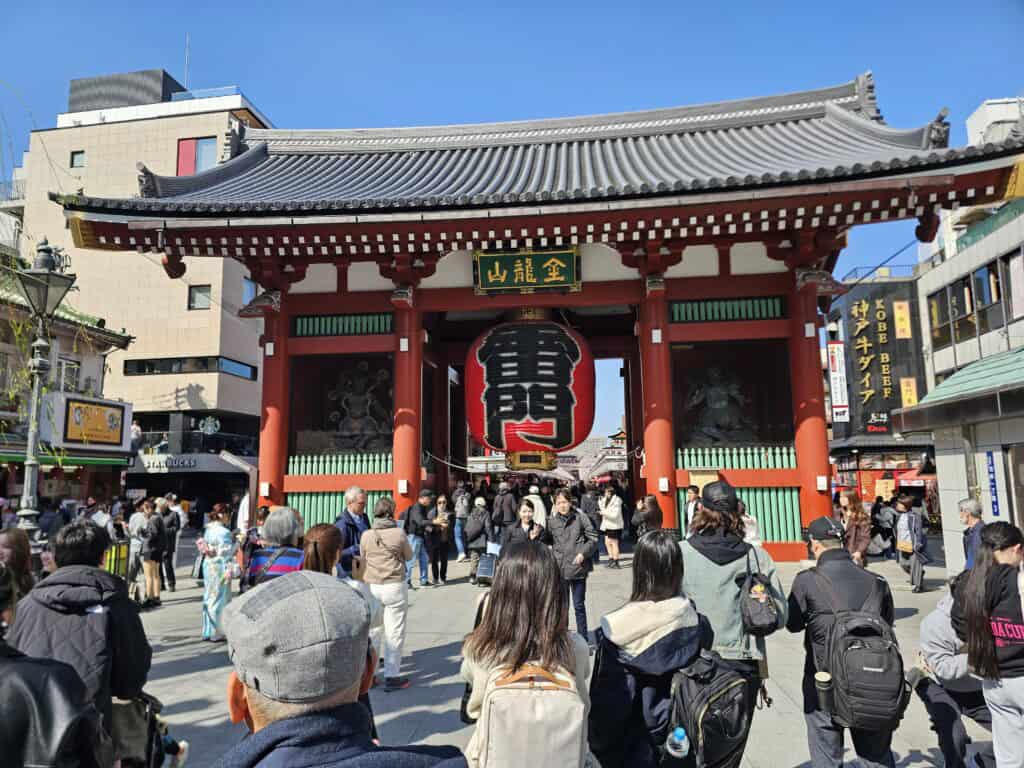
Kaminarimon is one of the most photographed landmarks in Tokyo. Tourists gather here before entering Nakamise Street and Senso-ji Temple.
But instead of heading toward the temple crowds, we turn north and leave the main tourist route behind.
Within a few minutes the atmosphere begins to change.
Stop 1:Mishimaya – A Retro Sweet Shop from Old Tokyo
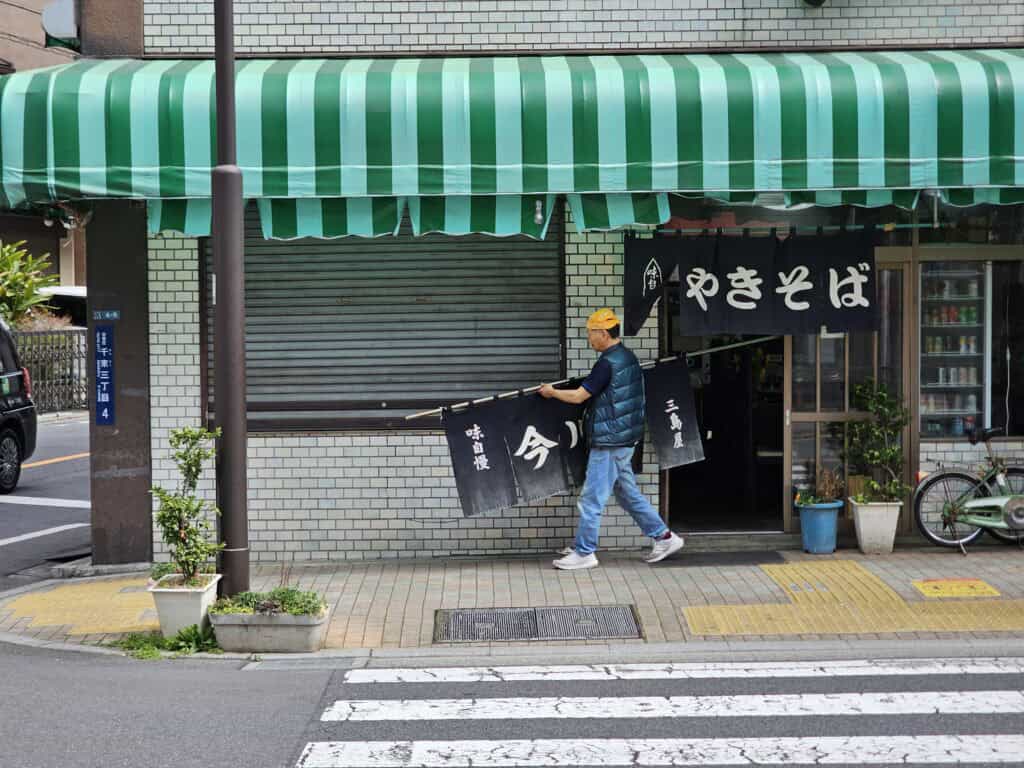
Just a few minutes from the bathhouse stands Mishimaya, a tiny neighborhood shop that feels like a surviving piece of the Showa era.
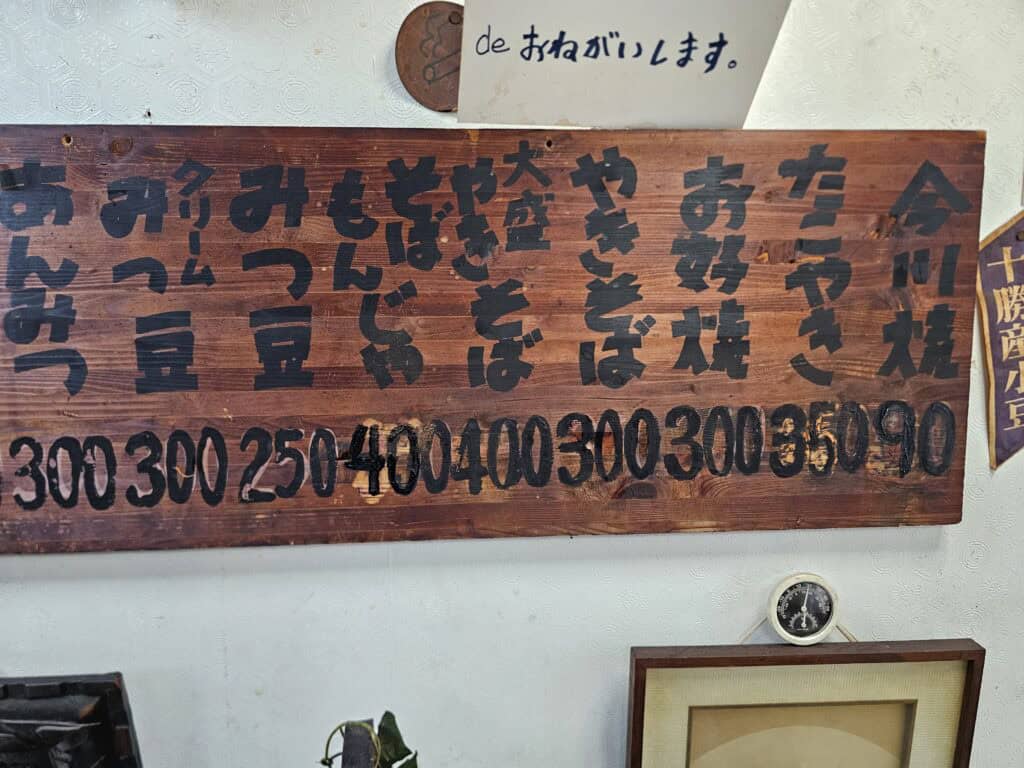
The handwritten wooden menu looks like it hasn’t changed for decades.
Some desserts still cost only a few hundred yen.
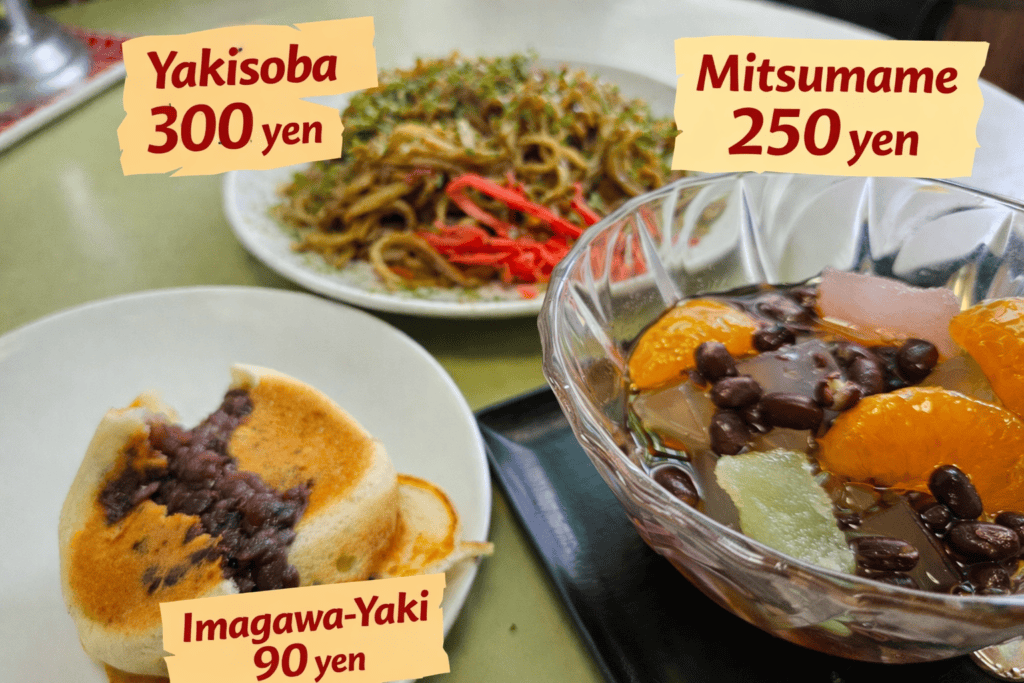
One of the most popular treats is imagawayaki, a small pancake filled with sweet red bean paste.
Amazingly, it still costs only 90 yen, a price that feels almost impossible in modern Tokyo.
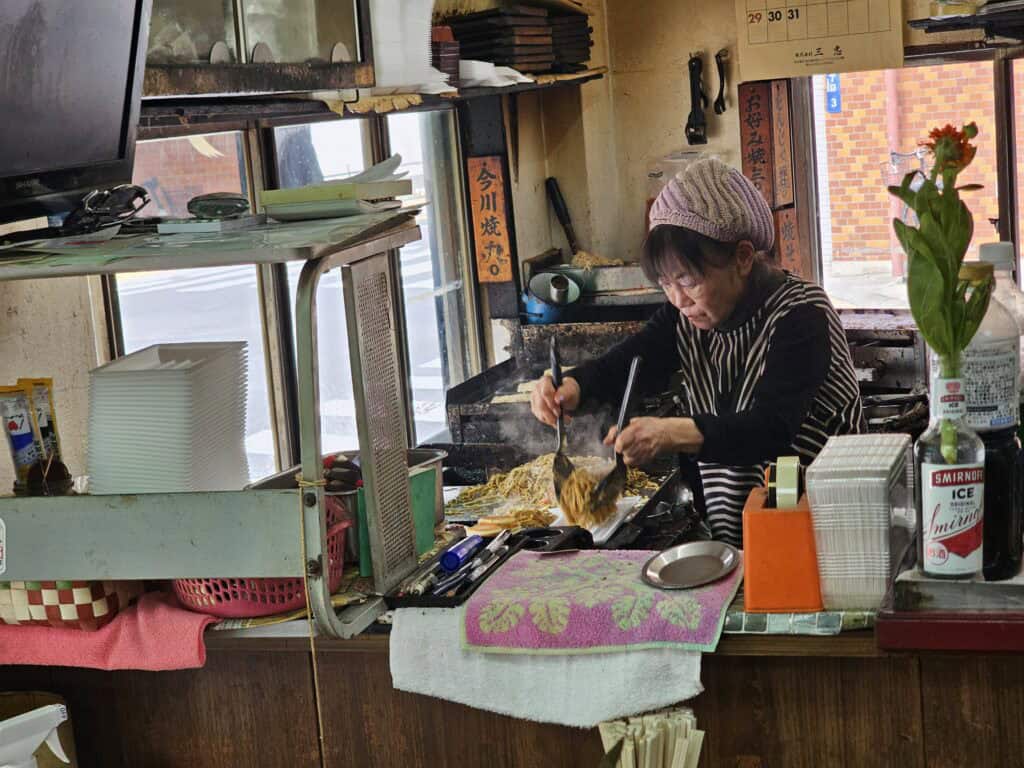
Locals often stop here for simple desserts such as shaved ice, anmitsu, or imagawayaki.
The atmosphere is nostalgic and relaxed — exactly the kind of neighborhood shop that once defined everyday life in Tokyo.
Stop 2: Yoshihara Shrine – Spiritual Center of the Pleasure District
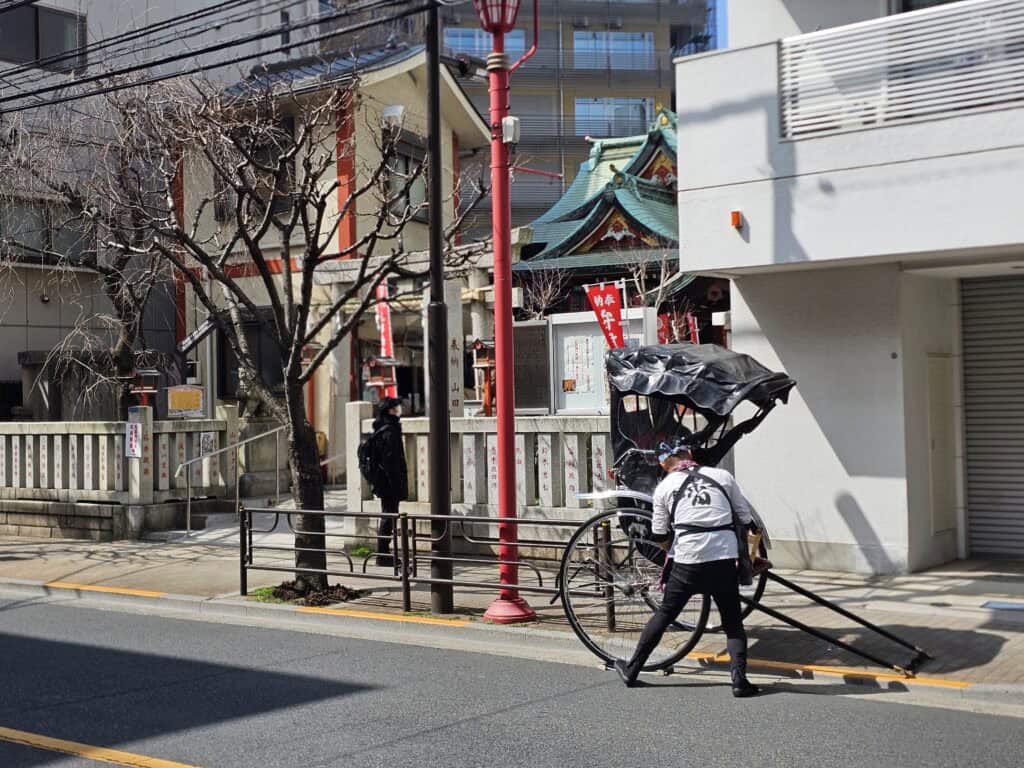
Soon we reach Yoshihara Shrine, quietly standing in the middle of what was once Japan’s most famous licensed pleasure district.
During the Edo period, thousands of courtesans lived and worked in Yoshiwara. Visitors from across the country came here seeking entertainment.
This shrine served as the spiritual center of the district.
Workers, performers, and guests all prayed here — for protection, success, and sometimes a different future.
Today the neighborhood looks like an ordinary residential area, but the shrine still carries the memory of that unusual past.
Stop 3:Yoshihara Omon – The Gate of the Old District
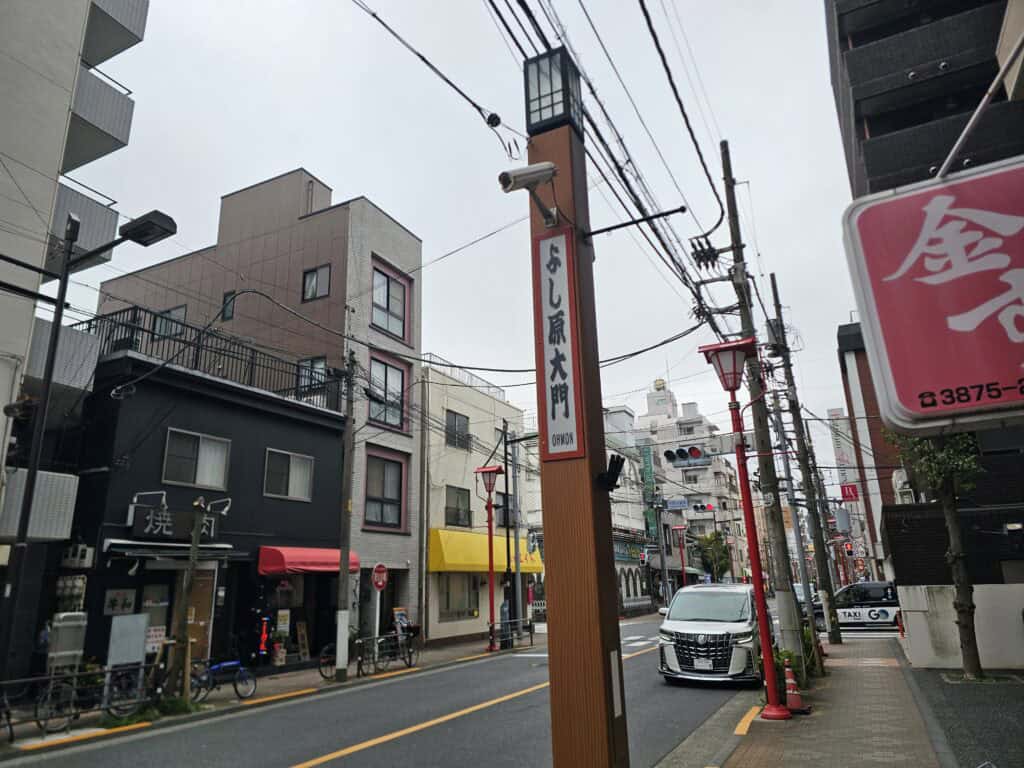
A short walk from the shrine stands the Yoshiwara Omon marker, indicating where the grand entrance gate to the district once stood.
In the Edo period this gate controlled entry and exit from Yoshiwara.
Visitors passed through here into a completely different world — a carefully designed city of entertainment that operated under strict rules.
Today only the marker remains, but the history still lingers in the streets.
Stop 4:Dote no Iseya – Edo-Style Tempura
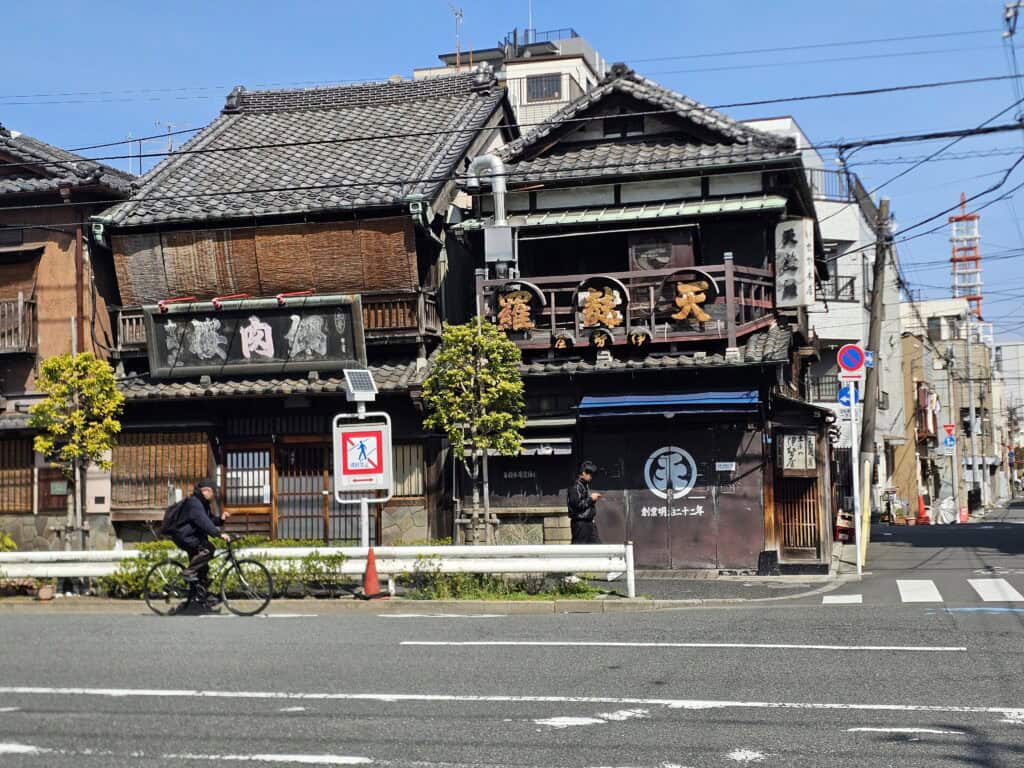
We are now standing right at the edge of Yoshiwara.
Across the street, the area already becomes Sanya.
Two old buildings stand side by side here, both having survived earthquakes and war for over a century.
On the right is Dote no Iseya, a historic tempura restaurant.
On the left is Nakae, a restaurant specializing in sakura nabe, or horse meat hot pot.
Horse meat was believed to give people strength and stamina.
There is also a story behind how this dish became popular.
During the Edo period, a man who desperately wanted to visit Yoshiwara sold his own horse to get money.
The merchant who bought the horse didn’t know what to do with it at first.
Eventually, he decided to cook the horse meat and serve it as a hot pot.
It became a huge success.
People began stopping here before entering Yoshiwara to build up their energy.
As a result, many sakura nabe restaurants opened in this area.
Even today, a few of them are still operating nearby.
This area quietly marks the boundary between pleasure and survival in old Tokyo.
Stop 5: Ashita no Joe – A Symbol of Post-War Tokyo
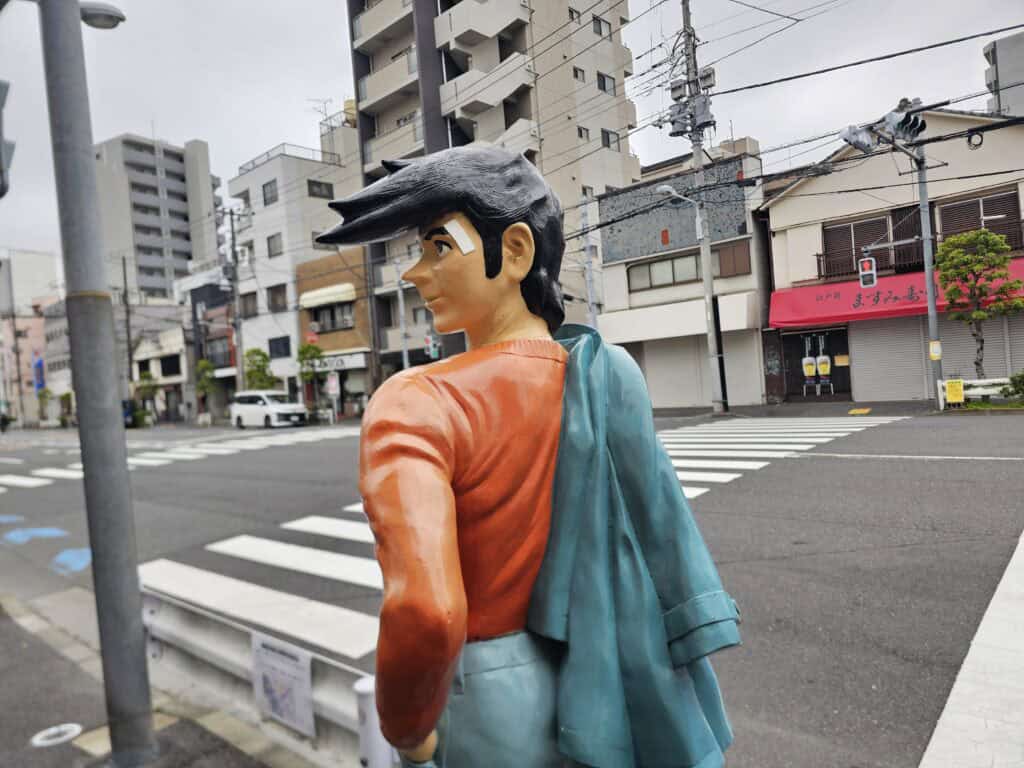
Nearby lies the Sanya district, once known as a center for day laborers and inexpensive wooden lodging houses.
This area called Sanya became the setting for the famous boxing manga Ashita no Joe, a story that captured the struggles of postwar Japan.
The story takes place in the rough working-class neighborhoods of Tokyo, including this area.
For many Japanese readers, Joe represents the struggles and determination of post-war Japan.
Stop 6:Yudonburi Sakae – Tokyo’s Tattoo-Friendly Hot Spring Bathhouse
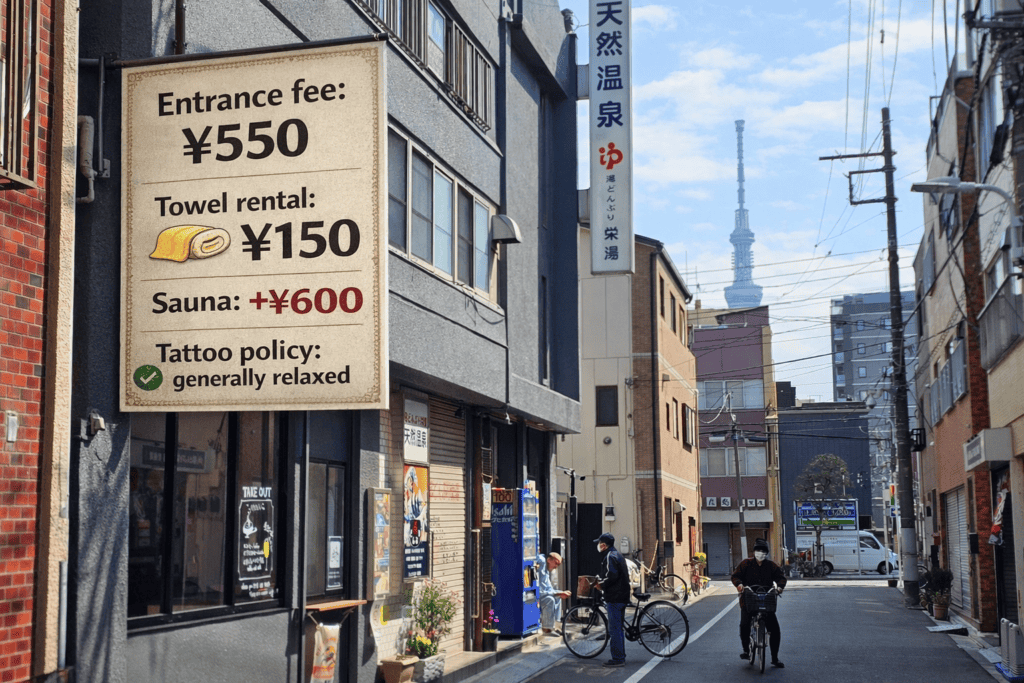
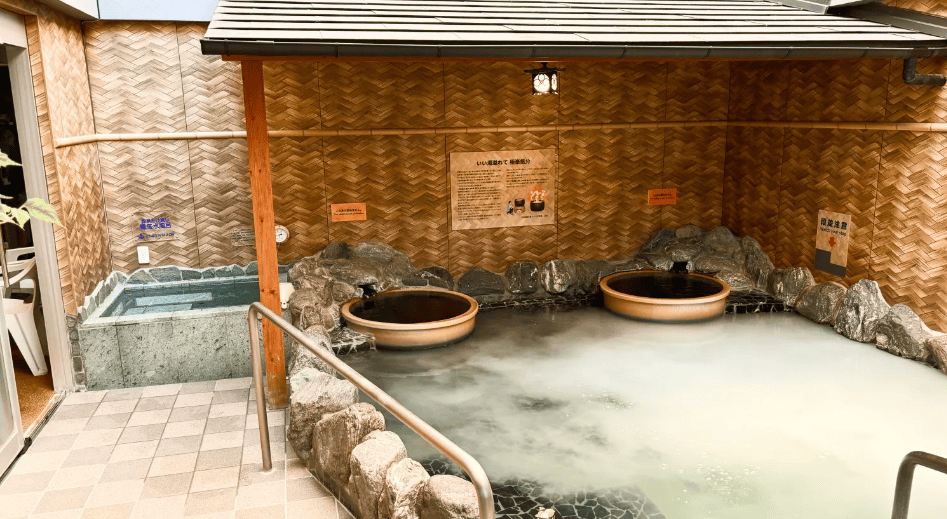
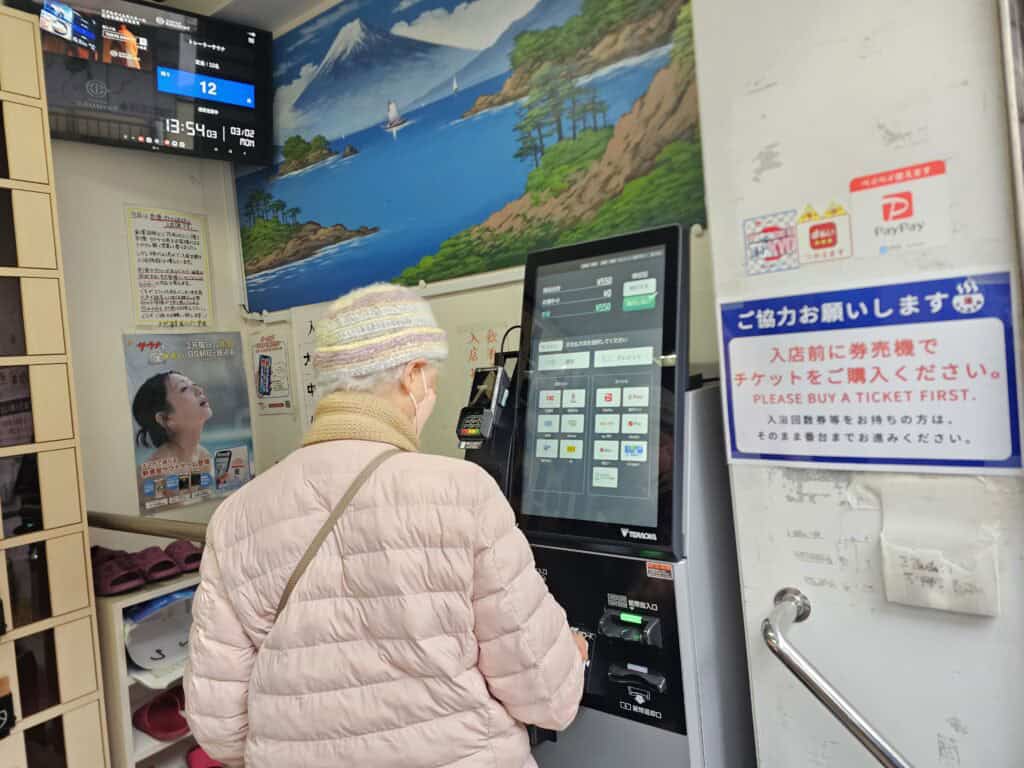
The highlight of this walk is Yudonburi Sakae, one of the most impressive neighborhood onsen bathhouses in Tokyo.
What makes this place special is that tattoos are allowed.
Sento culture once formed an essential part of everyday life in the city. Even today many locals still come here to relax after work.
Yudonburi Sakae is larger and more modern than many traditional sento in Tokyo, but it still keeps the relaxed atmosphere of a neighborhood bathhouse.
The experience begins at the front desk, where you pay the standard sento entrance fee.
Just before the bath area, there is a small relaxation lounge, where locals sit and cool down after bathing.
Passing through the red and blue noren curtains, you enter the changing room.
Kajino’s Eye
I spent about 90 minutes here and did not see a single foreign tourist.
Everyone was local.
Salarymen quietly bathing after work. Elderly residents chatting softly. At one point, a heavily tattooed man washed beside other customers, and nobody paid attention.
It felt like a genuine Tokyo neighborhood bathhouse rather than a tourist attraction.
Basic Info
- Entrance fee: ¥550
- Towel rental: ¥150
- Sauna: +¥600
- Tattoo policy: generally relaxed
- Facilities: onsen, carbonated bath, sauna, cold plunge, jet bath
Stop 7: Backpacker Street – A Different Side of Tokyo Travel
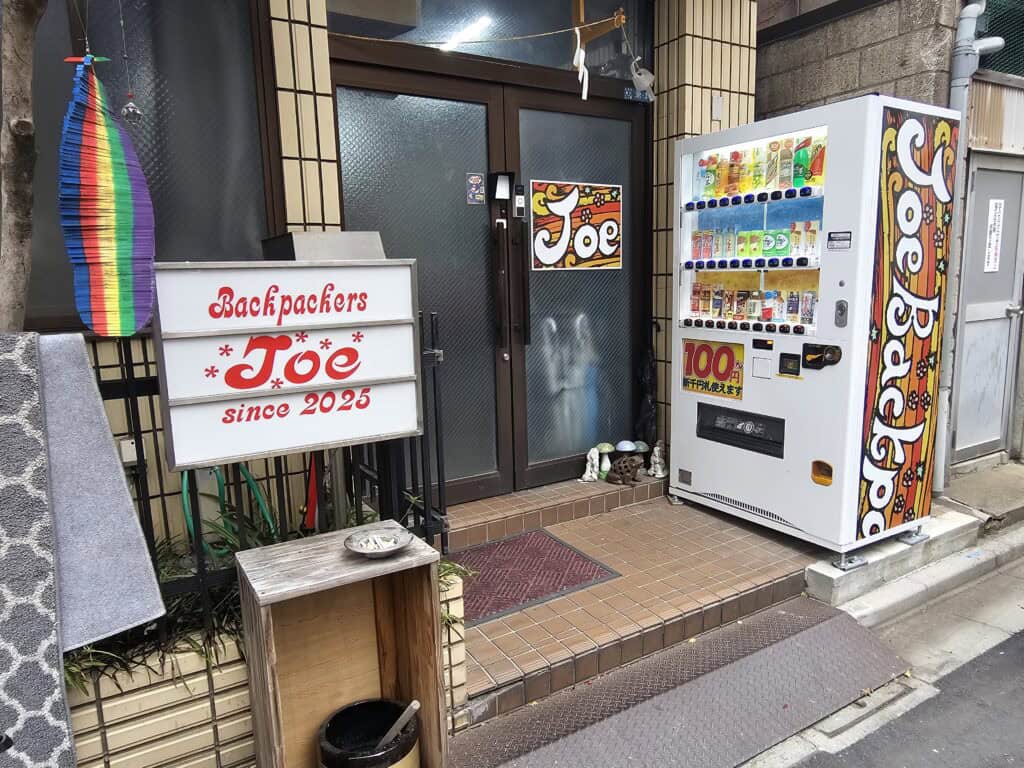
Walking through Sanya again, the atmosphere changes.
Small hostels, quiet residential streets, and the distant view of Tokyo Skytree remind visitors how close this neighborhood is to Asakusa.
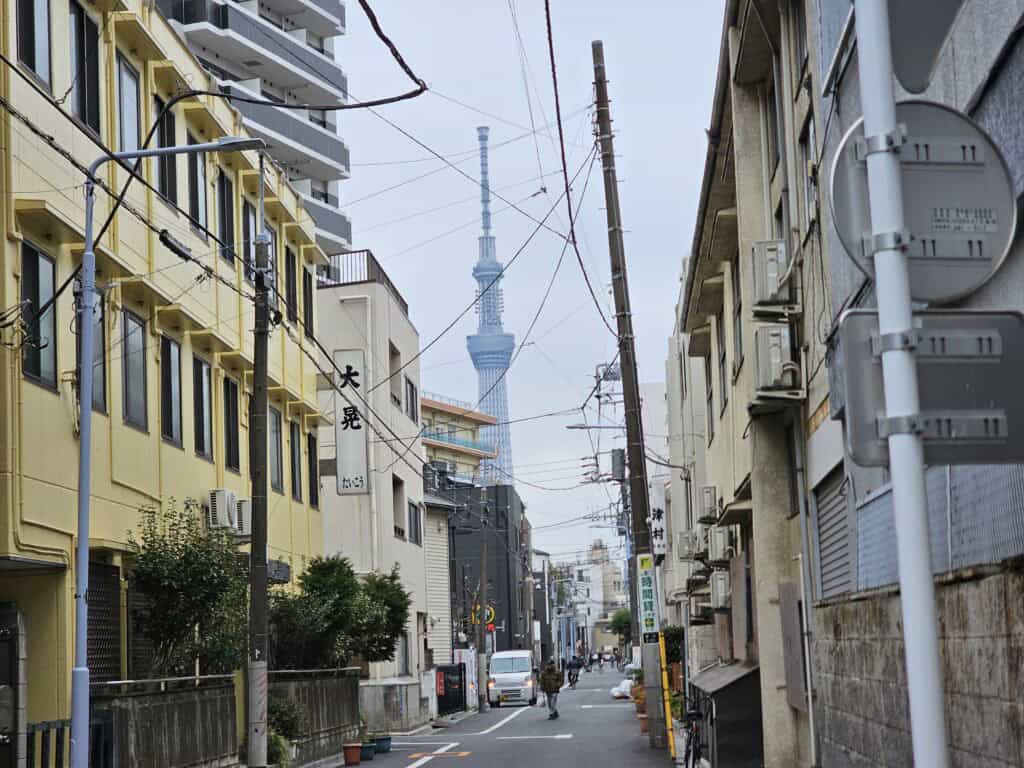
Sanya was once known for cheap lodging used by day laborers.
It has gradually transformed into a hub for backpackers from around the world.
Stop 8: The Ghost Jizo – Guardian of Travelers
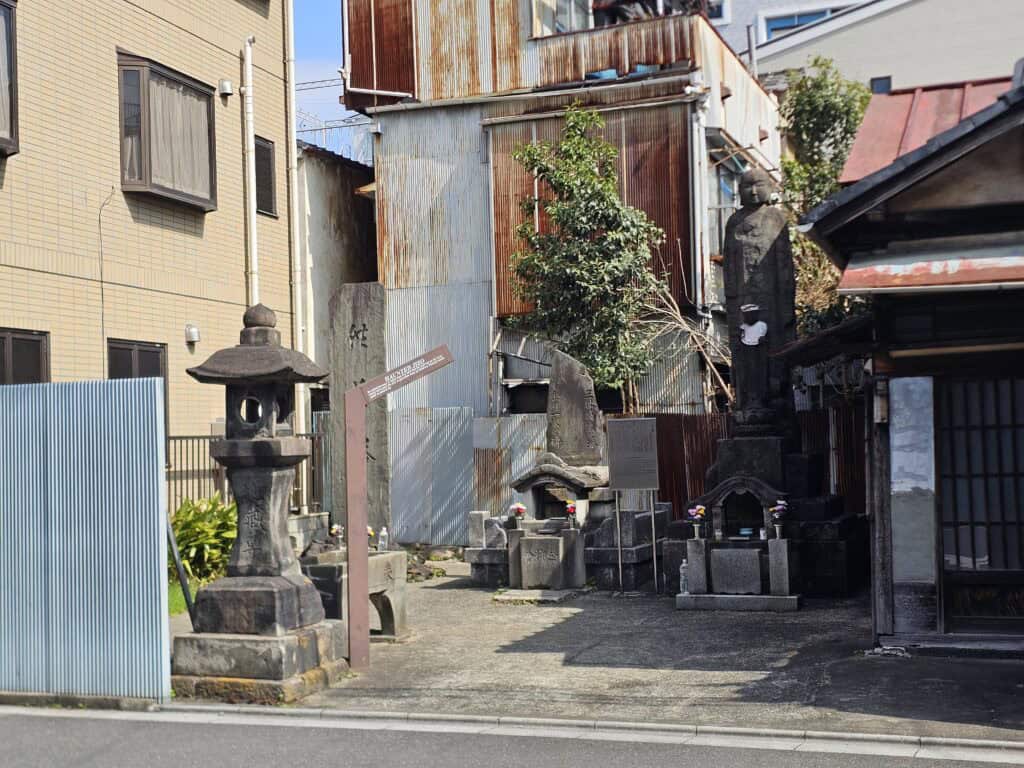
Hidden in a quiet residential corner stands Obake Jizo, a mysterious statue surrounded by local stories.
According to local legend, the statue once appeared to change its appearance at night, giving it the nickname “Ghost Jizo.”
What makes this statue especially striking is its size — nearly four meters tall (about 13 feet), far larger than most roadside Jizo statues in Japan.
More importantly, Jizo statues are traditionally placed along roads to protect travelers.
For visitors walking through this neighborhood, the towering statue feels like a silent guardian watching over the road.
Stop 9: Imado Shrine – Birthplace of the Lucky Cat
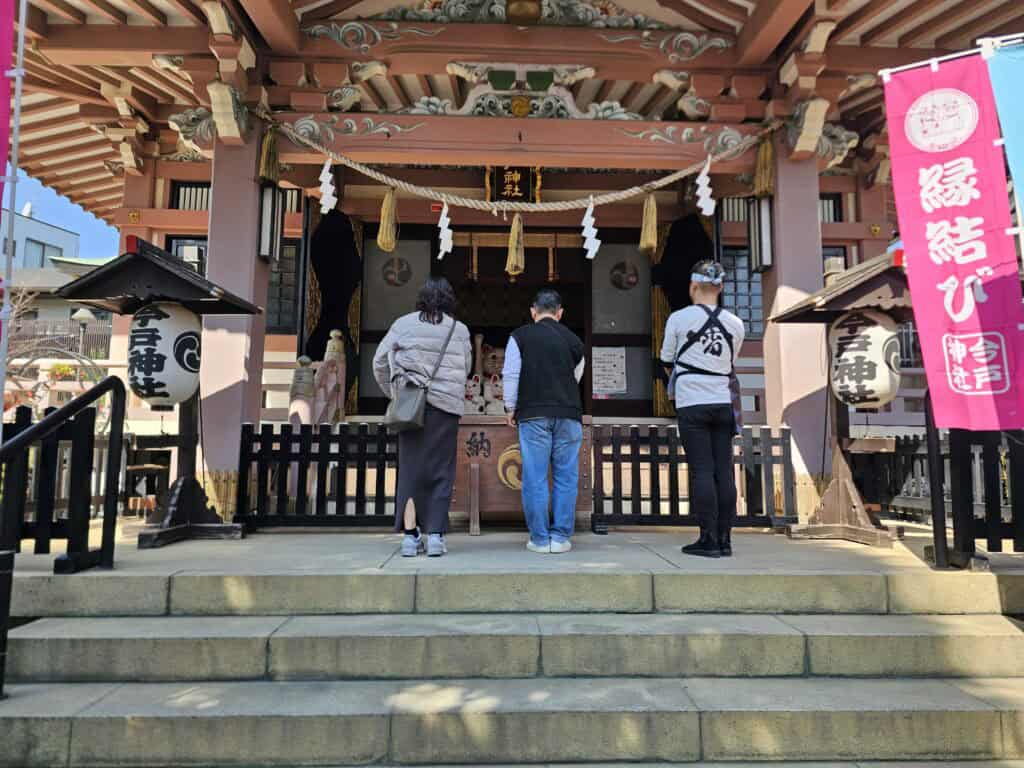
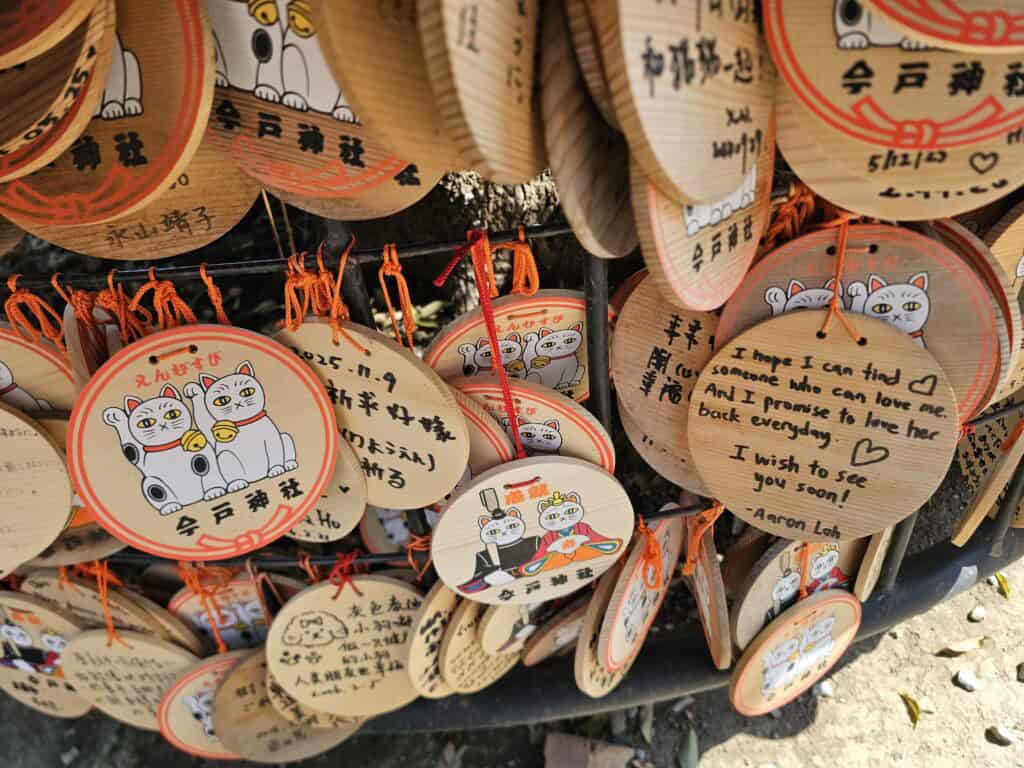
PHOTO — maneki-neko lucky cat statues (close-up)
Near the beginning of the Sumida River walkway stands Imado Shrine.
The shrine is known as one of the birthplaces of maneki-neko, the famous Japanese lucky cat often seen in restaurants and shops across Japan.
These small smiling cats are believed to bring good fortune and welcome visitors.
Today the shrine is also known as a place for matchmaking and relationships, and many people come here to pray for love and good luck.
Colorful lucky-cat statues and ema plaques create a cheerful atmosphere that contrasts with the quiet residential streets around it.
After exploring the deeper history of Yoshiwara and Sanya, Imado Shrine offers a lighter and more playful moment in the journey.
From here, the path naturally opens toward the Sumida River promenade, where the final part of the walk begins.
The Final Walk: Sumida River and the Road to Asakusa
Eventually the streets open onto the Sumida River, one of the most pleasant walking areas in eastern Tokyo.
The wide riverside path offers a calm break after exploring the dense streets of the neighborhood.
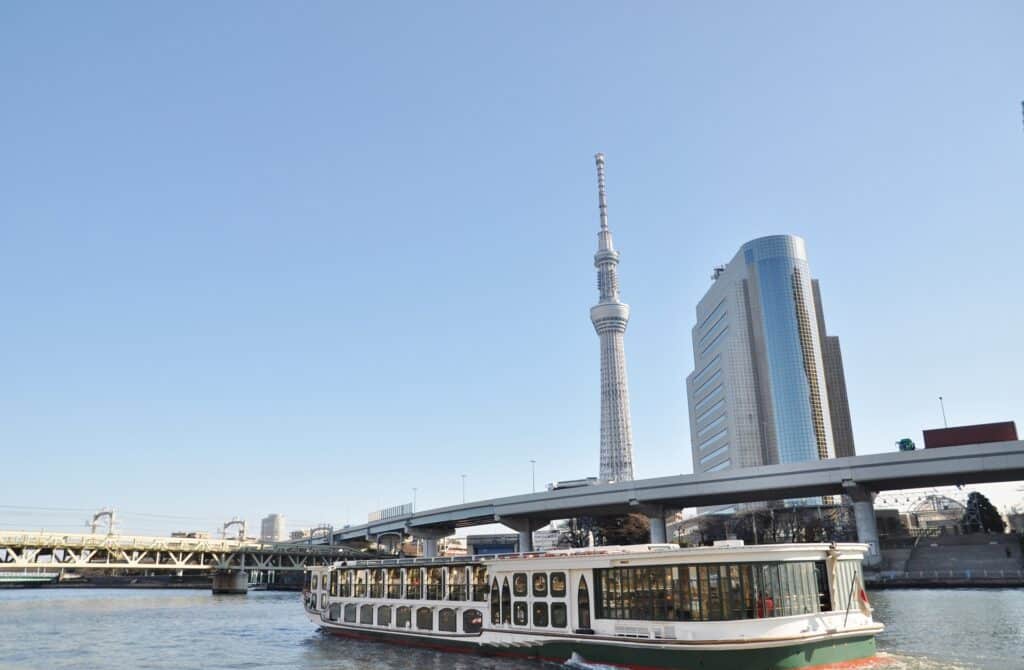
From here, Tokyo Skytree rises above the skyline, creating a striking contrast between the quiet river and the modern city beyond.
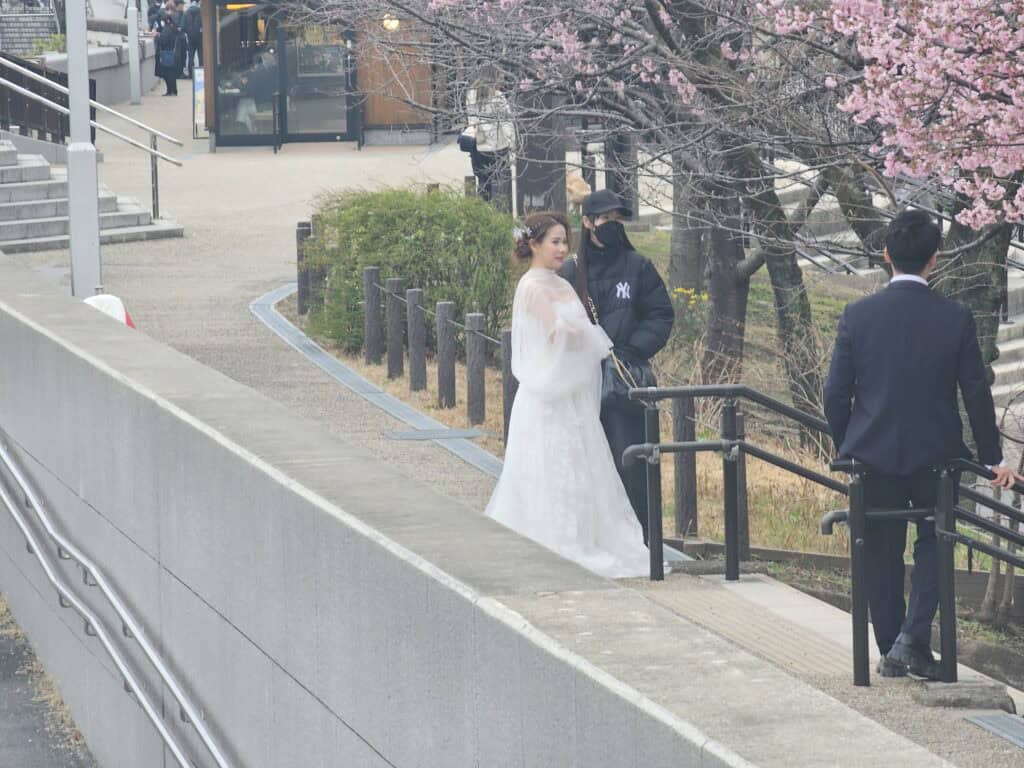
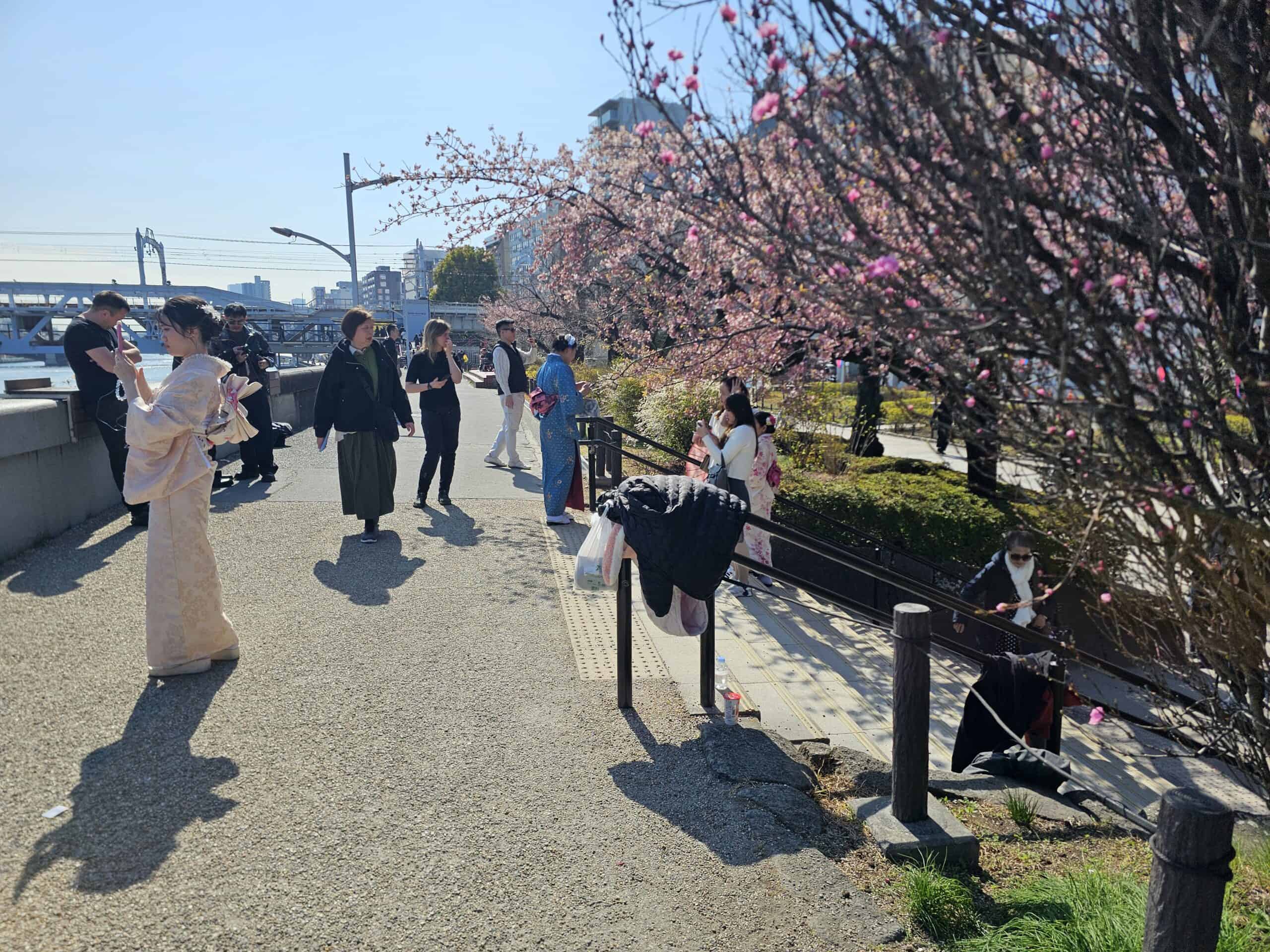
The riverside area is also a favorite place for visitors taking photos in traditional kimono or simply enjoying the view of the river.
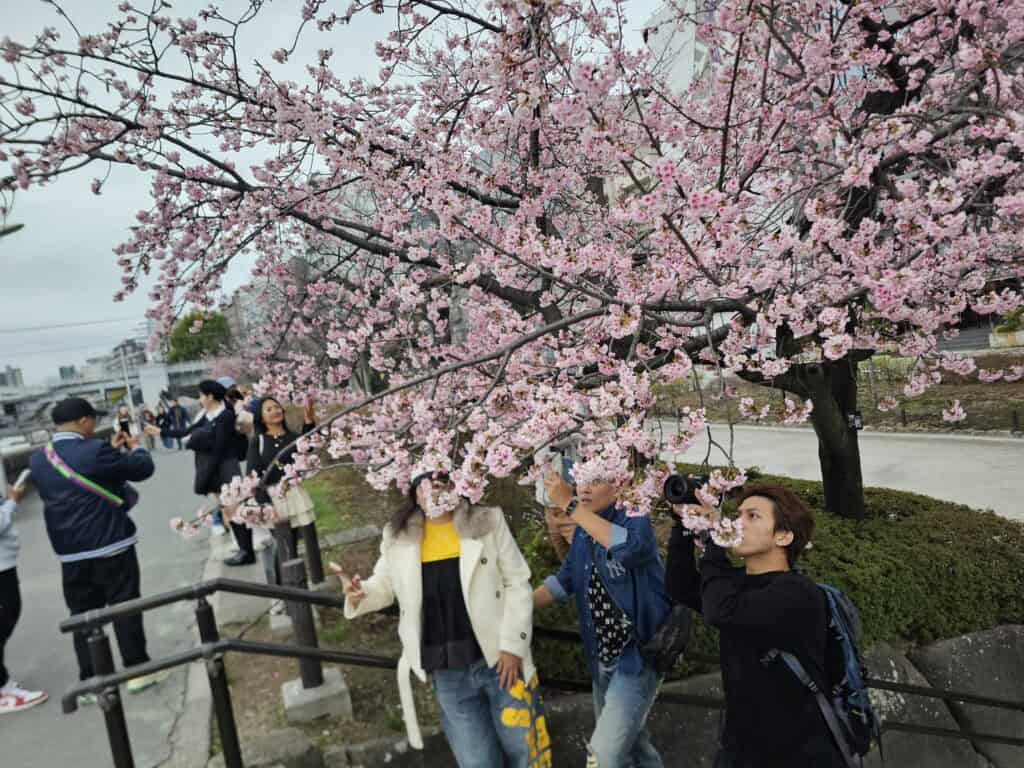
During spring, the path becomes even more beautiful as cherry blossoms appear along the riverbank.
The combination of water, sky, and the distant tower creates one of the most relaxing scenes in Tokyo — a peaceful walk that naturally leads toward Asakusa.
The quiet river, old neighborhoods, and modern tower create a scene that perfectly captures Tokyo’s layered identity.
Return to Asakusa
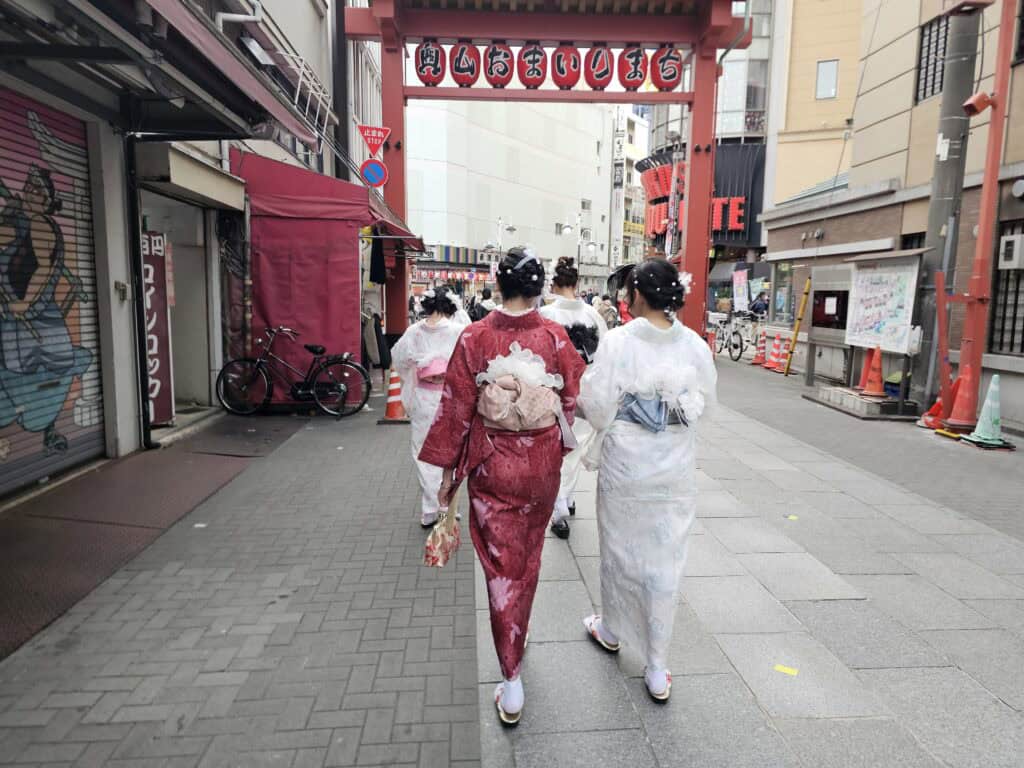
Finally the route loops back toward Asakusa.
By this point the famous temple district feels different. The crowds, the shops, the lanterns — they are still there, but now they sit beside layers of history that most visitors never see.
A Different Way to Experience Tokyo
This walk is not about famous landmarks.
It is about the unexpected connections between Edo history, post-war culture, everyday life, and modern travel.
From the former pleasure district of Yoshiwara
to a public bath loved by locals
to a mysterious roadside Jizo
to the open sky above the Sumida River.
Hidden Tokyo is often just a few streets away.
Map of This Walk