
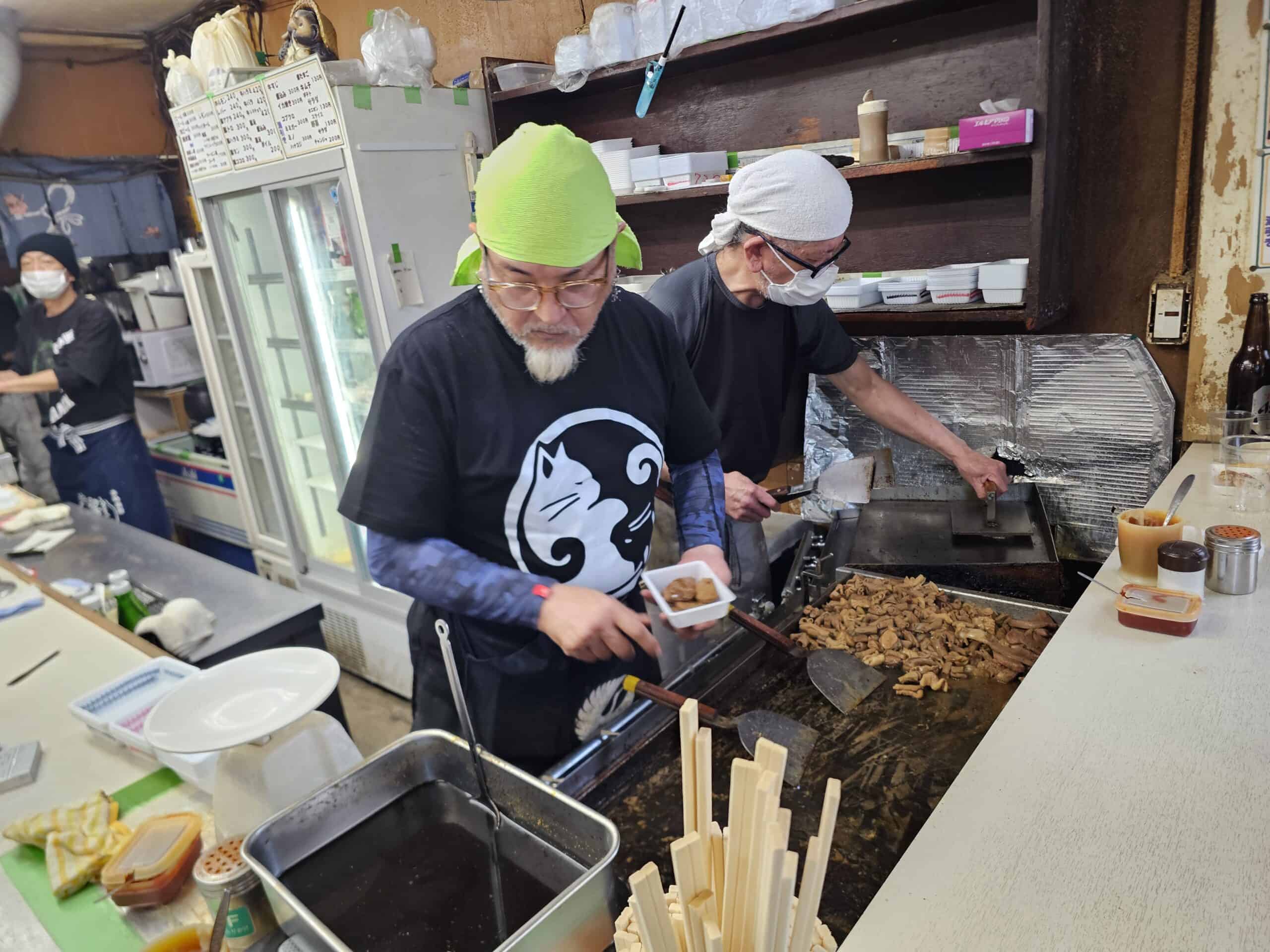
This wasn’t a typical Osaka trip.
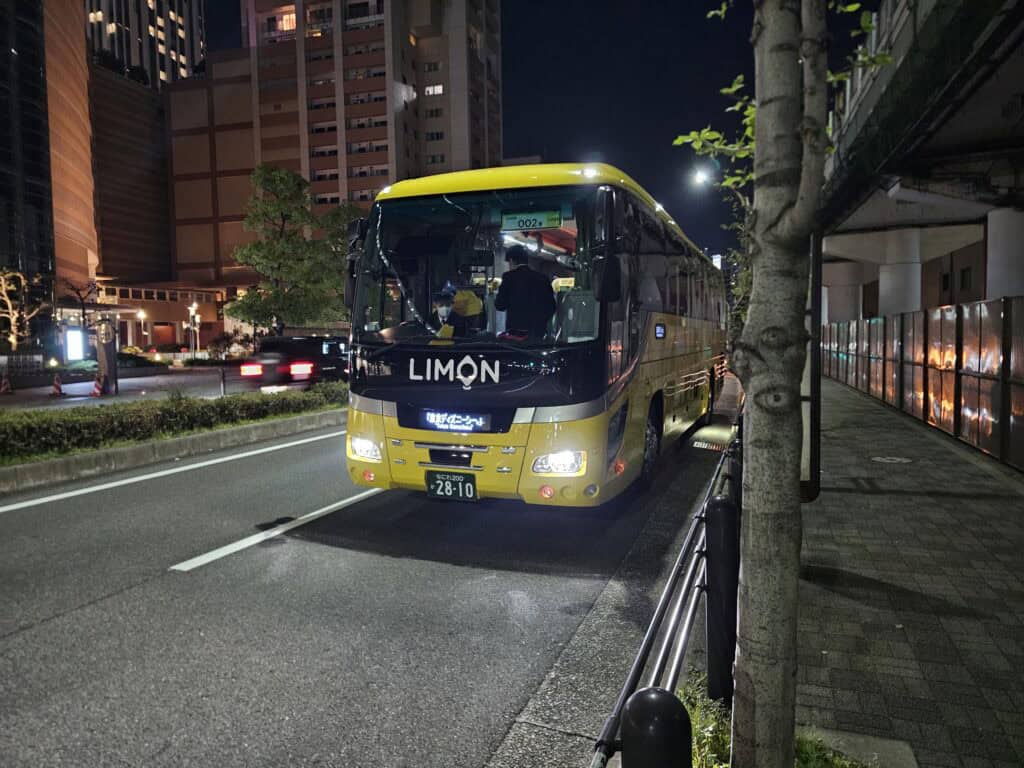
It started with an overnight bus—
and quietly drifted into places
most travelers never reach.
No highlights.
No must-see lists.
Just walking,
eating,
and sitting somewhere you didn’t expect to stop.
And somehow,
that’s where it begins.
The Morning That Changes Everything
I arrived in Osaka at Umeda.
And went straight to Nishinari.
For breakfast.
Square Park.
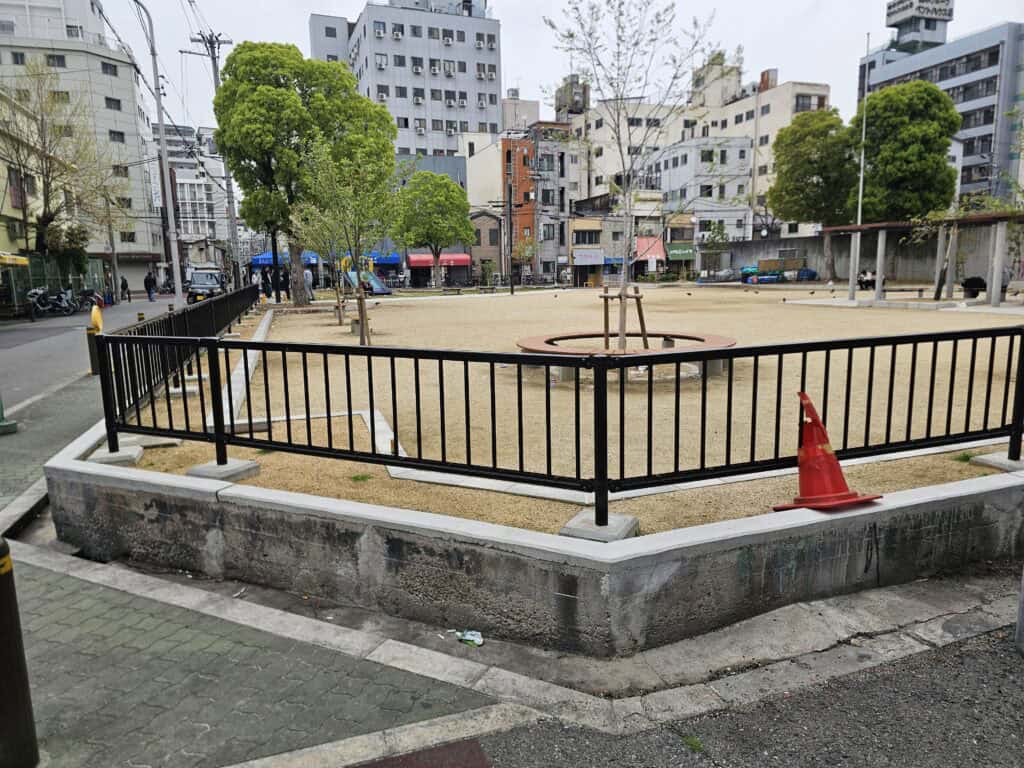
This is what I saw.
No one told me to come here.
Getting There: Overnight Bus from Tokyo
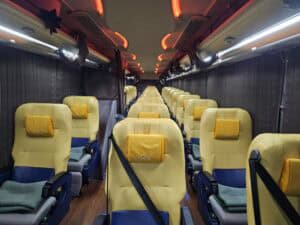
I left Tokyo the night before.
Departure was around 10:00 PM.
Arrival in Osaka — around 6:30 AM.
One night. No hotel needed.
Prices vary depending on the season,
but I paid roughly the same as a budget hotel night.
Sometimes even less.
Weekdays are cheaper.
Holidays and weekends go up.
It’s not luxury.
But it works.
You move, you sleep,
and you wake up in a different city.
It’s not perfect sleep — but it’s enough.
Killing Time in Namba
Too early.
Nothing is open yet.
So I walked.
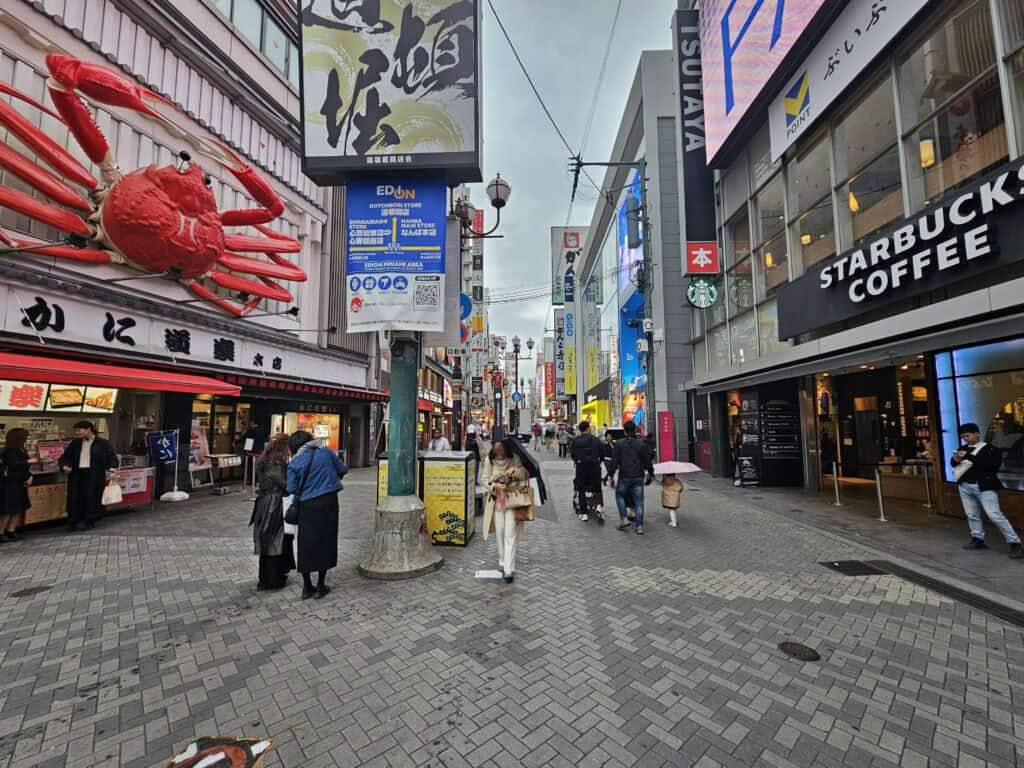
This is Namba.
Bright. Loud. Designed for attention.
The famous crab.
The moving signs.
The crowd that never really stops.
But step just a little off.
There’s a quiet udon shop.
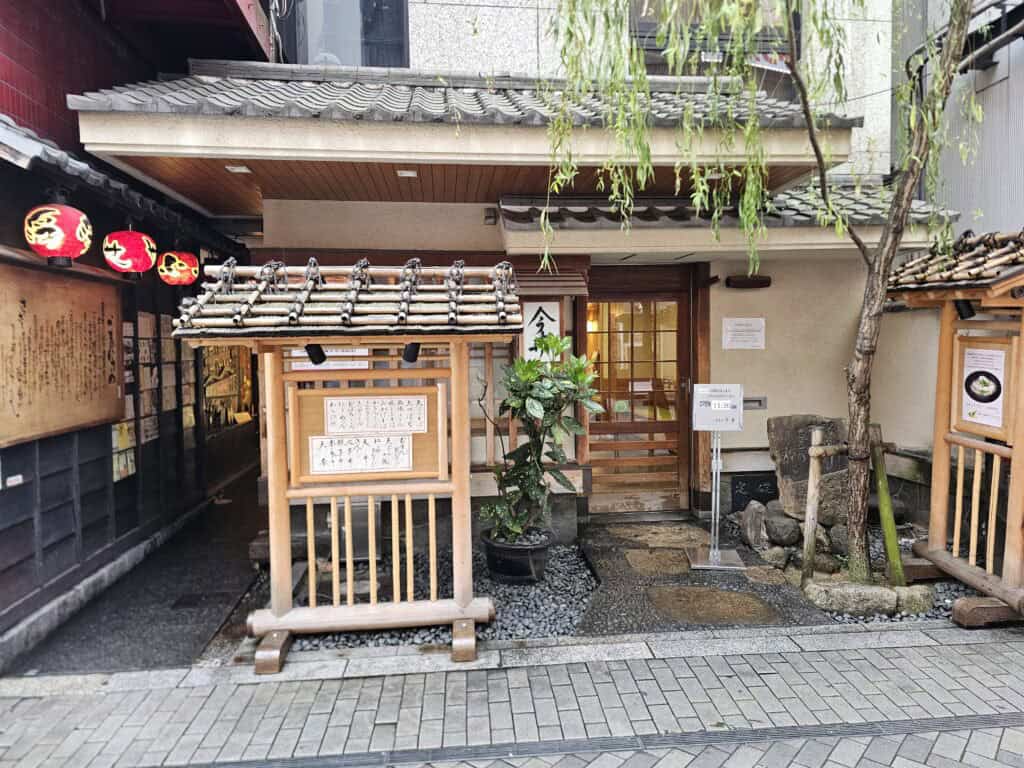
People call it “drinkable.”
The soup is the point.
The noodles… almost secondary.
And right next to it —
a moss-covered statue.
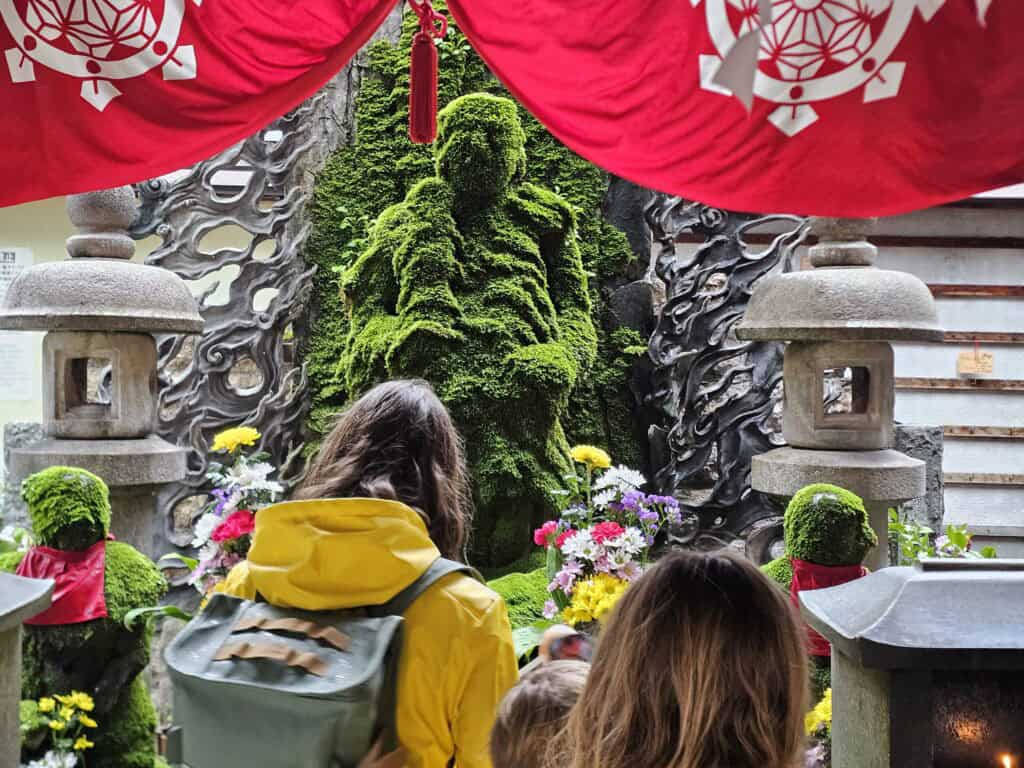
Not a landmark.
Not on any map.
People come here for luck.
Health. Business. Love.
Most visitors walk right past it.
That’s fine.
Tenjinbashisuji: Everyday Osaka
Reset.
I left Namba underground.
A long, quiet corridor.
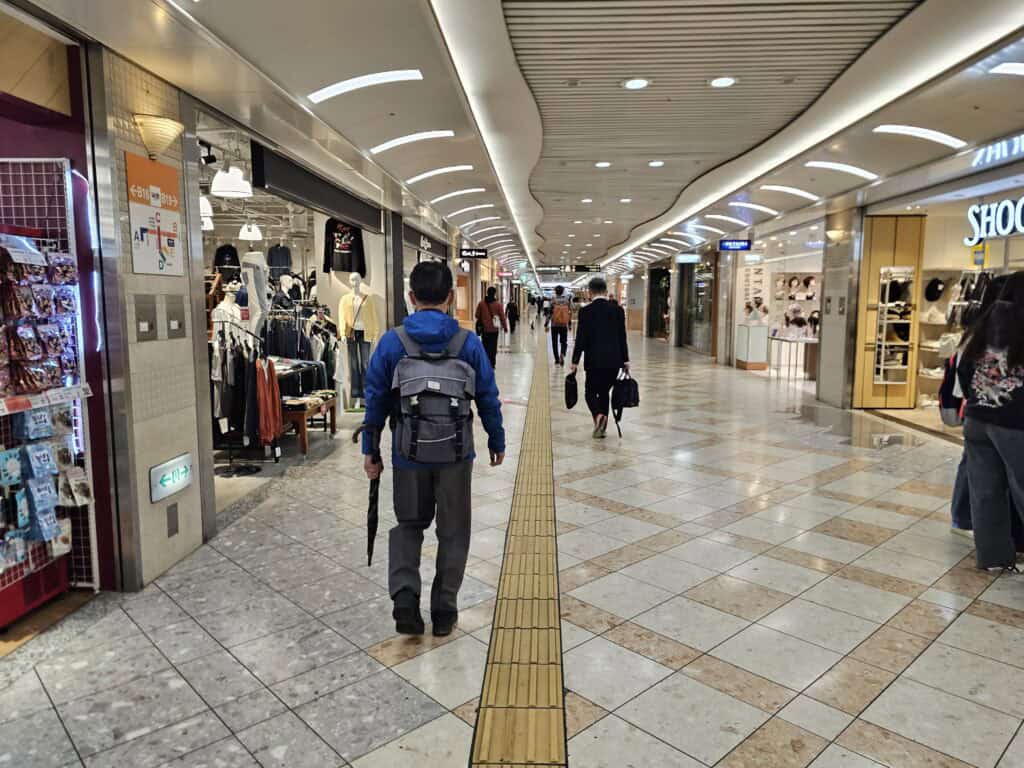
Shops. People. No noise.
Just walking.
From Namba to Nipponbashi.
Then a short ride.
Next stop — Tenjinbashisuji 6-chome.
This is where it starts.
It’s long, local, and entirely built around everyday life.
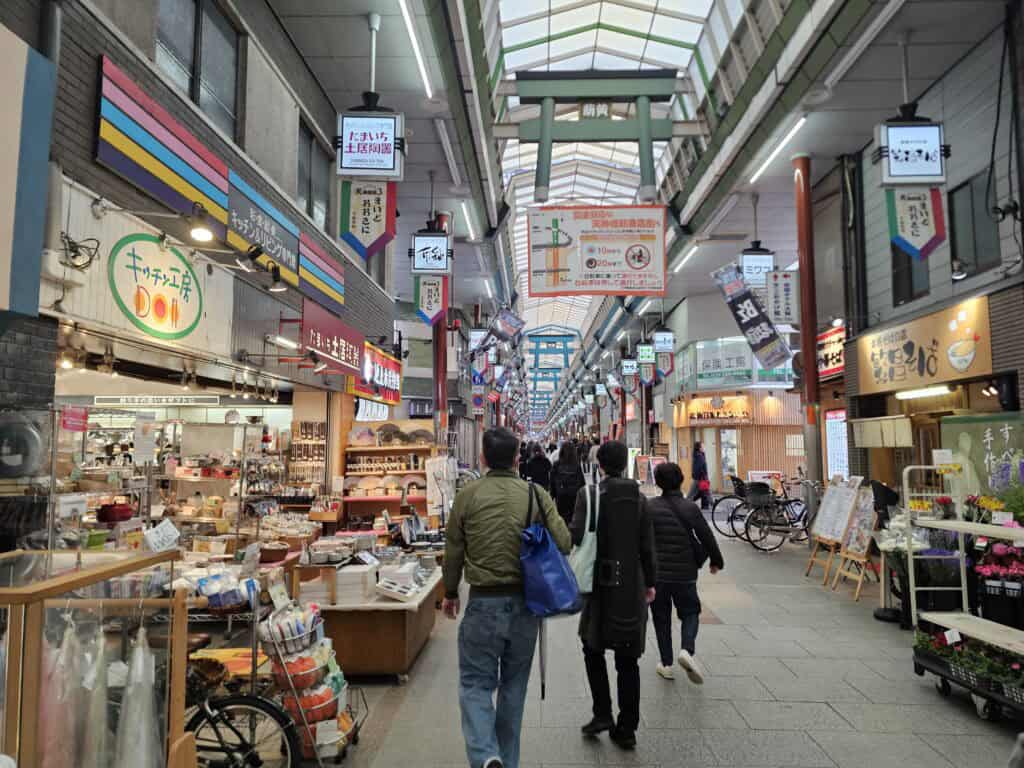
People shop here, eat here, and pass through without thinking about it.
That’s what makes it interesting.
There are no major attractions.
No famous landmarks.
Just normal life—unfiltered.
Highlight of this Tour: Marufuku
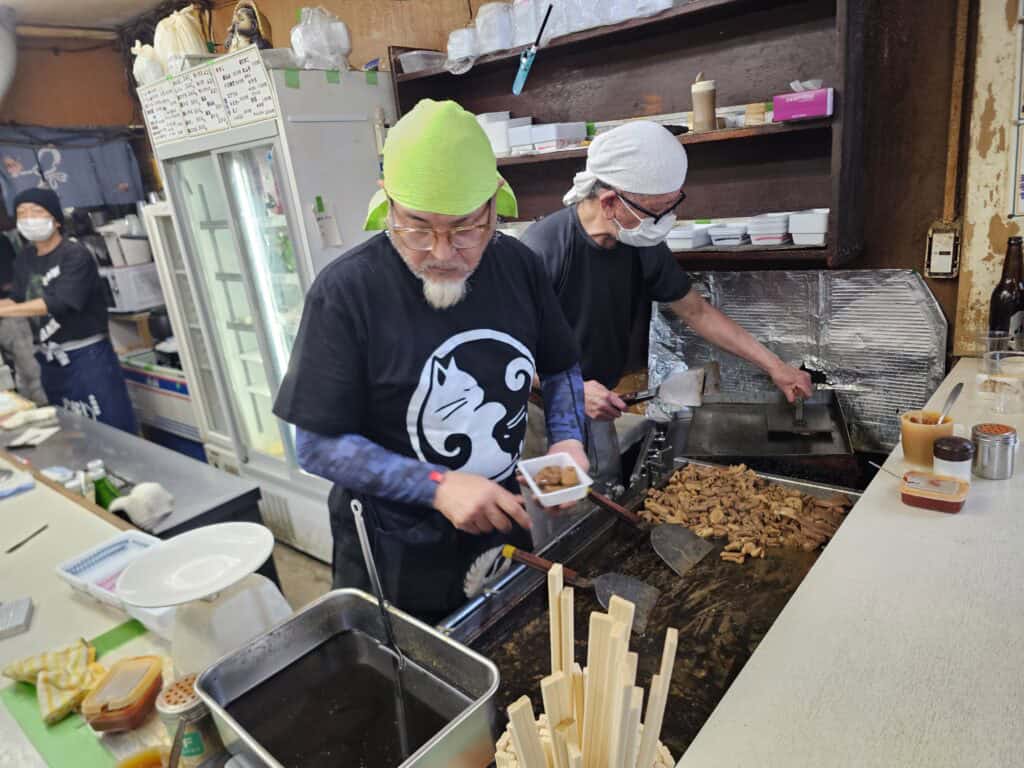
A place with no explanation.
Just a yellow sign.
You step in, point, and eat.
End of the Day
End of the day.
After everything, I just wanted something simple.
A small Chinese place, one minute from the hotel.
Set meal. Around 700–800 yen.
Nothing special.
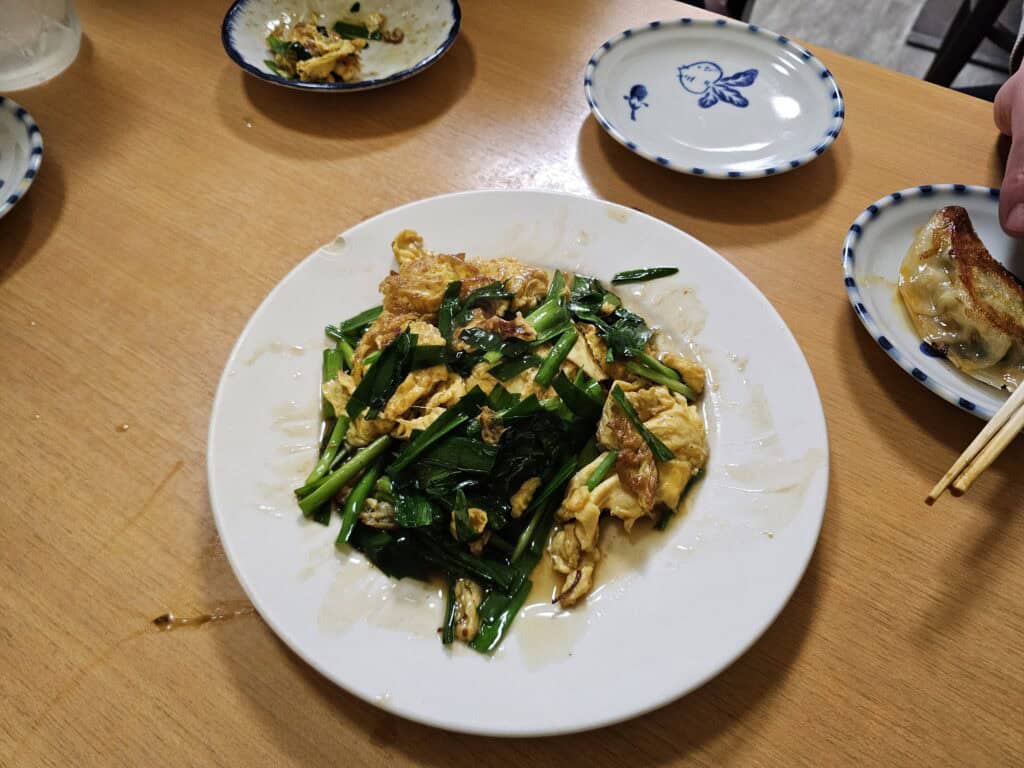
Just good.
That was enough for the day.
Another Side of Nishinari
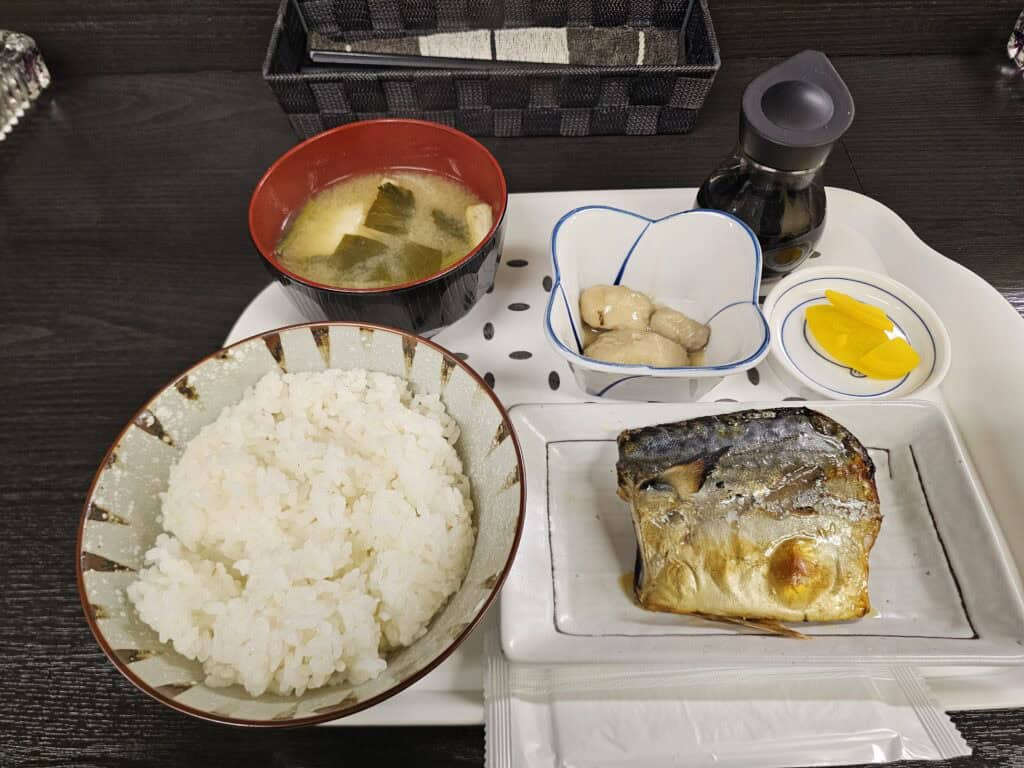
Morning again.
The same area, different light.
Breakfast was a little more expensive this time —
600 yen instead of 400.
Still simple. Still local.
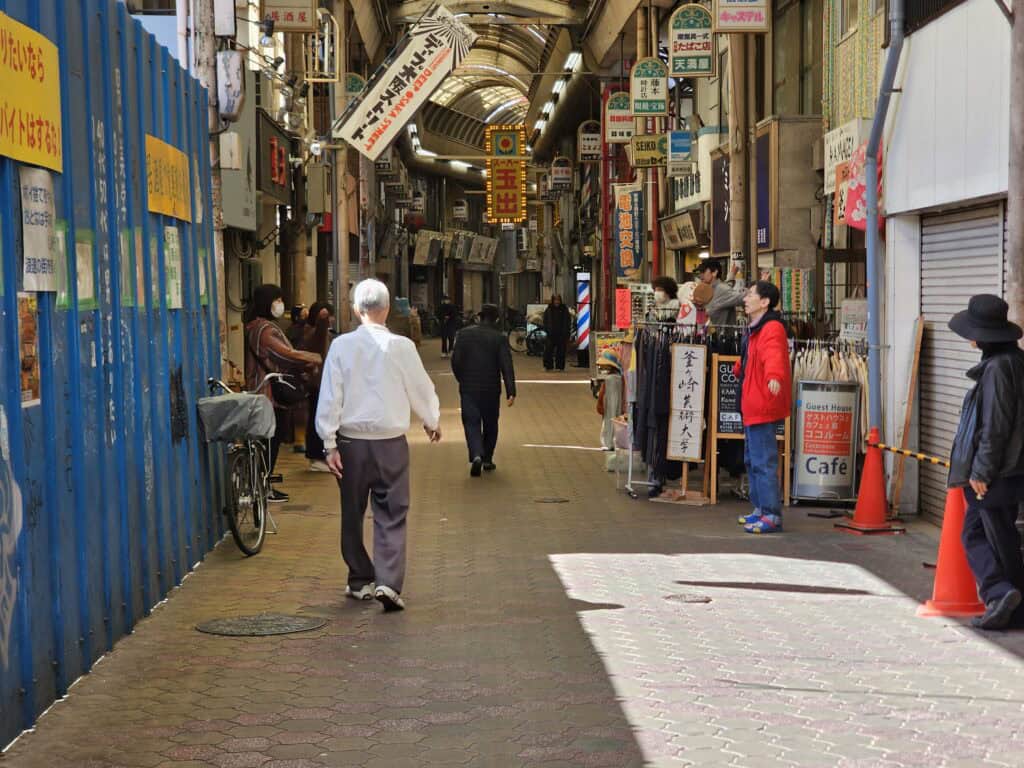
Nishinari is often described in extreme ways.
But walking through it,
you see something else.
Kids on their way somewhere.
Neighbors talking on the street.
A young mother with a stroller.
Just everyday life.
Nothing hidden.
Nothing staged.
What Actually Matters
If you understand a few simple things,
the risk is low.
Don’t stare at people
Don’t point your camera at strangers
Avoid walking alone late at night
That’s it.
And honestly —
the last one applies anywhere.
Even in places like Kabukicho in Tokyo.
Nishinari isn’t what people say it is.
It’s just a place where life is visible.
The Last Stop: Shinsekai
The last stop.
I checked out in the morning.
Talked briefly with the staff —
helpful, as always.
From there, it’s a short walk.
Cross one street,
and you’re in a completely different world.
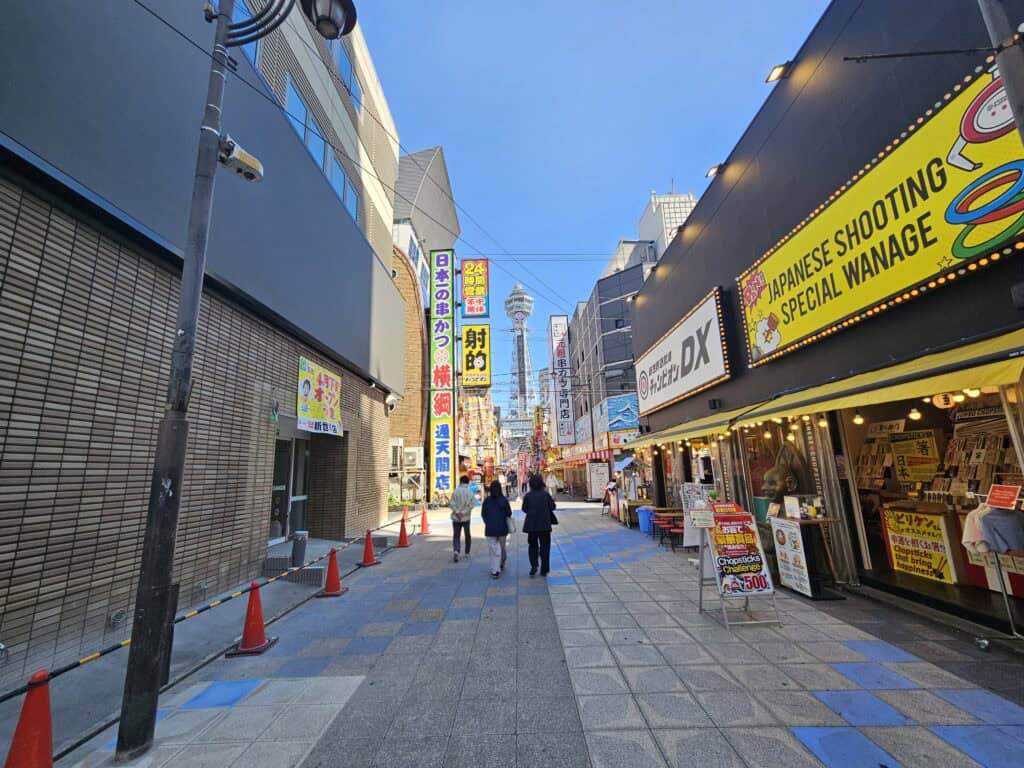
Shinsekai.
Bright.
Organized.
Designed.
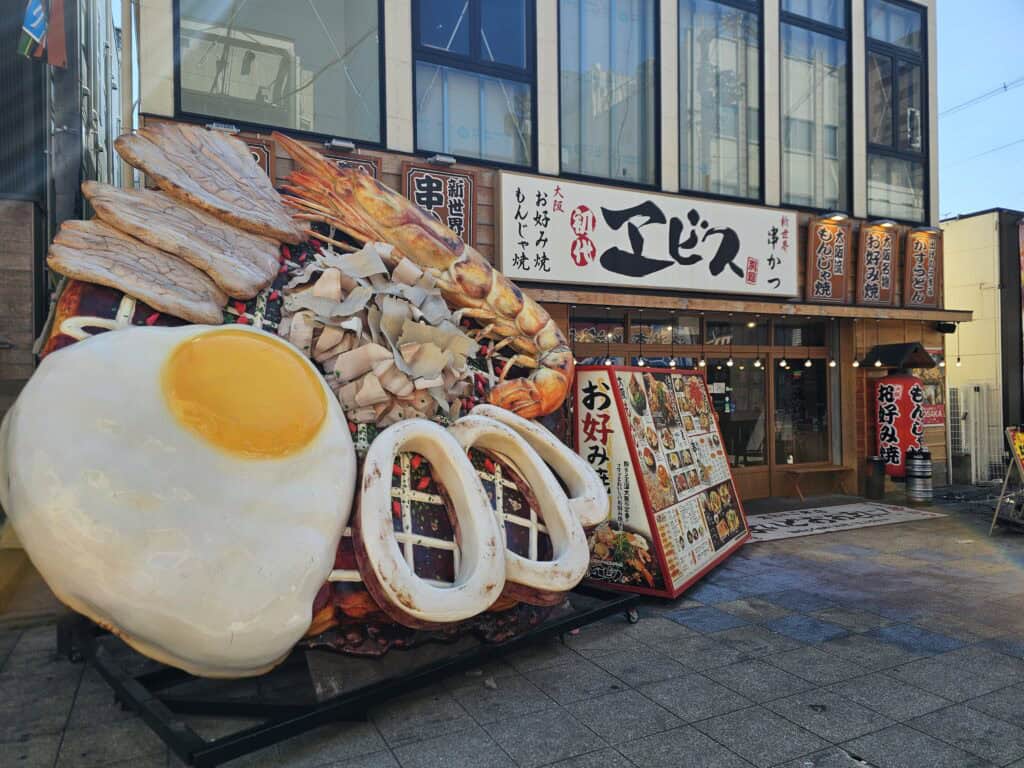
I walked through it.
Had lunch at a kushikatsu place.
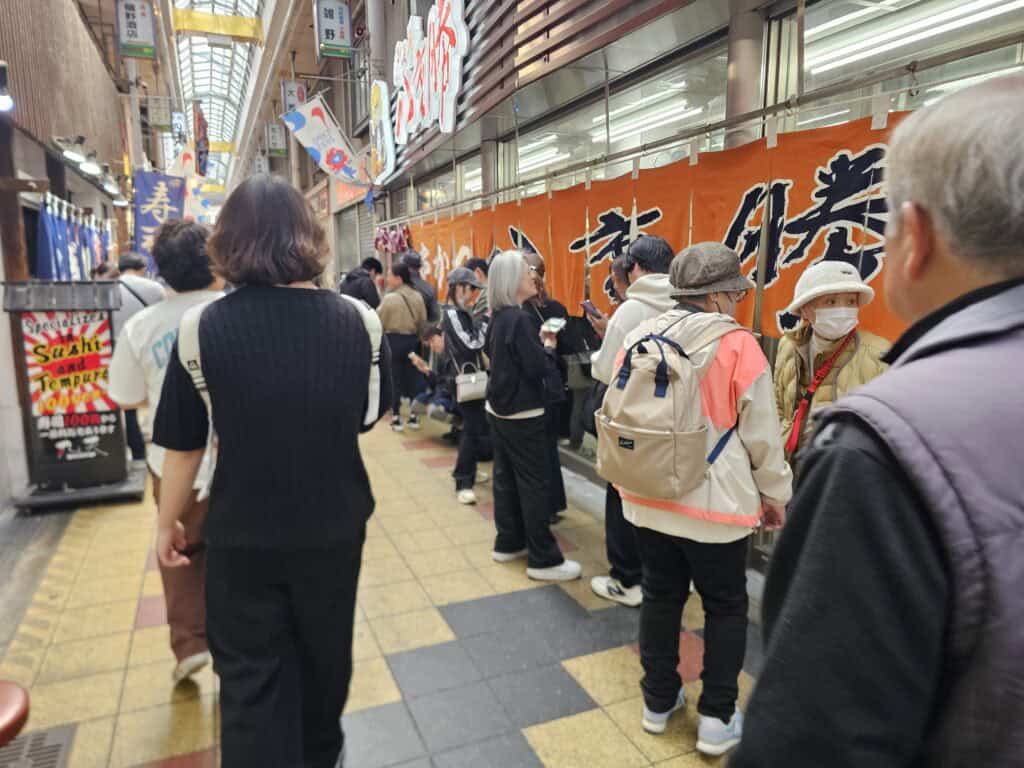
Took a quick bath nearby.
That was it.
After That
After that, I moved again.
To Tsuruhashi.
No photos.
Just walking.
A different kind of street.
Different smells.
Different language.
Then a café.
Two hours.
Coffee, cake, ice cream.
Nothing planned.
That’s when this writing started.
Later, dinner.
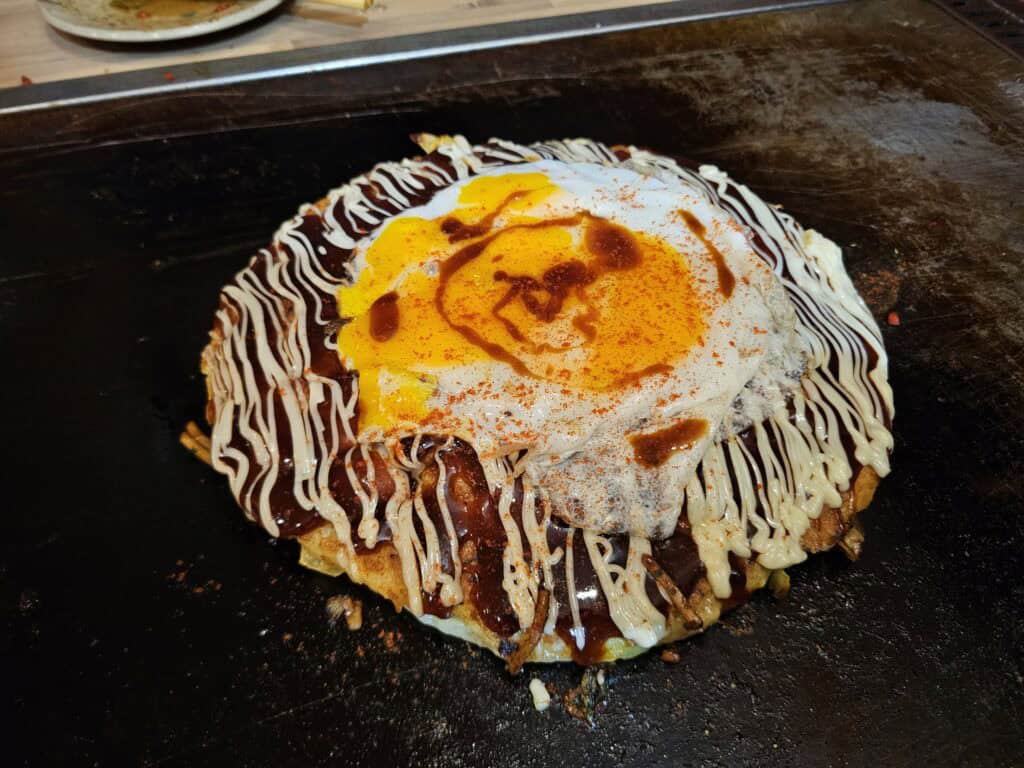
Okonomiyaki with friends.
Loud. Casual. Familiar.
A different Osaka again.
And then — back to the bus.
A dark stop.
Almost empty.
No signs.
No crowd.
Want to experience this in real life?
→ Asakusa Backstreet Tour (coming soon)