Intro
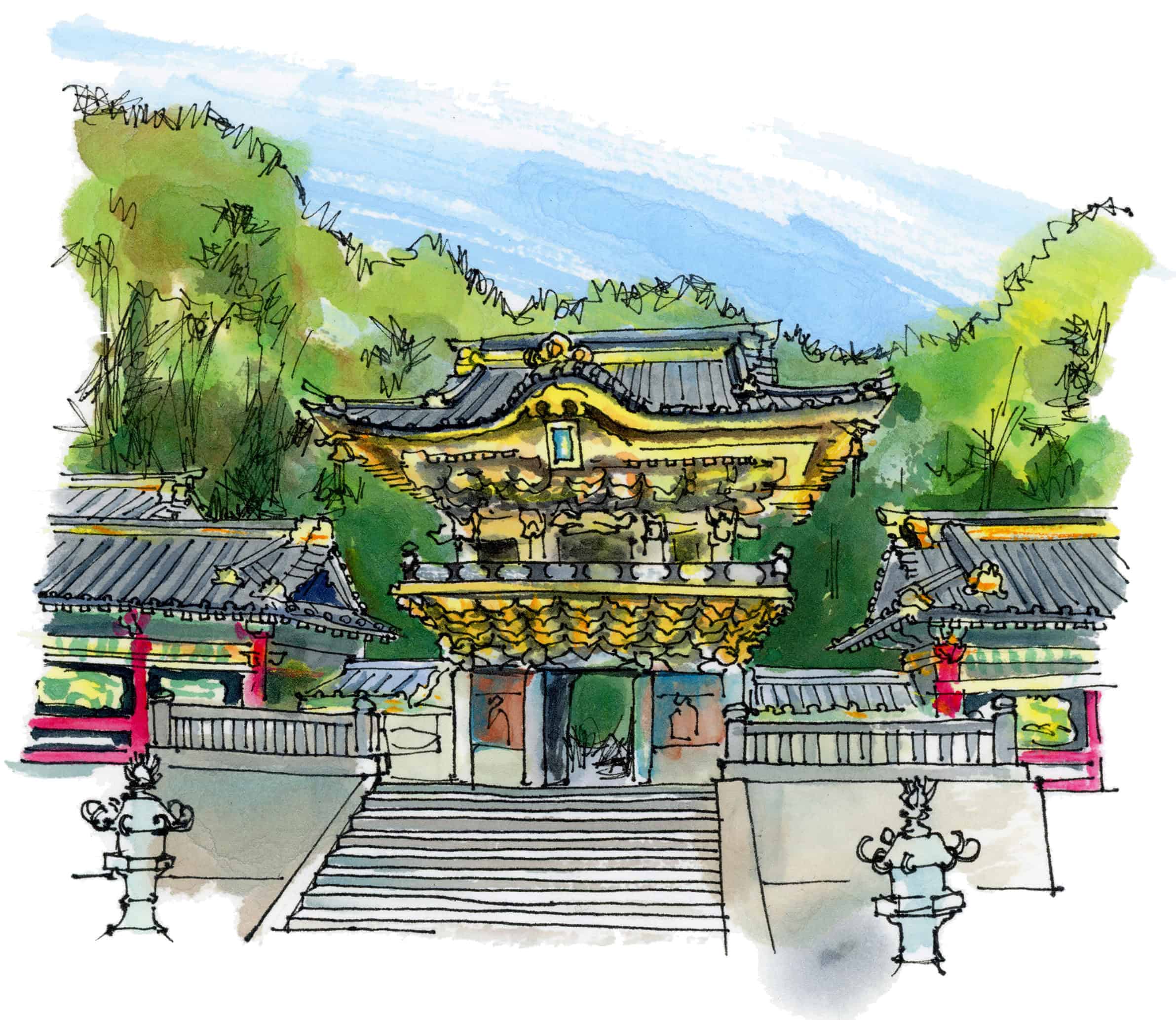
Nikko Toshogu is not just a shrine; it is a spiritual masterpiece and a UNESCO World Heritage site. Located about two hours north of Tokyo, it is the final resting place of Tokugawa Ieyasu, the founder of the Edo Shogunate. Unlike the minimalist beauty often associated with Japan (like Zen gardens), Toshogu is famous for its dazzling gold leaf, vibrant colors, and over 5,000 intricate carvings.
It is a place where history, art, and mysticism collide. Here is what you need to know before you go.
🌌 The Origins: The Guardian of the North Star
Why was this shrine built in the mountains of Nikko? It was the dying wish of Tokugawa Ieyasu. He carefully selected this location based on Feng Shui and celestial alignment.
- The North Star Connection: Nikko is situated directly north of Edo (modern-day Tokyo). Ieyasu believed that by resting here, he could become a deity synonymous with the North Star (which remains fixed in the sky) and watch over his descendants and the capital city forever.
- The Construction: The current lavish complex was mostly rebuilt in 1636 by his grandson, Tokugawa Iemitsu, to honor his grandfather’s legacy. It was a massive national project involving master craftsmen from all over Japan.
☯️ A Rare Fusion: Shinto & Buddhism (Shinbutsu-shugo)
One of the most unique aspects of Nikko Toshogu is that it preserves a forbidden history: the fusion of two religions.
- What is Shinbutsu-shugo? It refers to the syncretism of Japan’s indigenous Shinto (worship of nature spirits/Kami) and Buddhism (imported from India via China). Starting in the Nara Period (8th century) and solidified in the Heian Period with the theory that “Kami are Japanese manifestations of Buddhist deities” (Honji Suijaku), these two faiths coexisted as one system for over 1,000 years.
- The Great Separation: In the Meiji Era (late 19th century), the government issued a strict order to separate Shinto and Buddhism to strengthen the Emperor’s status. Temples and Shrines were forcibly split across Japan.
- Nikko’s Miracle: However, Nikko is one of the few places where strong traces of this fusion remain. You will see a Five-Story Pagoda (a Buddhist structure) standing proudly inside the Shrine grounds (a Shinto space). This architectural contradiction is a rare and beautiful reminder of how Japanese people originally understood the divine—not as separate entities, but as a harmonious whole.
🙈 Must-See Highlights
The recommended path follows this sequence: Omotesando (Main Approach) → Stone Torii Gate → Five-Story Pagoda → Omotemon (Main Gate) → Kamijinko (Upper Sacred Storehouse) → Shinkyusha (Sacred Stable) → Yomeimon Gate → Karamon Gate → Honden (Main Sanctuary) → East Corridor → Okusha (Inner Shrine).
The complex is vast, but these are the iconic spots you cannot miss:
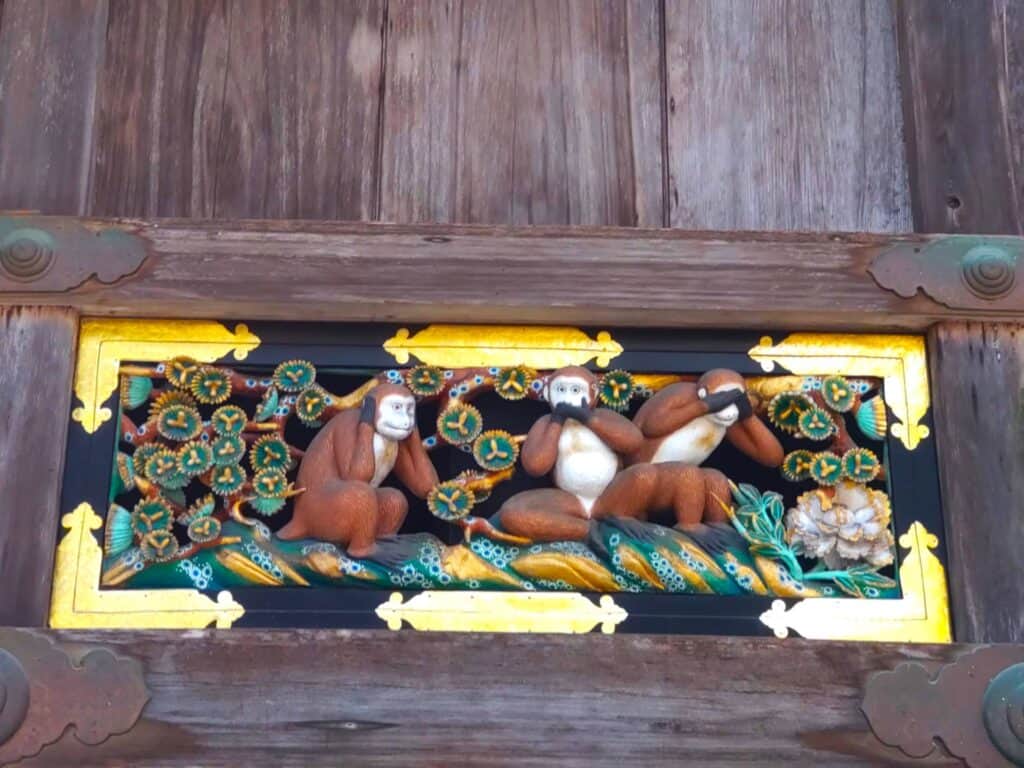
- The Three Wise Monkeys: Carved on the Sacred Stable. “See no evil, hear no evil, speak no evil.” They symbolize the pure upbringing of children.
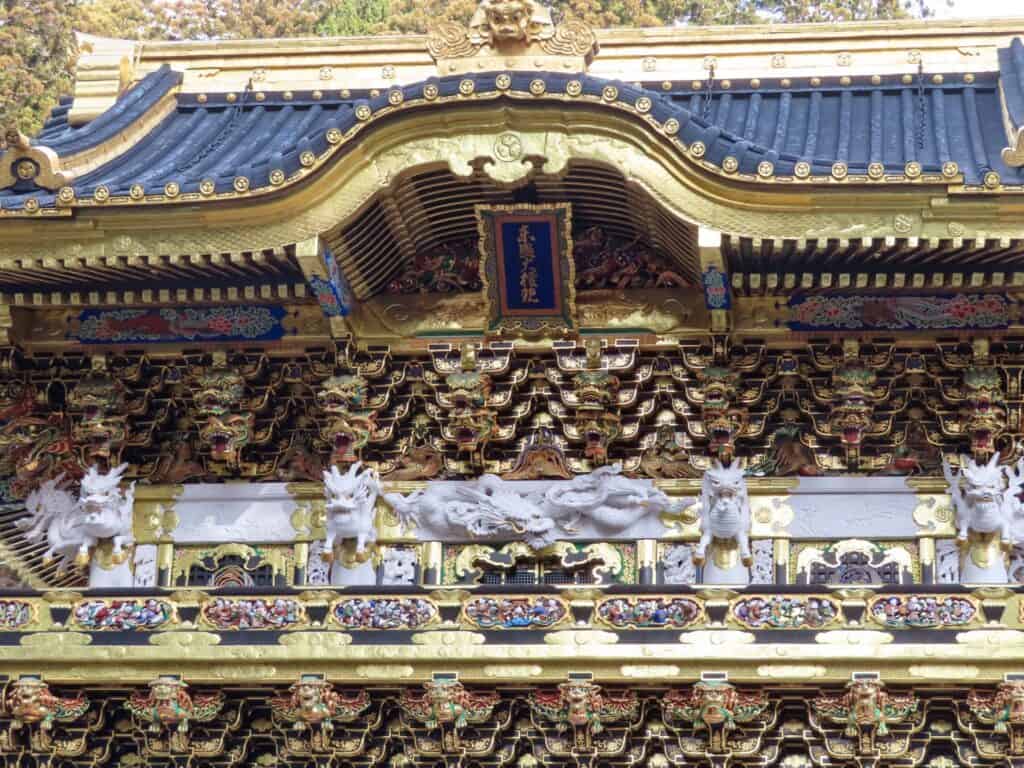
- Yomeimon Gate: A National Treasure often called the “Sunset Gate” because it is so beautiful you could gaze at it until the sun goes down. It features over 500 carvings.
- The Sleeping Cat (Nemuri-neko): A tiny carving above the East Corridor. It symbolizes peace—because the cat is sleeping, the sparrows (the common people) are safe.
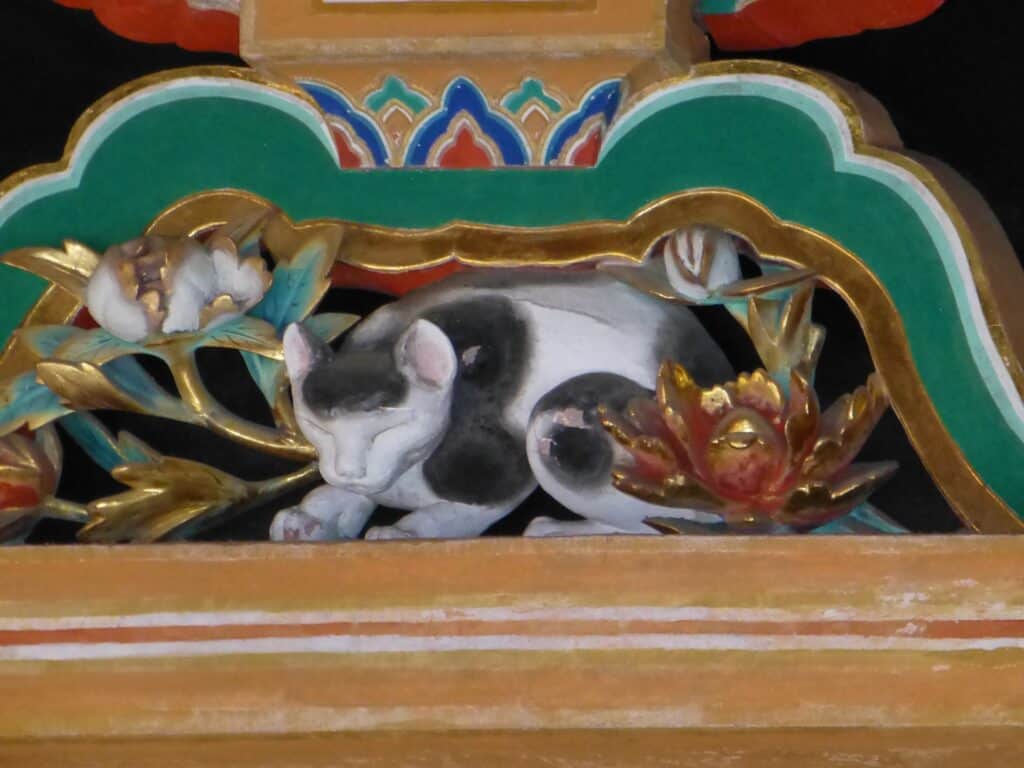
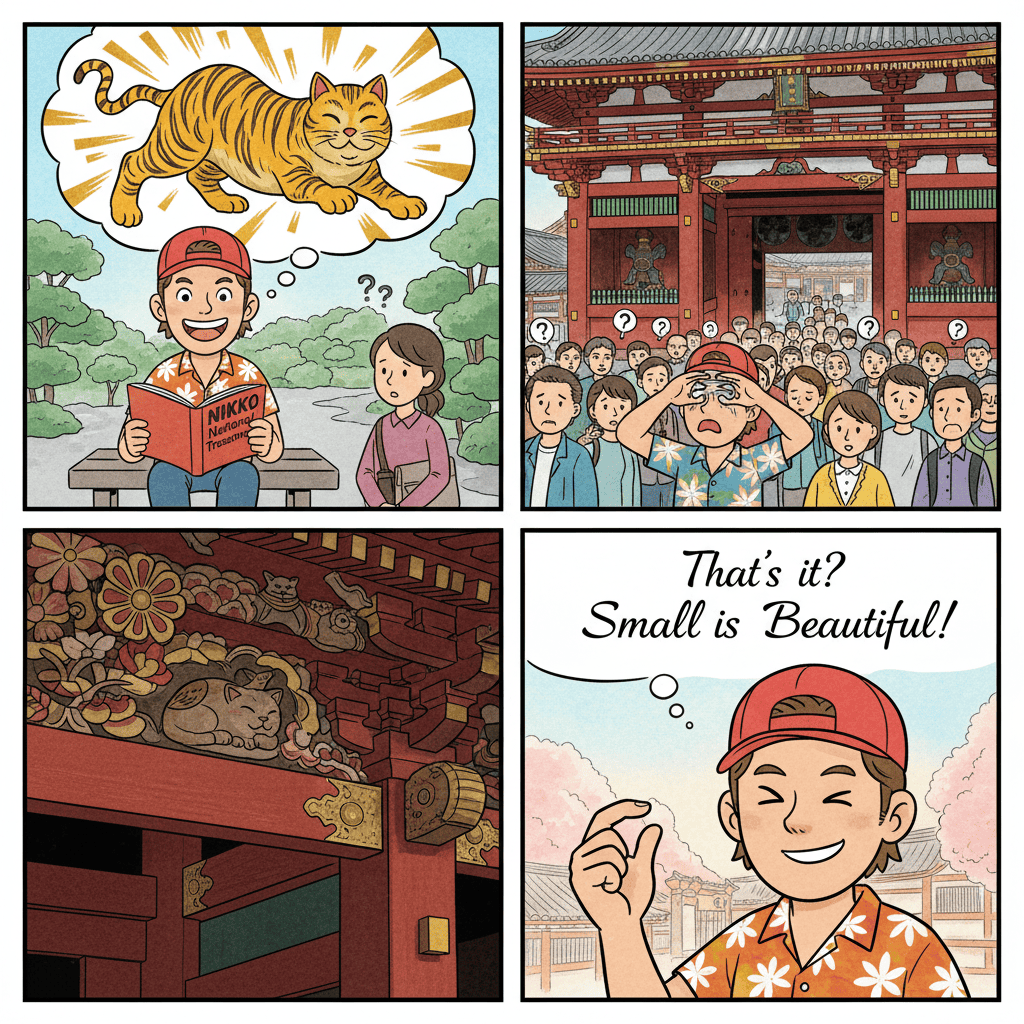
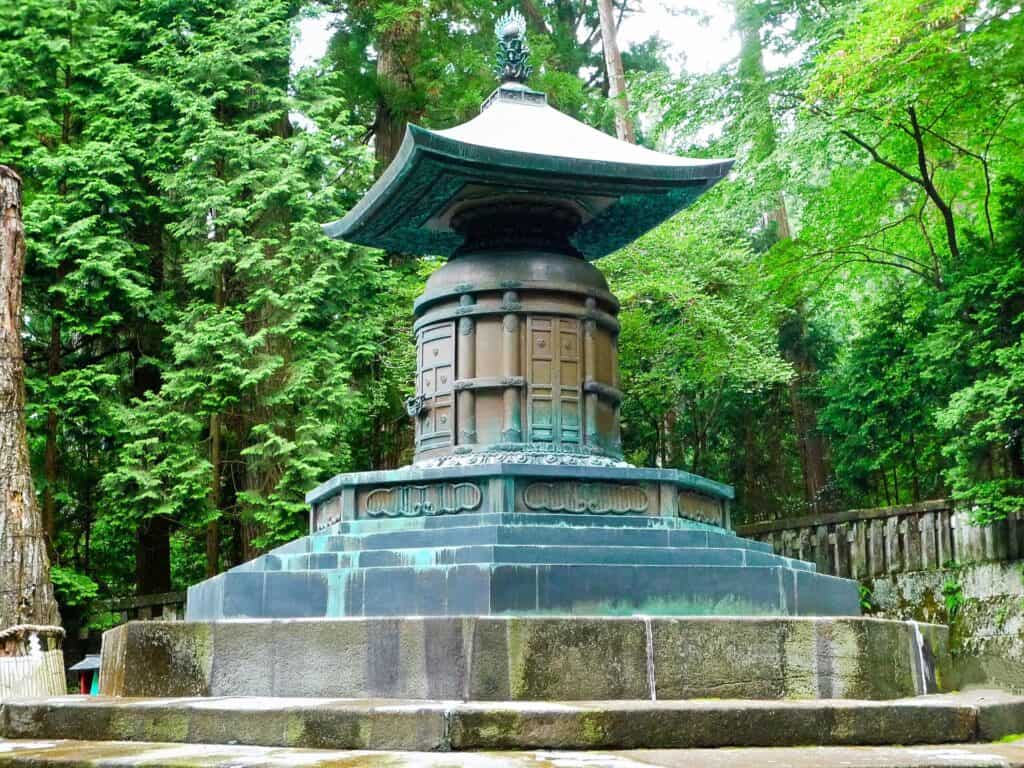
- The Tomb of Ieyasu: Located at the top of 207 stone steps. The atmosphere here changes completely—from the dazzling gold below to a quiet, solemn cedar forest.
ℹ️ Basic Info
- Access: Approx. 2 hours from Tokyo (Asakusa or Shinjuku) via Tobu or JR lines.
- Admission:
- Adults: ¥1,600 (Shrine + Museum set available for higher price)
- Note: Prices are subject to change, so please check locally.
- Hours:
- Apr–Oct: 8:00–17:00
- Nov–Mar: 8:00–16:00
- Time Required: 2 to 3 hours just for the shrine complex..
Other Noteworthy Attractions
If you have additional time, consider these fascinating sites that complement the main Toshogu experience:
Yakushido Hall (The Crying Dragon)
Overview: Famous for its unique acoustic phenomenon, this hall belongs to Rinnoji Temple but is located within the Toshogu complex near Yomeimon Gate.
What to See: Look up to admire the large dragon painting spanning the ceiling. When visitors clap their hands directly beneath it, the hall’s special acoustic properties create a distinctive “keen” echoing sound that resonates for several seconds—hence the name “Crying Dragon.” This architectural marvel demonstrates the advanced understanding of acoustics in 17th-century Japan.
Preview
Access
From Tokyo to Nikko
From Shinjuku to Nikko: Journey takes 2-3 hours. Fares range from 3,000-4,000 yen for limited express trains and about 2,000 yen for local trains. Limited express typically takes 2 hours, but can take up to 3 hours depending on timing, so checking timetables is essential. Local trains take approximately 3 hours.
From Asakusa to Nikko: Fares range from 2,800-3,100 yen for limited express trains and about 1,400 yen for local trains. Travel time is similar to the Shinjuku route. The Tobu Railway “Spacia” limited express offers a café car and spacious seating comparable to Shinkansen trains, providing a more comfortable journey than the Shinjuku route.
Budget travel tip: Purchase Tobu Railway shareholder courtesy tickets (Tobu Tetsudo Kabunushi Yutai Jyosha-Sho) at discount ticket shops in major cities. These cost 750-850 yen each. Two tickets would allow a round trip between Asakusa and Nikko for 1,500-1,700 yen. Note that these tickets typically have usage restrictions (often valid for only about three weeks from purchase). These tickets are for local trains only, with a one-way journey time of 3 hours.
From Nikko Station to Toshogu Shrine
Nikko has two adjacent stations—JR Nikko Station and Tobu Nikko Station—though most tourists arrive at Tobu Nikko Station. The distance to Toshogu Shrine is approximately 2.3 kilometers.
On foot: Takes about 40 minutes. The route is lined with shops and points of interest, but includes a steep uphill section toward the end, making it quite strenuous.
By taxi: Taxi stands are available in front of both JR and Tobu Nikko stations. A ride to Toshogu’s Omotemon (Main Gate) costs around 1,200 yen and takes about 5 minutes. Note that calling a taxi costs more (approximately 1,700 yen). Taxis are recommended for groups, especially given the uphill terrain.
By bus: Bus stops are located directly in front of both stations. Buses to the shrine area run frequently (3-4 per hour) between 9 AM and 1 PM. Ask the driver for “Kami-Hashi” or “Yasukawa-cho” to confirm the route. Three stops serve the Toshogu area: