
Introduction
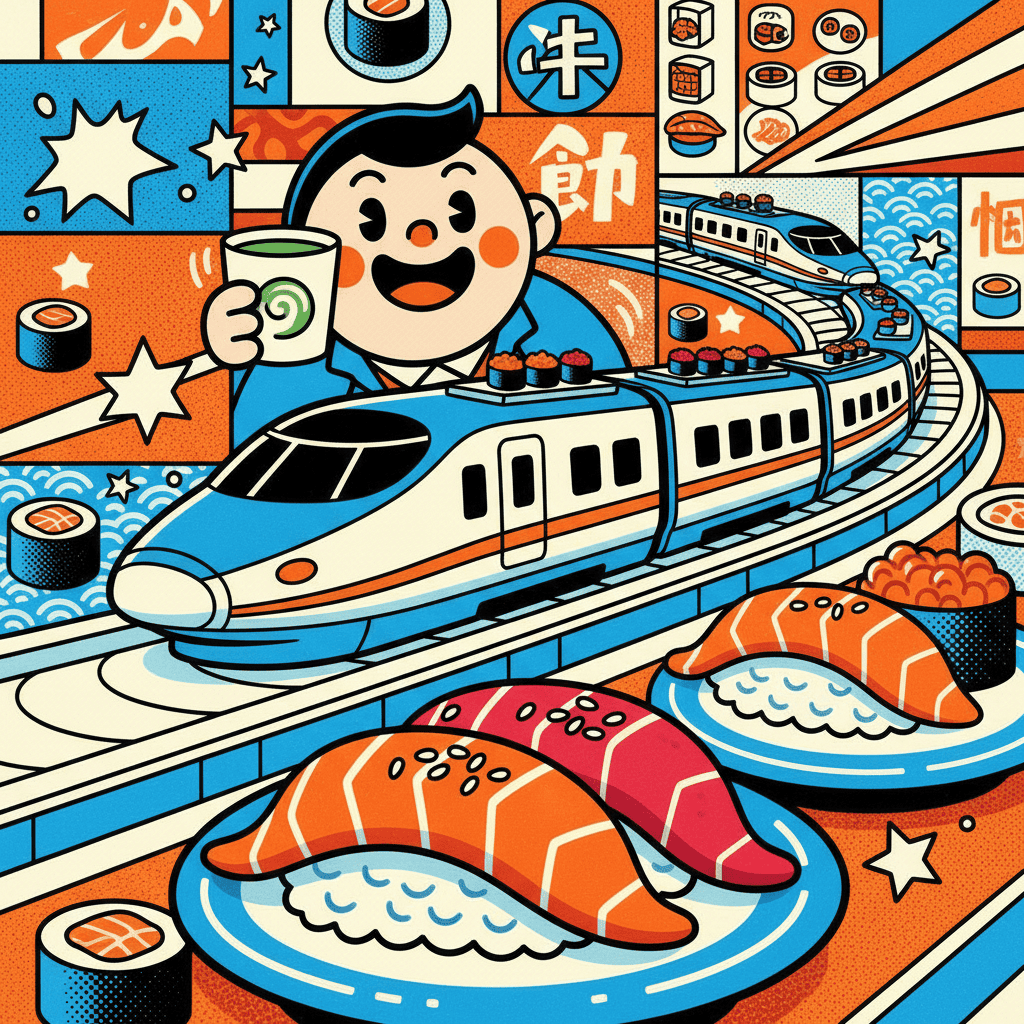
Welcome to the world of Kaiten-zushi (回転寿司)! For travelers, visiting a conveyor belt sushi restaurant isn’t just a meal; it’s one of the most exciting, affordable, and distinctly Japanese entertainment experiences you can have.
Whether you are a solo traveler, a couple, or a family with kids, this guide covers everything from the history and rules to the “Big 3” chains you need to know.
👁️ Kajino’s Eye: It’s a “Theme Park,” Not a Shrine
Many tourists come to Japan thinking they must eat sushi in a quiet, serious wooden shop. Forget that image for a moment.Kaiten-zushi is not about “meditation.” It is a Here is the truth: We locals don’t just eat raw fish here. My favorite guilty pleasure? “Corn Mayo” (Corn salad ship) and “Hamburger Sushi.” Yes, it sounds crazy, but at Kaiten-zushi, anything goes. Don’t be a sushi snob here—enjoy the chaos and the incredible price tag!
Why order Ramen at a Sushi place? You might think ordering ramen at a sushi restaurant is a mistake. But in Japan, it’s a secret hack. Sushi chains handle massive amounts of fresh fish daily. They use the leftover fish bones and heads (especially Sea Bream/Tai) to make the soup stock (Dashi). This creates a rich, seafood-infused broth that regular ramen shops can’t replicate easily. It’s sustainable, cheap (around ¥400), and incredibly delicious. Don’t underestimate it!
📖 What is Kaiten-Zushi?
Kaiten-zushi was invented in 1958 by Yoshiaki Shiraishi in Osaka. Struggling to staff his small restaurant, he was inspired by beer factory conveyor belts and created a system to bring sushi directly to customers. Today, it has evolved from a “cheap alternative” to a high-tech dining experience where quality rivals traditional counters.
🤖 The System: How to Navigate a Sushi Shop
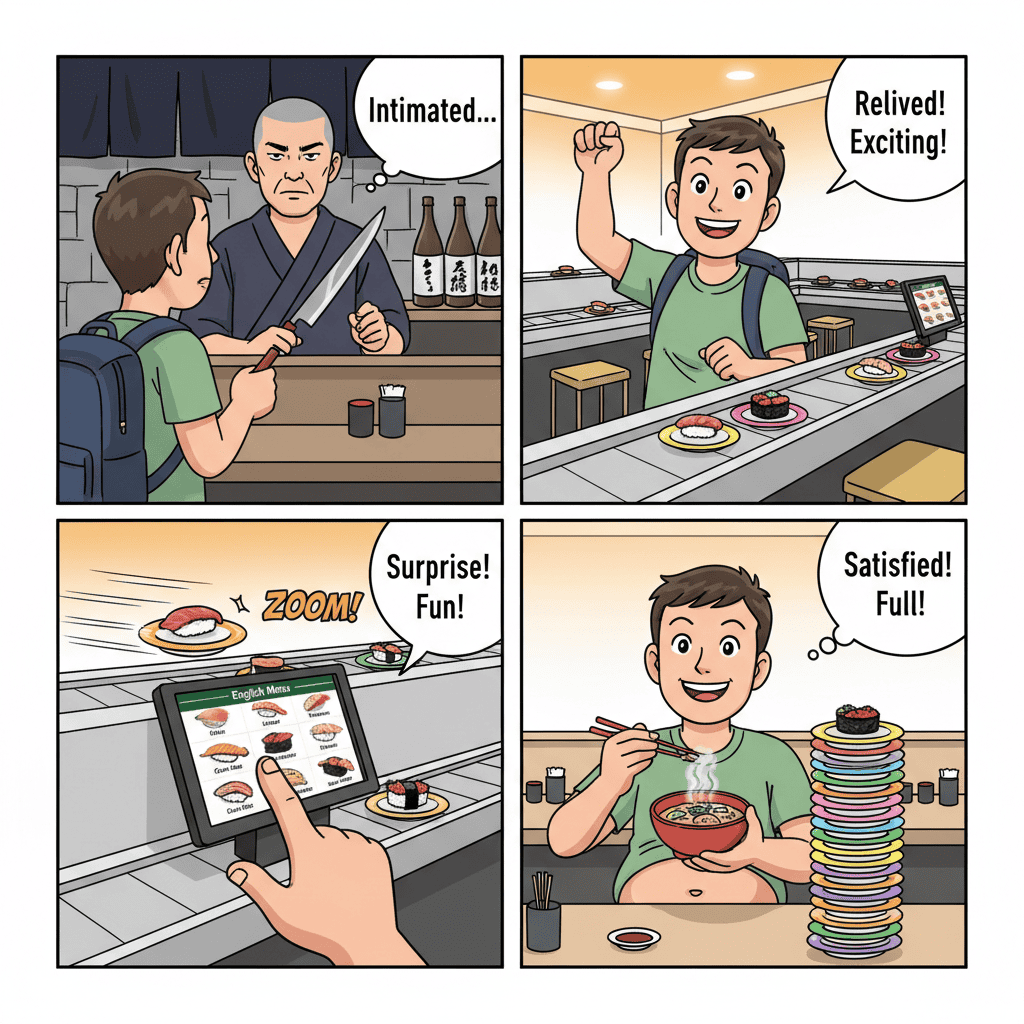
Don’t be intimidated by the technology. Here is the standard flow at almost any major chain (Sushiro, Kura, Hamazushi):
1. Getting a Seat
- Use the automated kiosk at the entrance.
- Select the number of people and choose “Table” (Box seat) or “Counter.”
- Take the printed ticket with your seat number.
2. The Setup At your table, everything is self-service:
- Green Tea: Put matcha powder in a cup and fill it with hot water from the tap at your table.
- Ginger: Feel free to take as much pickled ginger as you like from the box.
- Chopsticks & Sauce: Usually found in a box on the table or a shelf above it.
3. Two Ways to Order
- The Belt: You can pick plates freely from the rotating belt. (Note: Due to hygiene trends, some chains have stopped rotating food and only use the belt for orders).
- The Tablet: This is the best method. Switch the language to English, browse the menu, and order. Your sushi will arrive on a separate “Express Lane” and stop right at your table.
4. Checkout
- Press the “Check Out” or “Call Staff” button on the tablet.
- Staff (or an automated scanner) will count your plates.
- Take your bill to the self-checkout register near the exit.
🏆 The “Big 3” Chains: Which Should You Choose?
While there are thousands of shops, three major chains dominate Japan. Each has a unique personality.
1. Sushiro (スシロー) – The King of Quality
If your priority is fish quality, go here. Sushiro is the market leader. They are famous for their high sourcing standards. Their tuna and seasonal campaigns (like Hokkaido Scallops or Fatty Tuna festivals) are top-tier.
- Best for: Serious sushi lovers who want the best taste for the price.
2. Kura Sushi (くら寿司) – Fun & Health Conscious
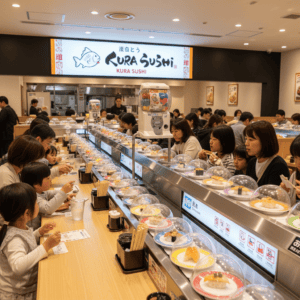
If you have children or worry about additives, go here. Kura is famous for the “Bikkura Pon” game (every 5 plates gives you a chance to win a capsule toy). They also use no artificial preservatives or colorings in their food.
- Best for: Families with kids and health-conscious diners.
3. Hamazushi (はま寿司) – The Variety Expert
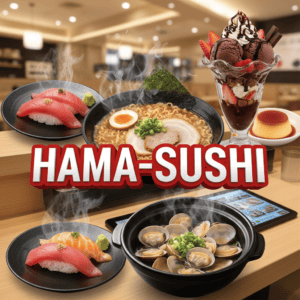
If you want meat sushi, ramen, and vast options, go here. Hamazushi has an incredible menu that goes beyond fish. Their roast beef sushi, duck, and extensive side menu (ramen, fries) make it a “family restaurant” that happens to serve sushi.
- Best for: People who want variety or aren’t huge fans of raw fish.
🛑 5 Golden Rules of Etiquette
Even casual places have rules. Keep these in mind to look like a “Tokyo Smart” local:
- Never touch the belt: Unless you are taking the plate. Don’t touch a plate and put it back.
- Don’t take ordered food: If a plate is on a special “Order Stand” or plays a melody, it belongs to someone else. Only take what you ordered.
- No Wasabi inside: Most chains now serve sushi sabi-nuki (without wasabi). You need to add wasabi yourself from the packets or jars on the table.
- Pickled Ginger is a palate cleanser: Eat it between different fish to refresh your taste buds.
- Separate your trash: If you order ramen or desserts, don’t stack those bowls with the sushi plates.
The Future: The “Beltless” Revolution
Interestingly, the “conveyor belt” is slowly disappearing. To reduce food waste and ensure freshness, many new stores (especially Sushiro and Hamazushi) are moving to an “Order Only” system. In these shops, nothing rotates. Food only zooms to your table when you order it. It’s faster, fresher, and more hygienic.l!
⭐ Popular Items & Pricing
Most Popular Items for Beginners
If you don’t know what to order, try these standard favorites:
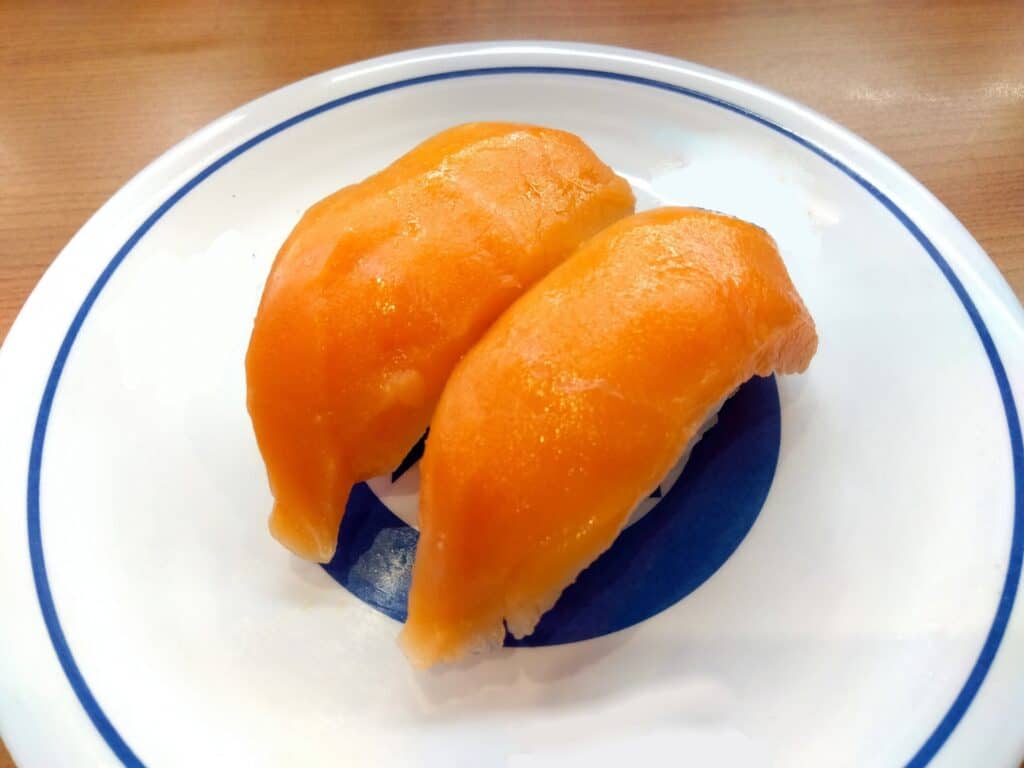
Salmon (サーモン)
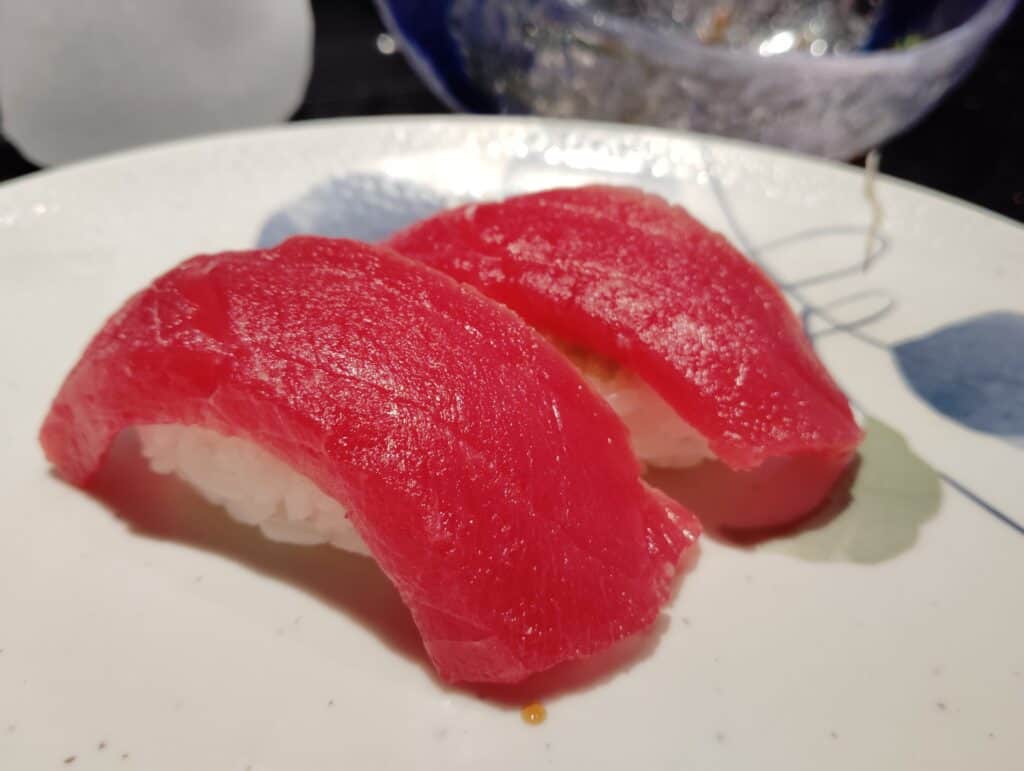
Tuna (マグロ)
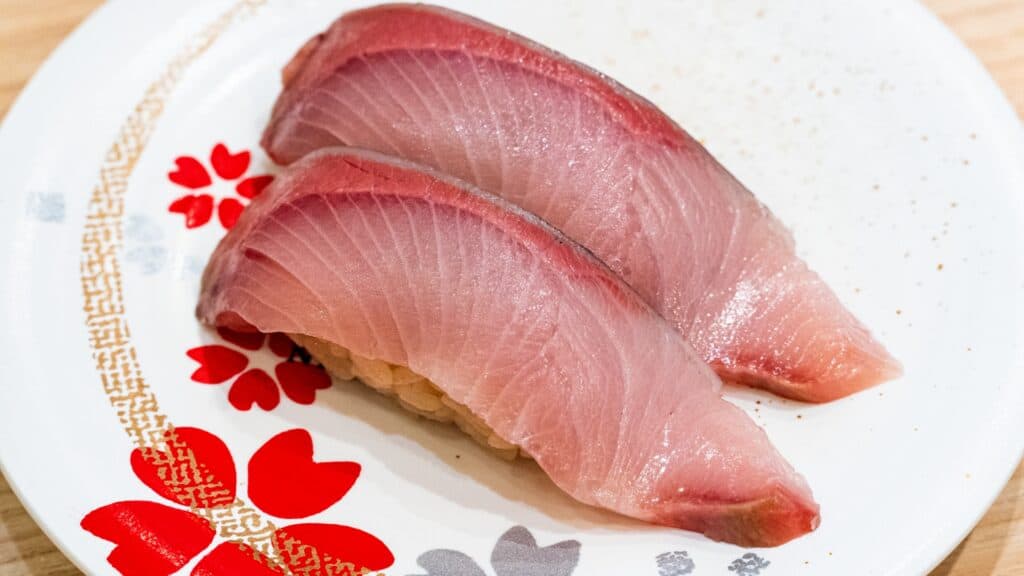
Yellowtail (ハマチ/ブリ)
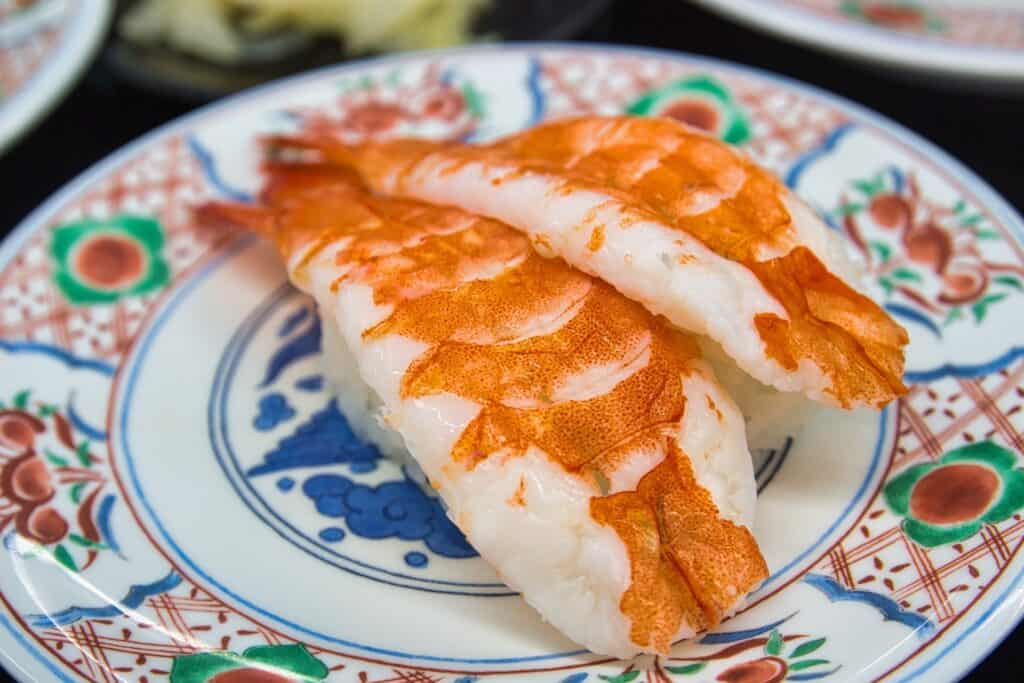
Shrimp (エビ)
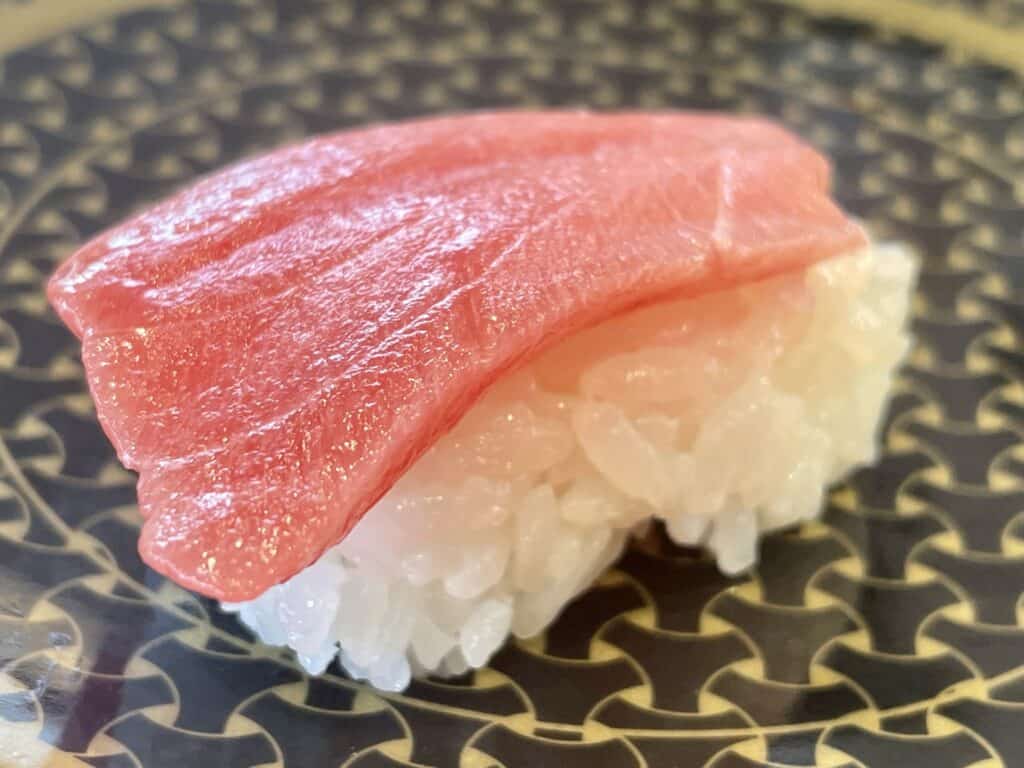
Medium-fatty Tuna (中トロ)
Understanding Sushi Plates and Pricing
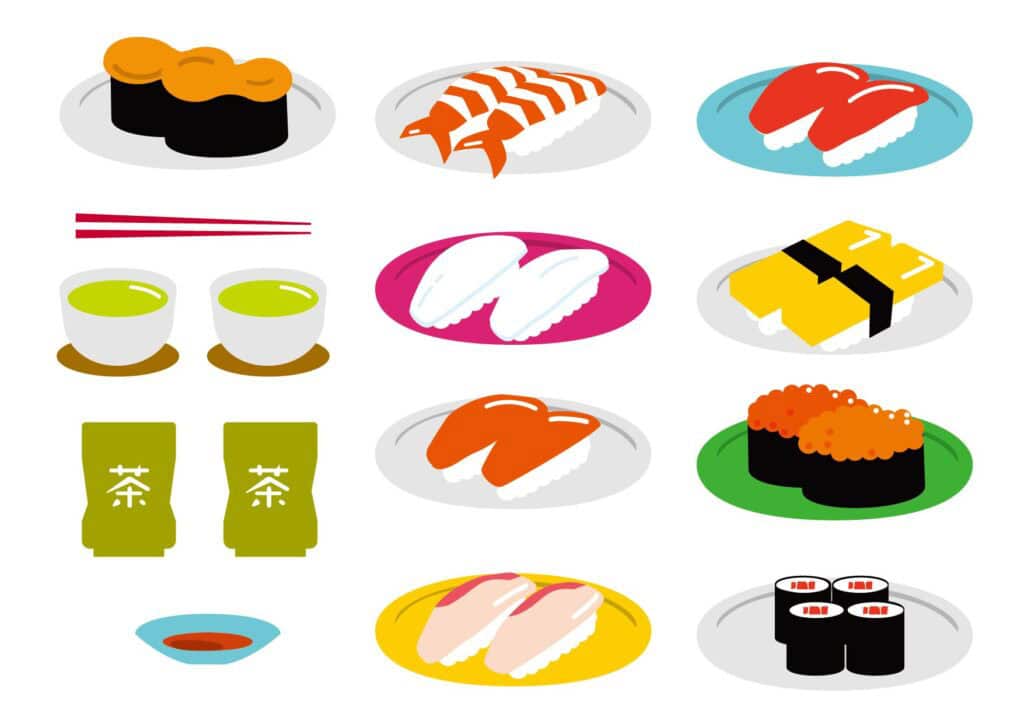
Most conveyor belt sushi restaurants use a color-coded plate system to indicate prices:
- Plain plates (usually white or black): ¥120-150
- Gold or premium-colored plates: ¥200-300
- Special design plates: ¥400+
The plates are automatically counted at the end of your meal using RFID technology, making checkout quick and accurate.
💎 Local Secrets: Beyond the Big 3
The Hidden Gem: Triton (トリトン)
If you are willing to pay a little more (¥3,000–¥4,000) for vastly superior quality, look for Toriton. Originating from Hokkaido, their fish is incredibly fresh, and the portions are huge.
- Locations: Ikebukuro, Shinagawa, Tokyo Solamachi (Skytree).
- Warning: The lines are long, but it is worth it.
Regional Spotlight: Toyama
This is a bit of trivia for sushi fans. While Tokyo is famous, many Japanese foodies believe Toyama Prefecture has the best Kaiten-zushi in Japan. If your travels take you there (it is accessible by Shinkansen), try the local chains. The “White Shrimp” (Shiro-ebi) and “Firefly Squid” (Hotaru-ika) are delicacies you can’t easily find in Tokyo.
Summary
- Budget: ¥1,500 – ¥2,500 per person.
- Time: 45 – 60 minutes.
- English: Available at almost all major chains.
Now that you know the basics, it’s time to choose your destination. Check out our specific guides above to find the perfect shop for your next meal!
Prices and information updated as of January 2025. Check official websites for current prices and locations.






コメント
コメント一覧 (2件)
[…] Sushi 101: Complete Guide to Conveyor Belt Sushi in Japan Are you planning a trip to Tokyo and curious about Japan's famous conveyor belt sushi restaurants? […]
[…] offering affordable and accessible sushi experiences for … あわせて読みたい Sushi 101: Complete Guide to Conveyor Belt Sushi in Japan Are you planning a trip to Tokyo and curious about Japan's famous conveyor belt sushi restaurants? […]