Intro
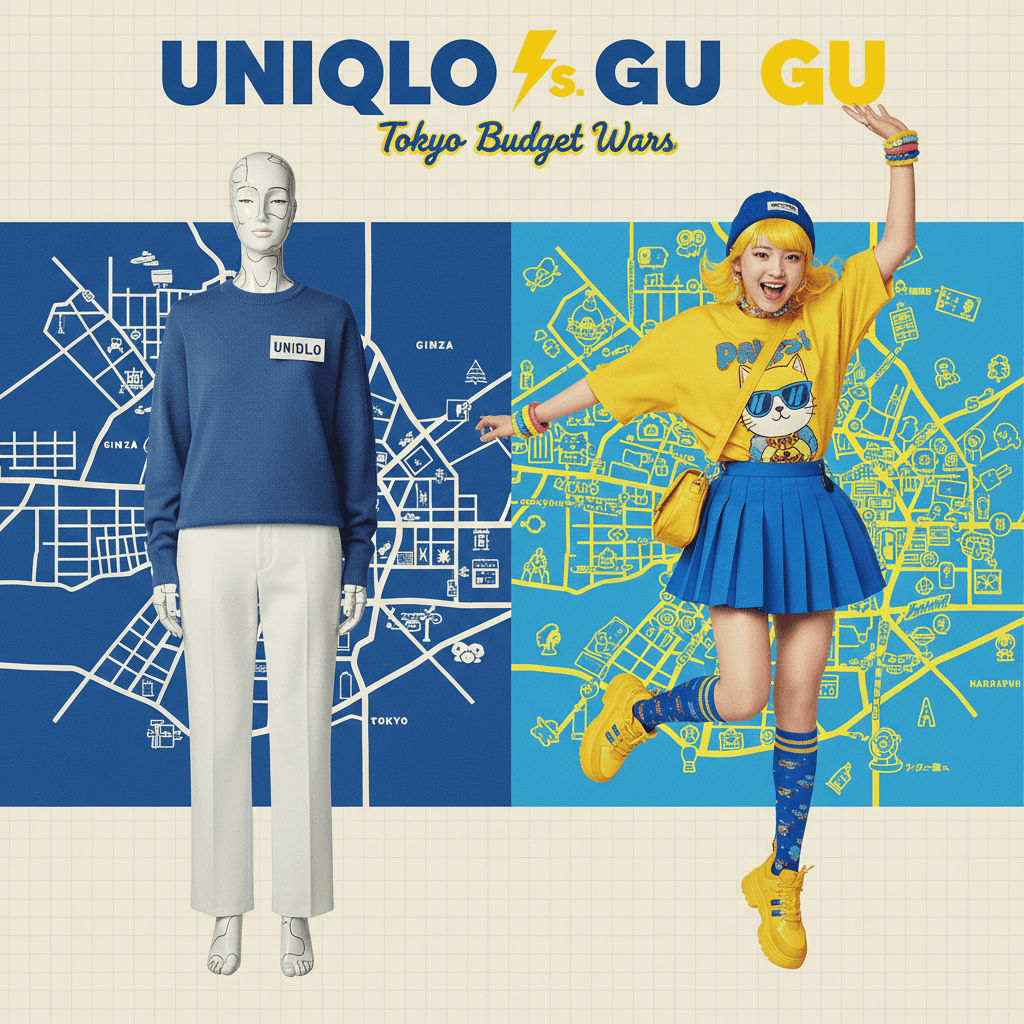
If UNIQLO is the “Honor Student” of Japanese fashion—reliable, high quality, and loved by everyone—then GU is the “Rebellious Little Sister.” She is trendy, colorful, significantly cheaper, and changes her mood (style) every few weeks. Many tourists visit UNIQLO and think, “This is cheap!” But for local students and young workers in Tokyo, UNIQLO has actually become a bit expensive. Their sanctuary is GU. Here is the deep story behind the brand that rose from a massive business failure to become the new king of budget fashion.
👁️ Kajino’s Eye: “Too Expensive for Me”
Let me be honest: I have never bought clothes at GU. Why? Because I am an old man and GU is a kingdom for Gen Z (teens and 20s). Walking in there feels like crashing a high school party.
However, I realized the power of this brand during a conversation with a young Vietnamese worker here in Japan. He was wearing a very stylish outfit. “Is that UNIQLO?” I asked. He shook his head and smiled. “No, Mr. Kajino. UNIQLO is too expensive for me. I cannot touch it. This is all GU.”
That moment hit me. UNIQLO has evolved into a global standard of quality (“LifeWear”), but in doing so, it has left the “ultra-budget” zone. GU has filled that void. It is not just about clothes; it is a lifeline for young people who want to look good without spending their rent money.
🆚 The Showdown: GU vs. UNIQLO vs. Workman
If you are confused about where to shop, here is the “Smart Tokyo” breakdown based on your needs.
1. GU vs. UNIQLO (The Sibling Rivalry)
Both are owned by Fast Retailing, but their DNA is different.
| Feature | UNIQLO | GU |
|---|---|---|
| Concept | “LifeWear” (Timeless essentials) | “Freedom” (Instant Trends) |
| Target | All ages (0 to 100 years old) | Gen Z & Millennials (10s – 30s) |
| Quality | High durability, high-tech fabrics | Good for one or two seasons |
| Price | Affordable (¥1,990 – ¥12,900) | Ultra-Cheap (¥990 – ¥3,990) |
| Vibe | Basic, Simple, Clean | Colorful, Pop, Trendy |
- Go to UNIQLO if: You want a down jacket to last 5 years or high-tech innerwear (Heattech).
- Go to GU if: You want to try a trendy baggy style or buy a full outfit (Shirt + Pants + Shoes) for under ¥5,000 ($35).
2. GU vs. WORKMAN (The Budget Kings)
Both are cheap, but their purpose is opposite.
- Workman: Built for Survival.
- Focus: Functionality (Waterproof, Fire-resistant, Warmth).
- Origins: Construction sites.
- Style: Rugged, Outdoorsy.
- GU: Built for Social Media.
- Focus: Softness, Silhouette, Colors.
- Origins: Fast Fashion.
- Style: Relaxed, “Chef Pants,” Oversized shirts.
📉 The “3 Billion Yen” Failure: How GU Was Born

This is a story you won’t find on the price tags. GU’s success is built on one of Japan’s most spectacular business failures.
In 2002, Fast Retailing (UNIQLO’s parent company) started a vegetable business called “SKIP.” Why vegetables? They thought they could apply their supply chain efficiency to agriculture. The result? A disaster. Within 1.5 years, they lost 3 Billion Yen ($20 million). The vegetables rotted, and the business collapsed.
The man in charge, Mr. Osamu Yunoki, was ready to resign. He went to the CEO, Tadashi Yanai (Japan’s richest man), to apologize. Yanai-san didn’t fire him. Instead, he said:
“One failure doesn’t matter. Use this experience. And… earn that money back.”
Mr. Yunoki took that pressure and was assigned to the struggling low-cost clothing division. He applied the lessons of “consumer impact” and launched ¥990 Jeans. They were a massive hit. He then shifted from copying Western trends to hiring Japanese designers to create “Tokyo Trends” specifically for Japanese body types. The vegetable business died so GU could live.
- Yanai’s Philosophy: “1 Win, 9 Losses.” You can fail 9 times as long as your 1 win is big enough to cover everything.
💡 Unique Features of GU
1. The Virtual Model “YU” GU is so focused on the future that they even created a virtual human model named “YU” for their advertisements. They developed her body type by averaging the measurements of random Japanese women to make clothes fit “real” people (though she looks perfect).
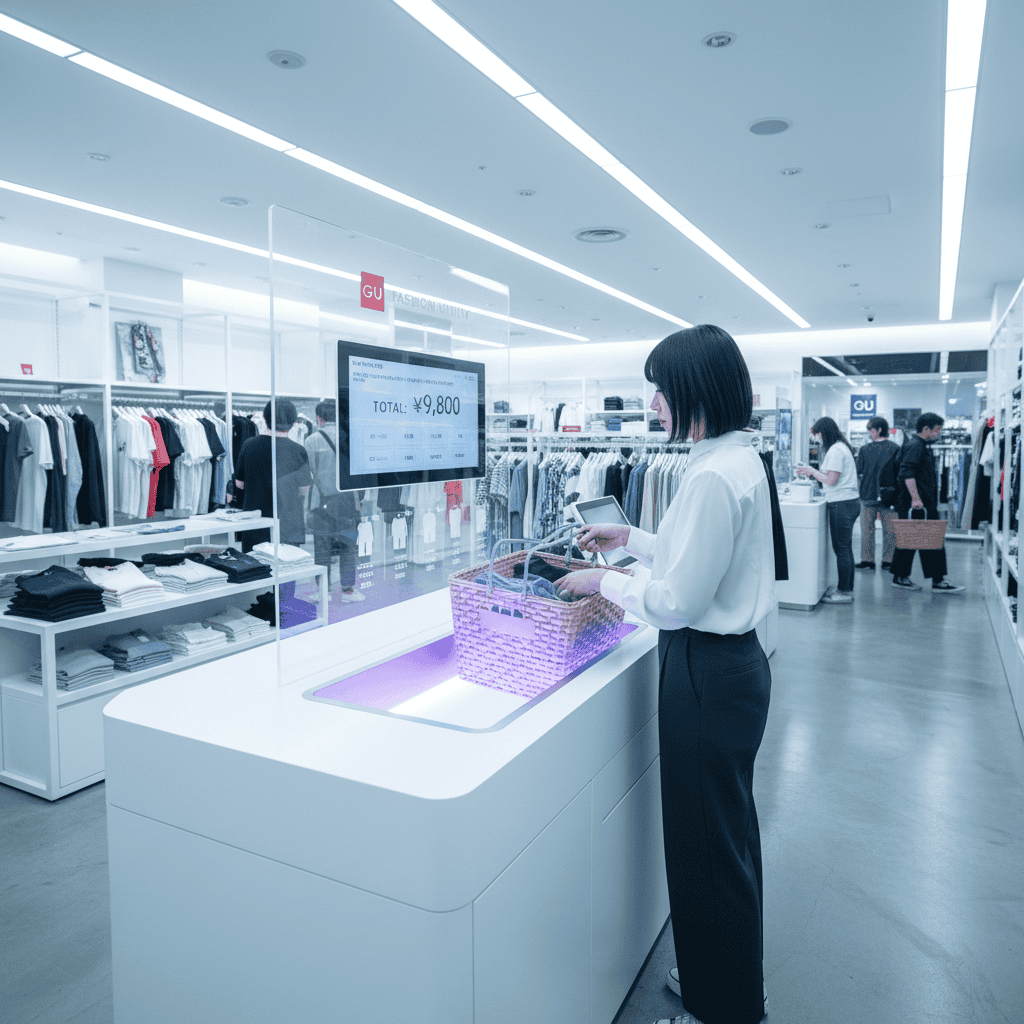
2. RFID Self-Checkout GU introduced this before almost anyone else. You don’t scan barcodes. You just drop your basket into a box at the register, and it instantly calculates the total using RFID tags. It feels like magic.
ℹ️ Basic Info / Maps / YouTube
<details> <summary>📍 Where to Find GU (Best Tourist Locations)</summary>
GU Ginza (Everything in one place)
- Located right next to UNIQLO Ginza. You can compare both brands in 10 minutes.
- Address: 5-7-7 Ginza, Chuo-ku
Google Map (Click here to expand)
GU Shibuya (The Center of Youth)
- The selection here is hyper-focused on what teenagers are wearing right now.
- Address: 31-2 Udagawa-cho, Shibuya (MEGA Don Quijote B1F)
Google Map (Click here to expand)
GU Shinjuku Flags
- Right next to the station, very convenient for a quick stop.
- Address: 3-37-1 Shinjuku (Flags 7F/8F)
Google Map (Click here to expand)
</details> <details> <summary>🎥 YouTube Preview</summary> (Place holder for embedded video link showing the store interior and “Chef Pants” section) </details>



コメント