
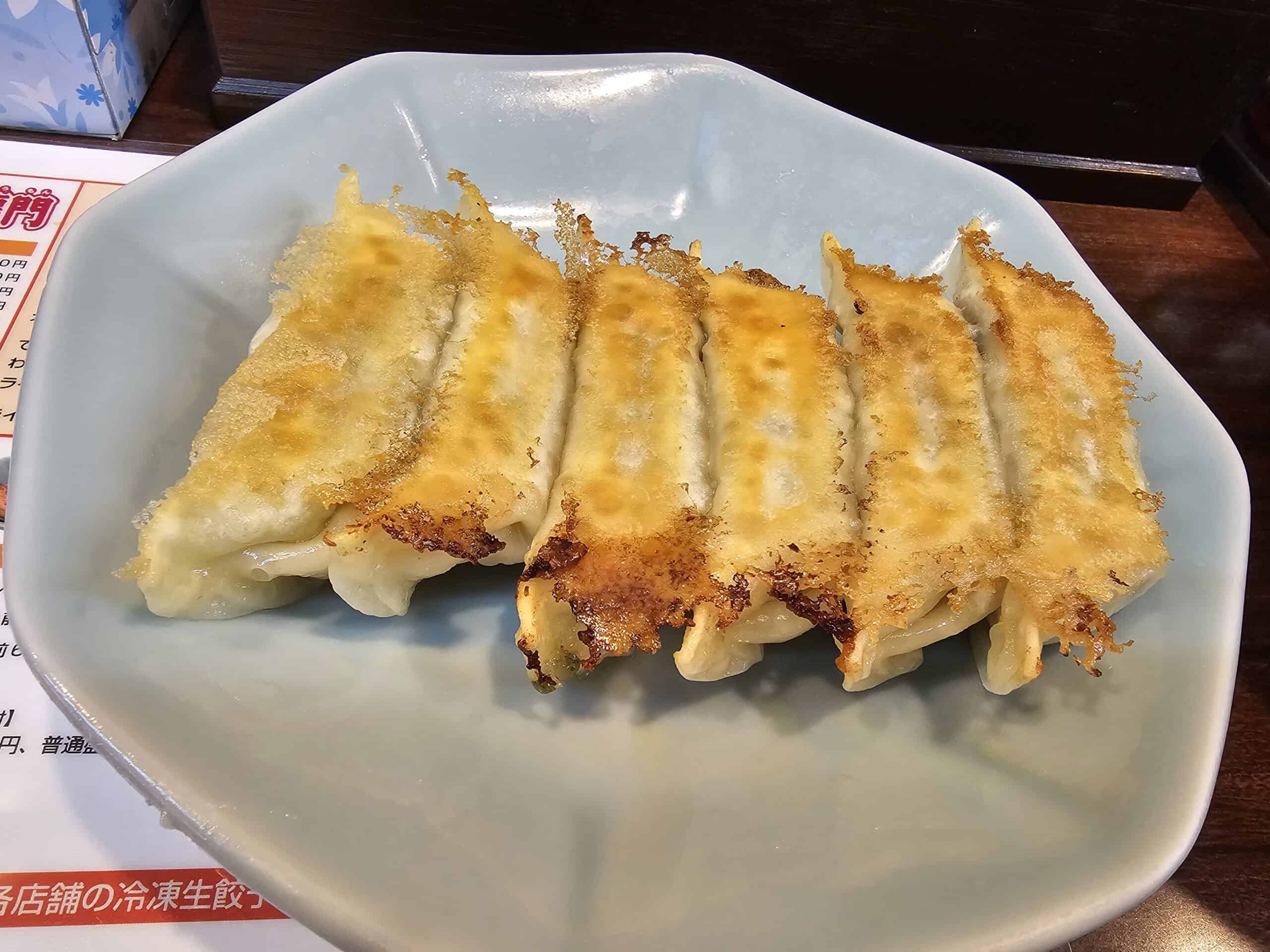
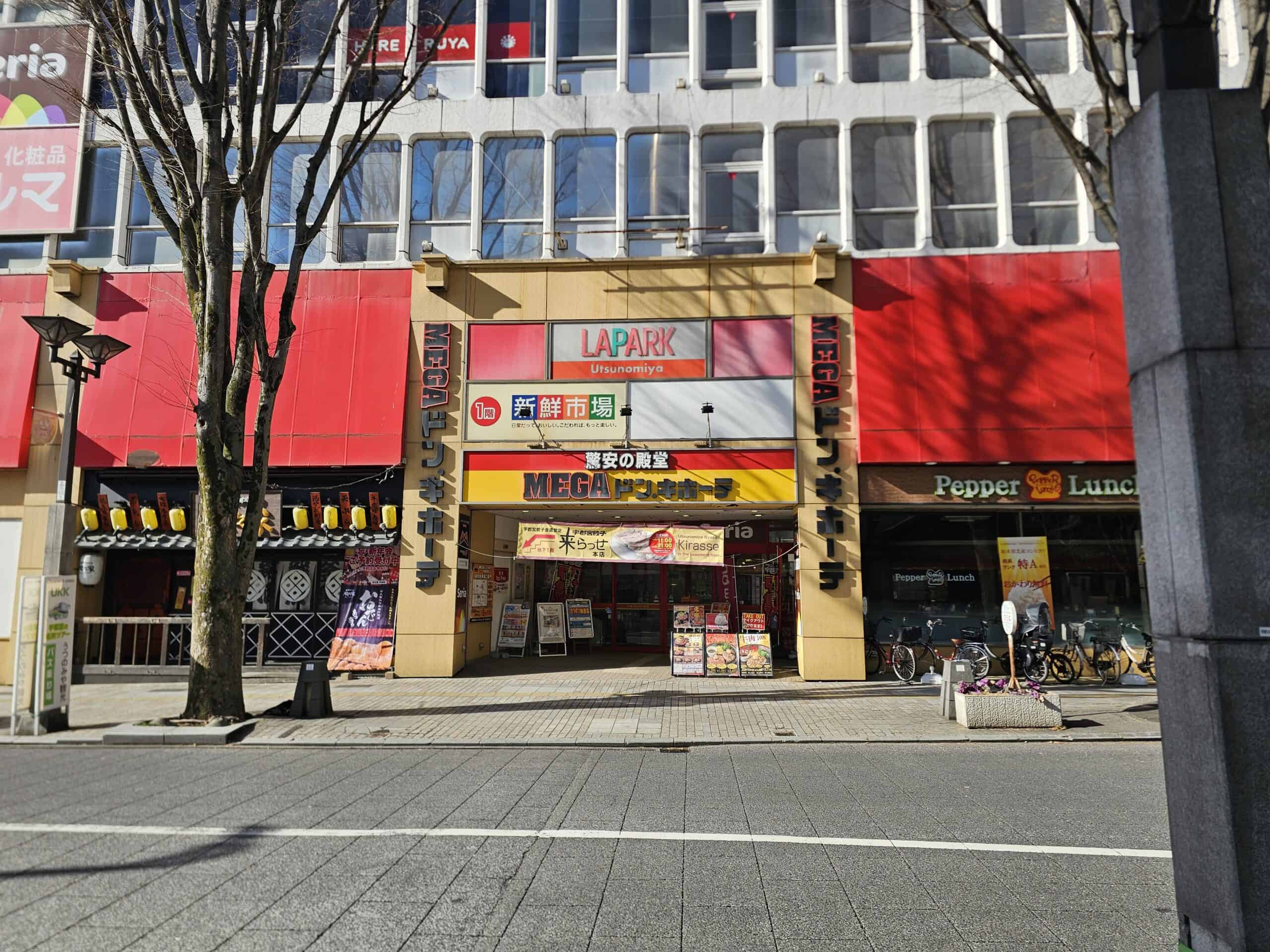
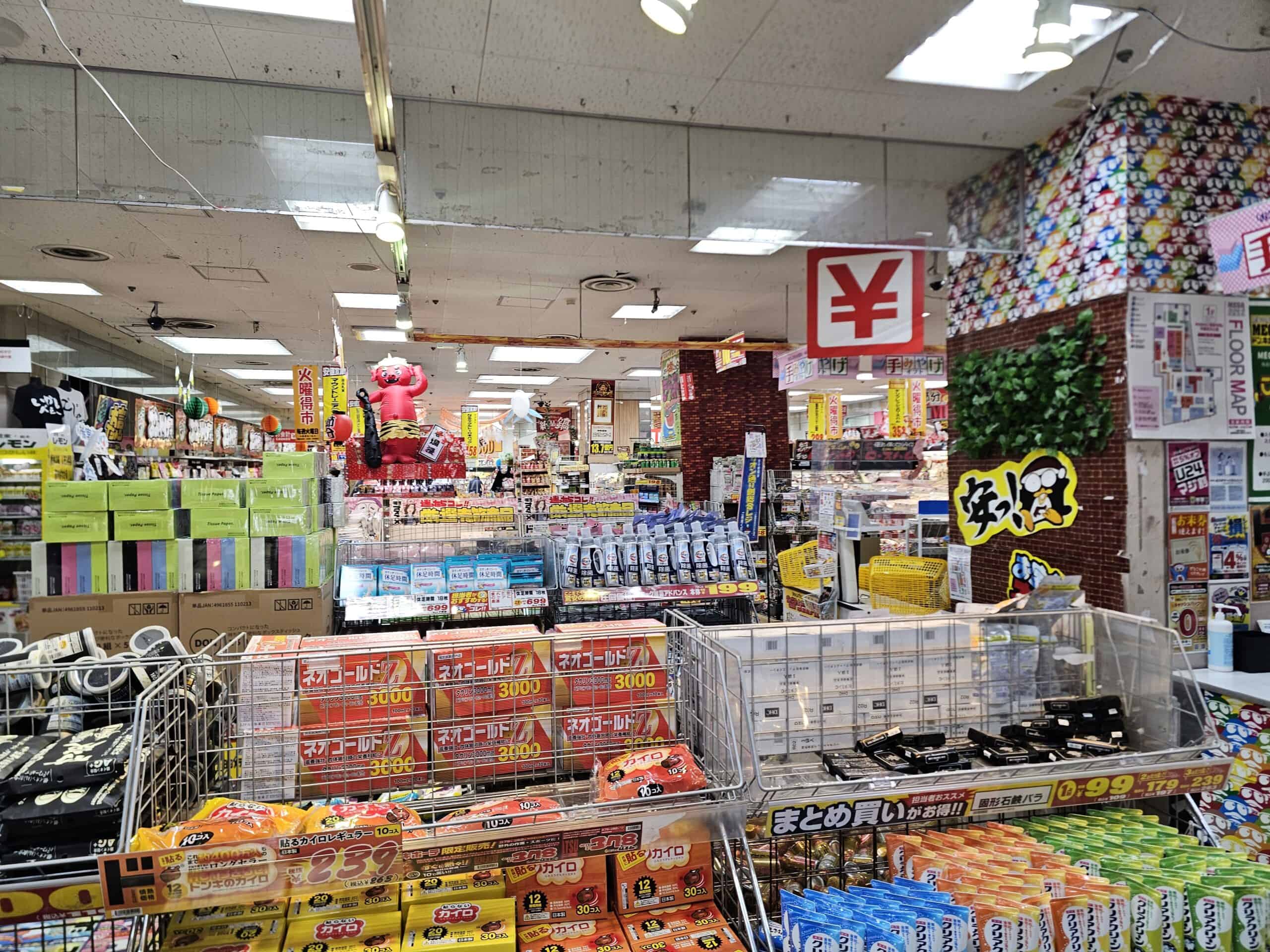
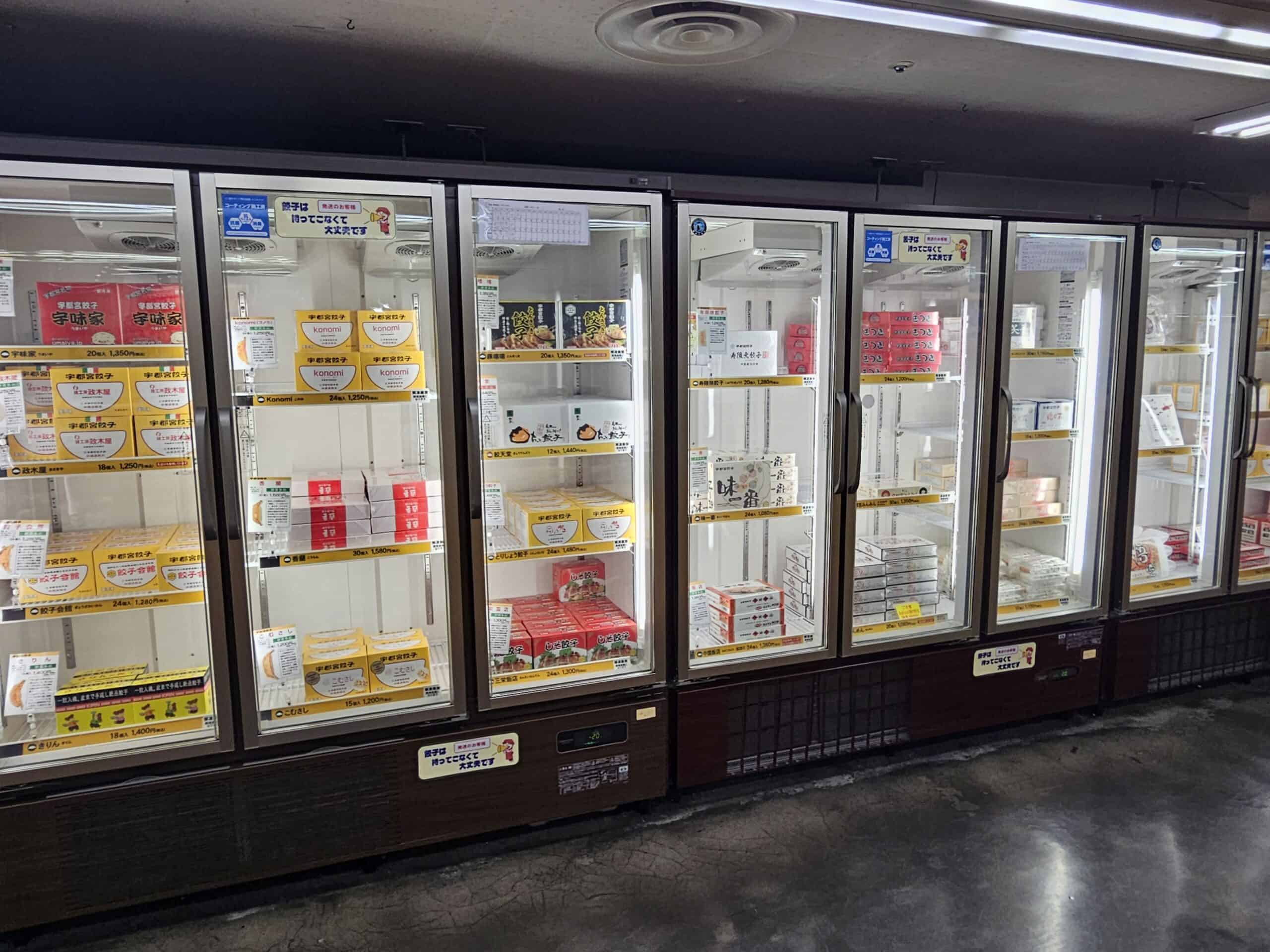
If you love Gyoza (and who doesn’t?), you must make the pilgrimage to Utsunomiya, the Holy Land of Gyoza. But with over 200 shops, where do you start? The answer is Kirasse. Located in the basement of a massive Mega Don Quijote, this is a “Gyoza Theme Park” where the city’s most legendary shops gather in one food court. Here is how to survive the queues and avoid the “Sauce Trap.”
👁️ Kajino’s Eye: The “Standard” is King
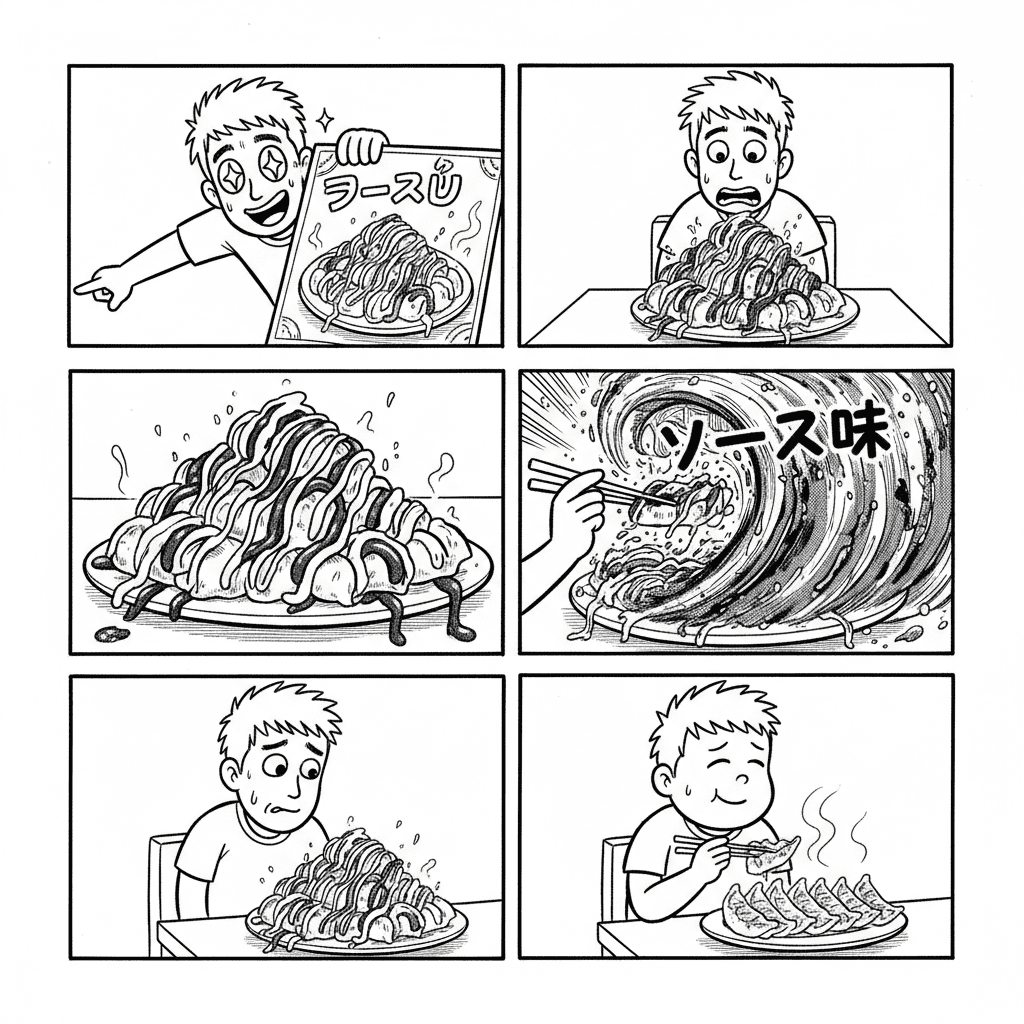
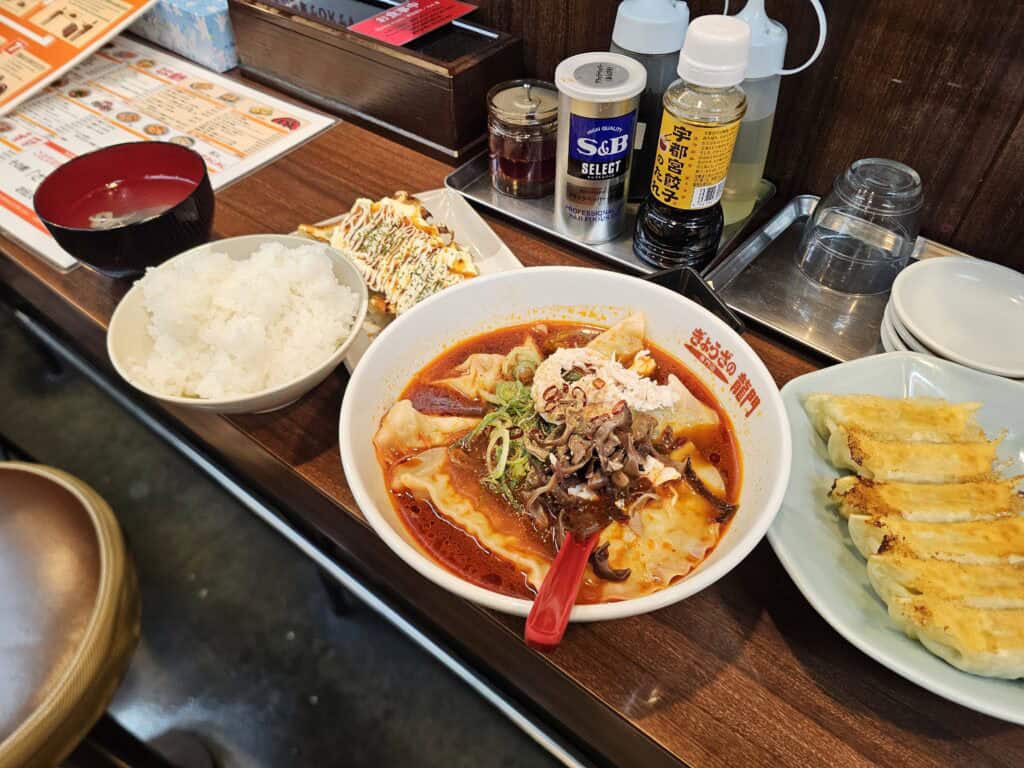
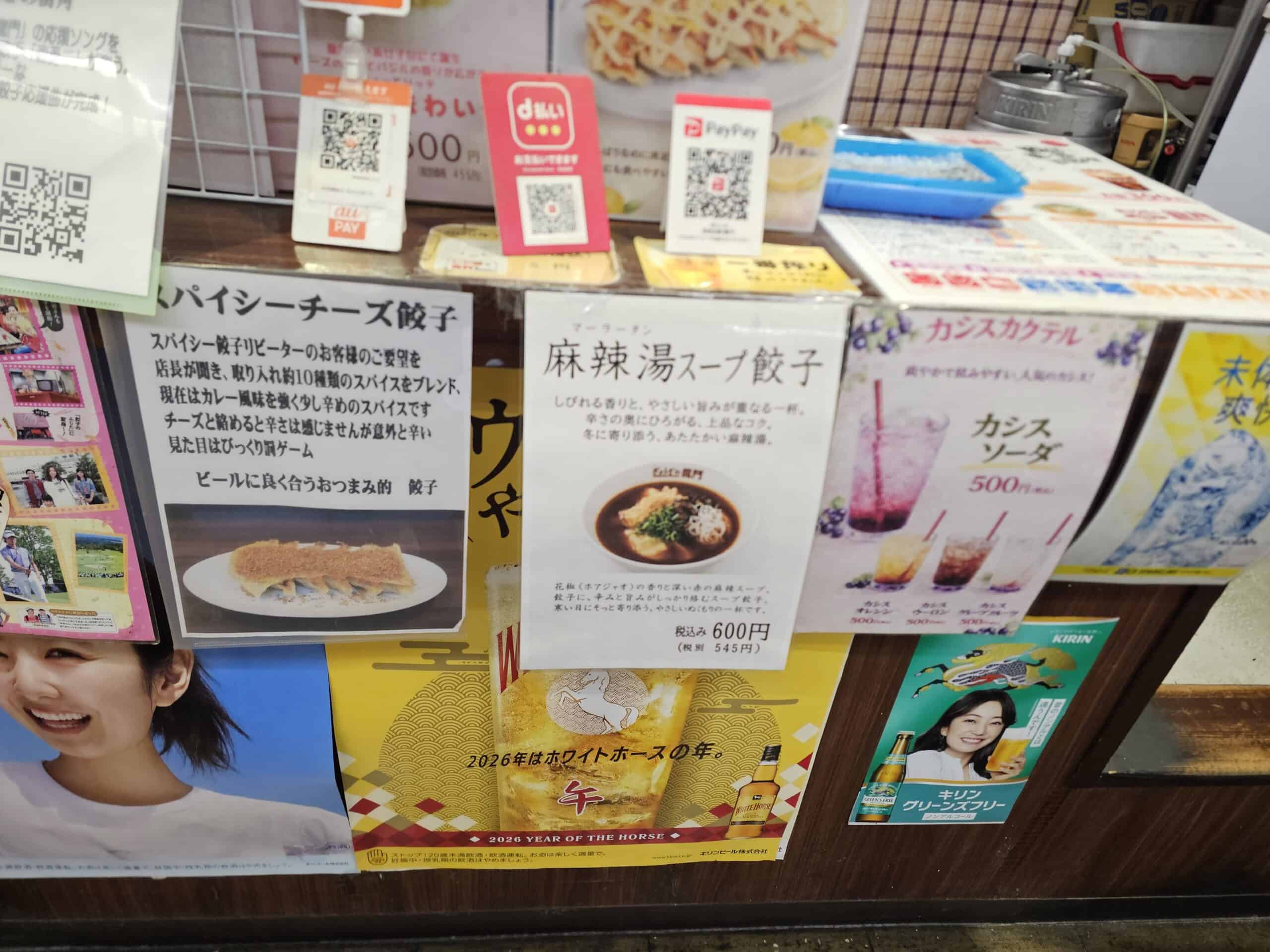
I made a mistake so you don’t have to. When I visited Kirasse, I got excited by the menu. I ordered “Teritama Gyoza” (Gyoza with egg salad and teriyaki sauce) and “Mala Soup Gyoza” (Spicy soup dumplings).
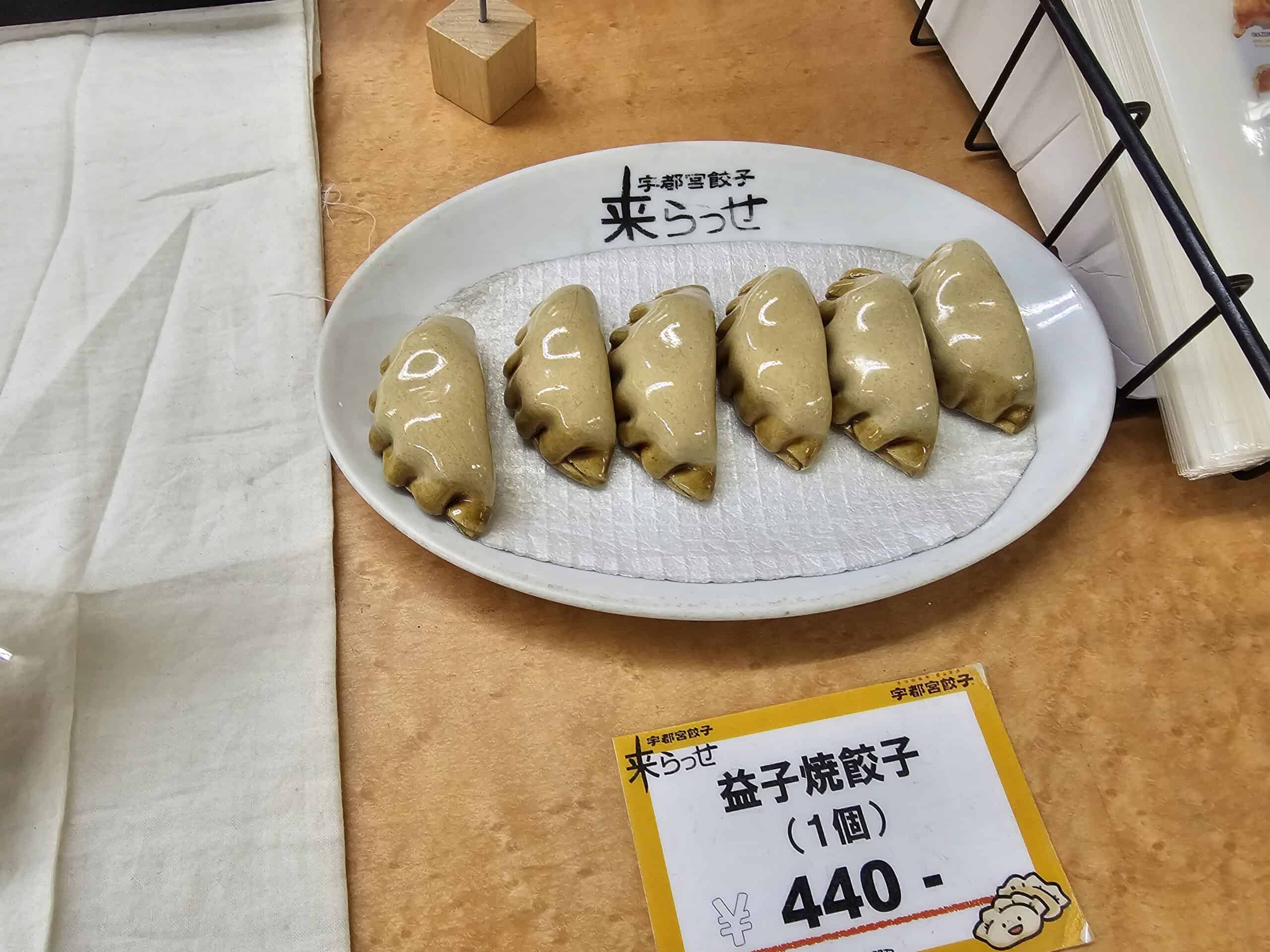
My verdict? It was a strategic failure. The Teriyaki sauce was too strong—it tasted like Okonomiyaki, killing the delicate flavor of the pork and vegetables. The Mala Soup was delicious, but the gyoza skin became soggy and lost its texture. Then, I ate the Standard Pan-Fried Gyoza from Minmin (みんみん). It was perfect. The crispiness, the juice, the balance—it was world-class. Lesson: Do not be tempted by the “Tourist Specials” or fancy toppings. The locals love these shops for their Standard Gyoza. Trust the original taste.
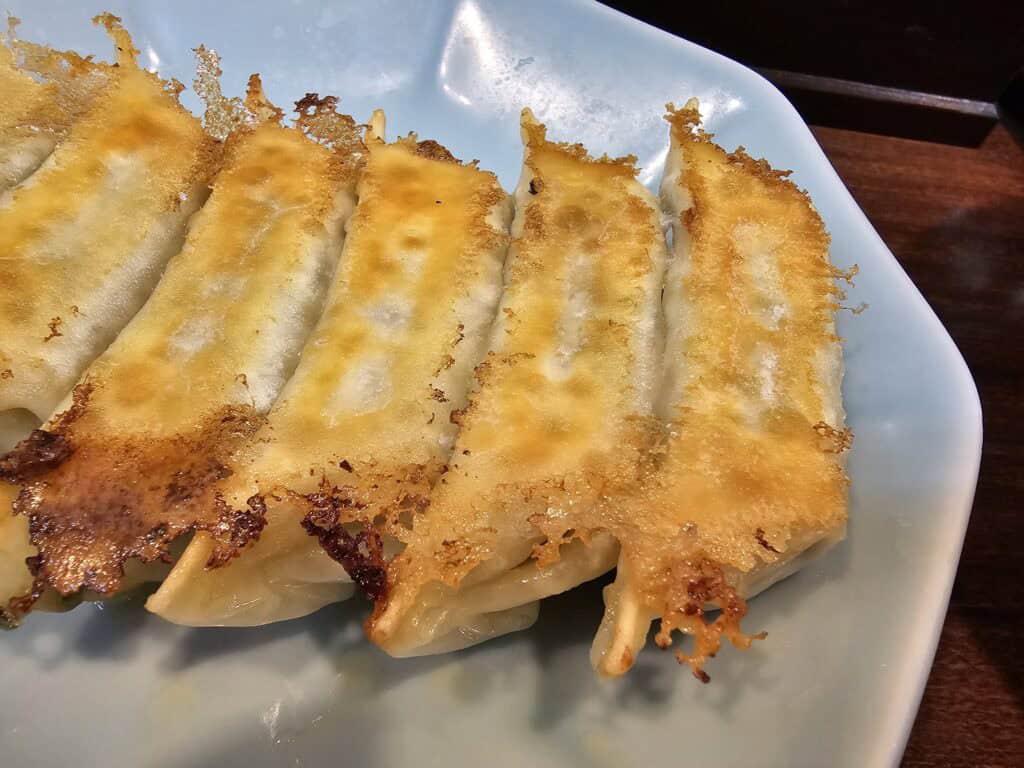
🥟 The Two Zones: Legends vs. Rookies
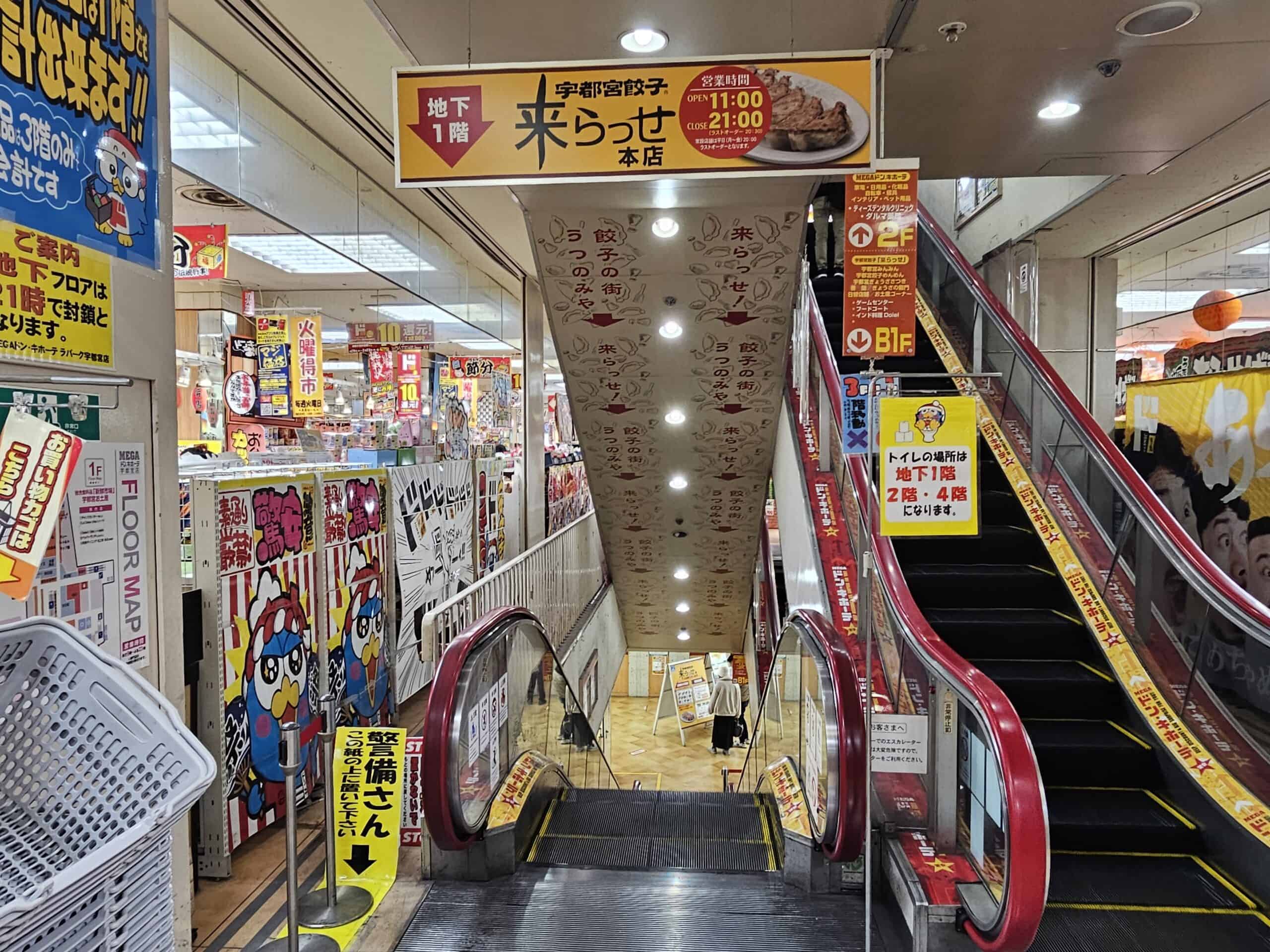
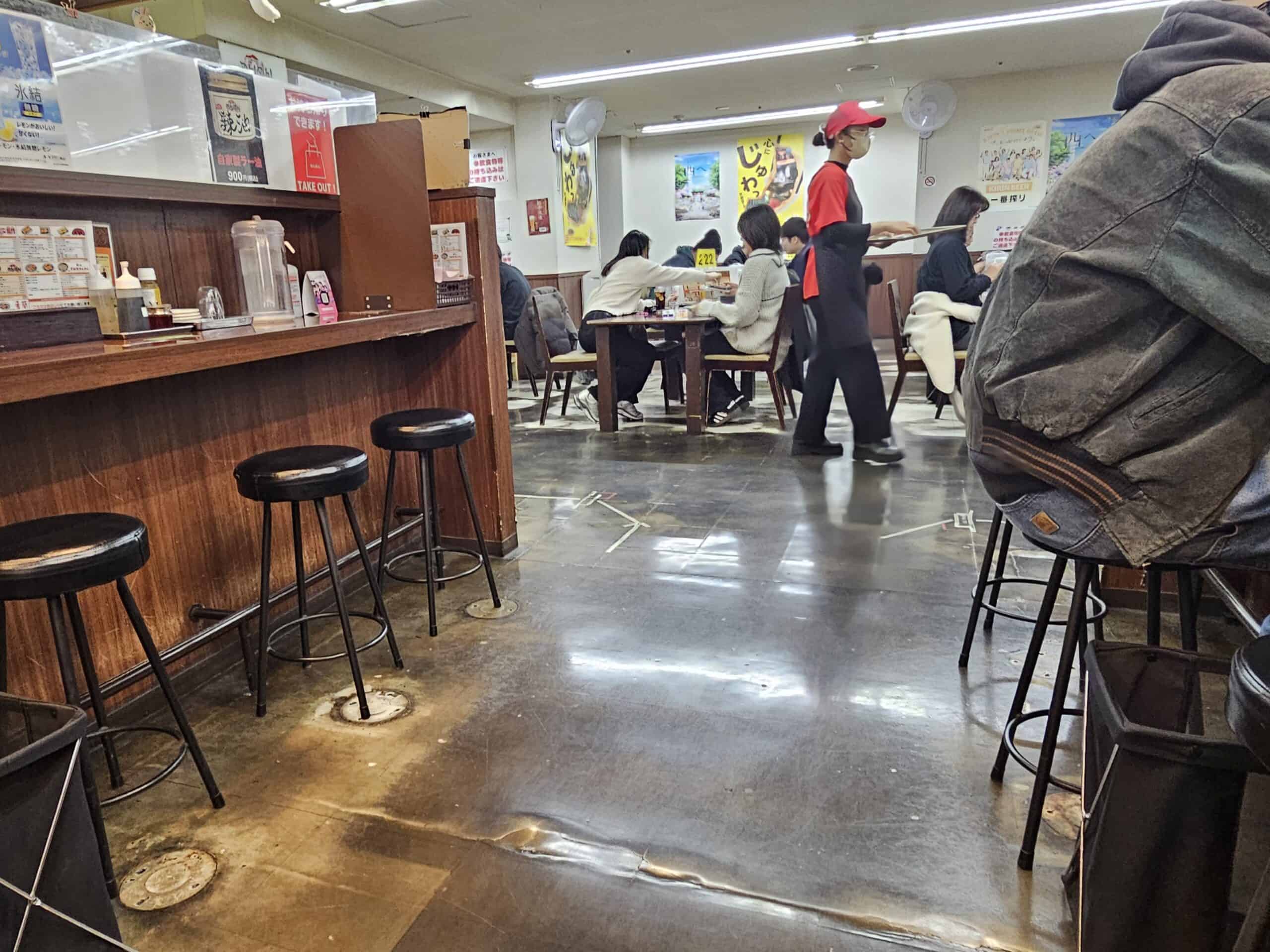
Kirasse is divided into two distinct zones. Don’t get confused when you descend the escalator.
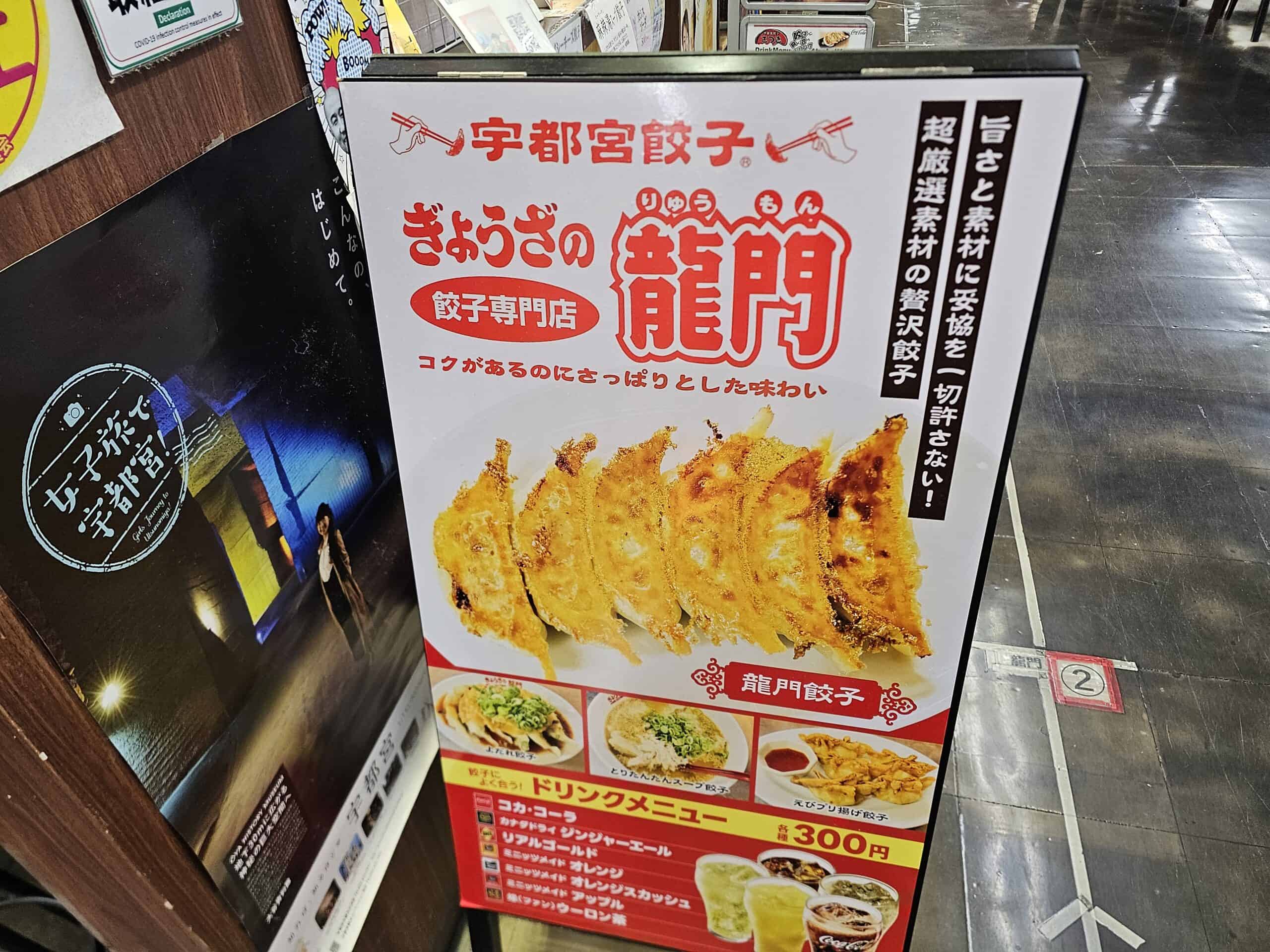
- Permanent Zone (Right Side): This is the hall of fame. It features 5 permanent shops including Minmin (the King), Menmen, Kouran, Ryumon, and Satsuki. If it is your first time, go here.
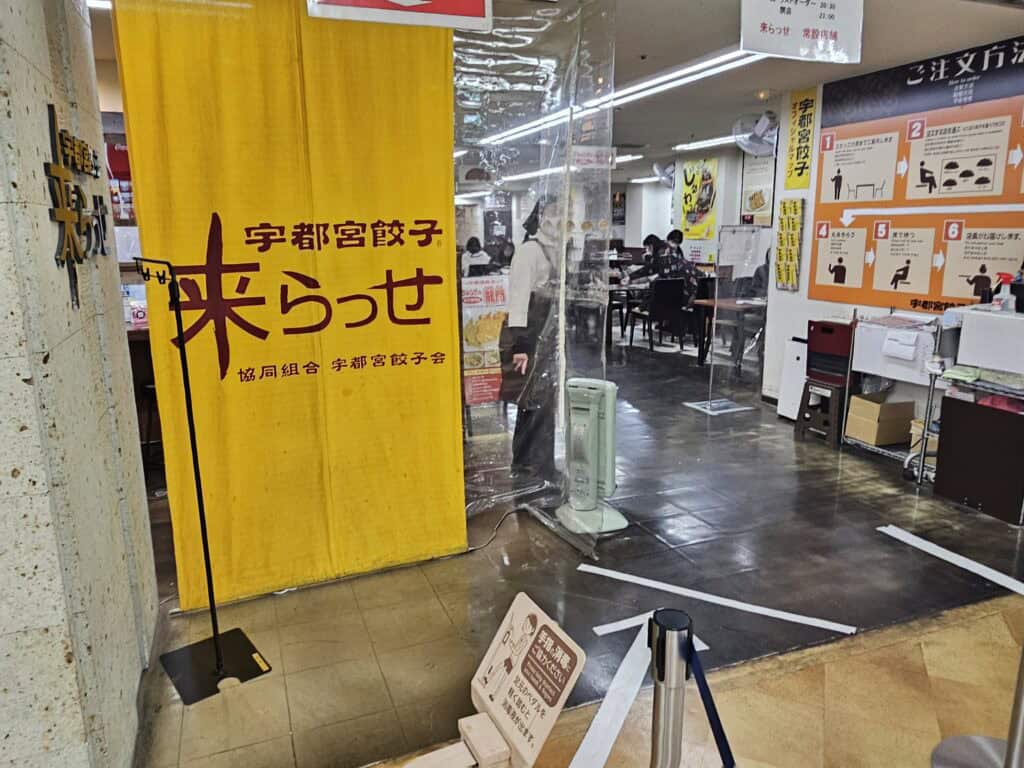
- Daily Rotation Zone (Left U-Turn): This area features 33 different shops that rotate daily. It is for hardcore fans who want to try “Rookies” or hidden gems.
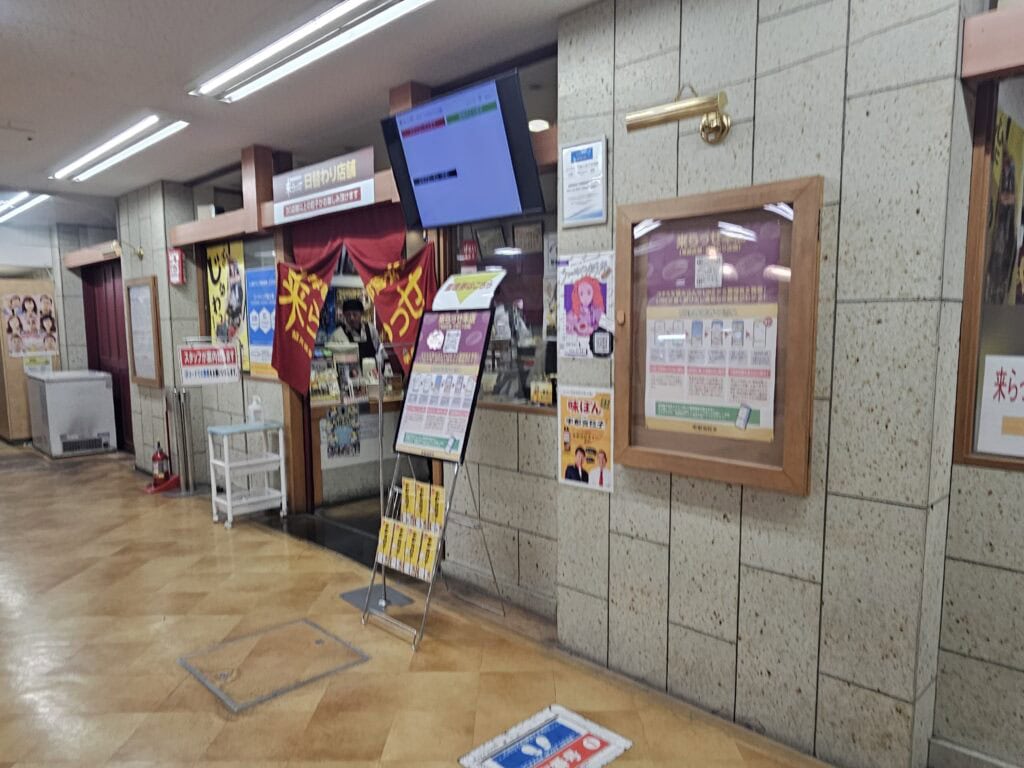
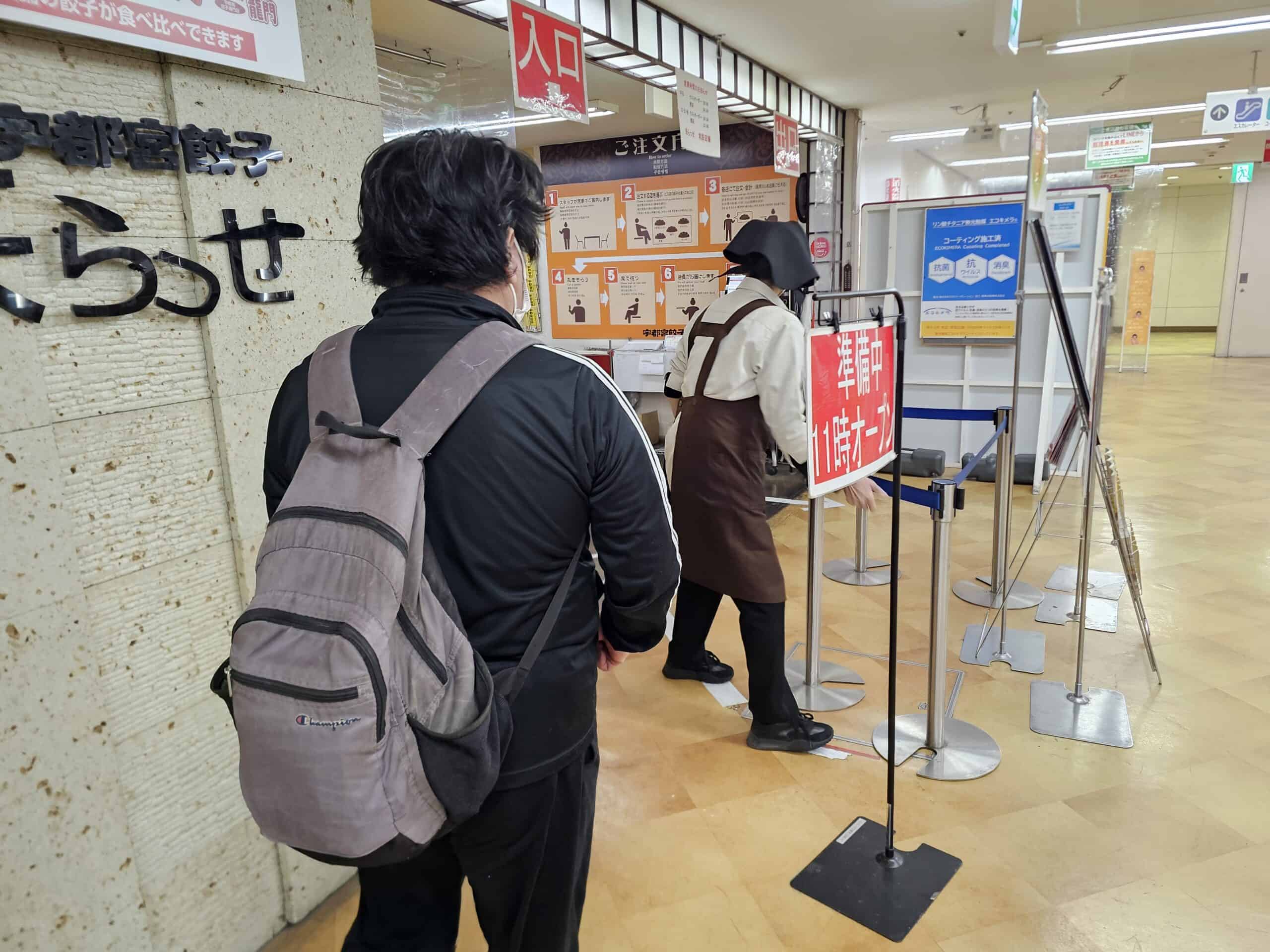
⚠️ The Queue Warning: On a Tuesday at 11:00 AM (opening time), I walked right in. But be warned: On weekends, this place is a battlefield. I heard horror stories of 200-minute waits on Saturdays.
- Strategy: Go on a weekday at 11:00 AM. If you go on a weekend, prepare to use the “LINE app waiting system” and kill time shopping in Don Quijote upstairs.
⚔️ How to Order & The “Golden Ratio”
This is not a full-service restaurant. It is a strategic food court.
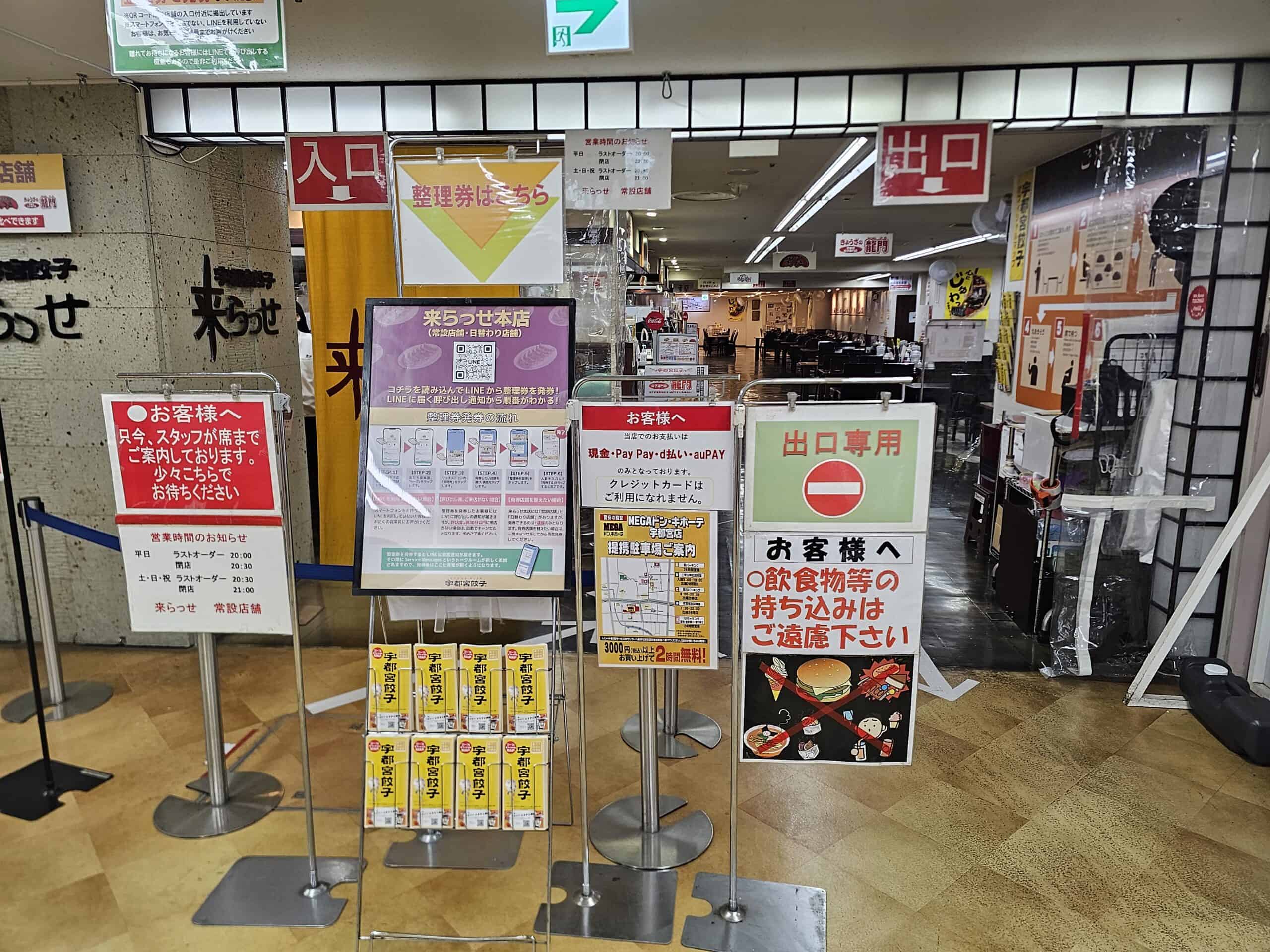
- Secure a Table: Tell the staff your party size. Solo travelers get counter seats; groups get tables.
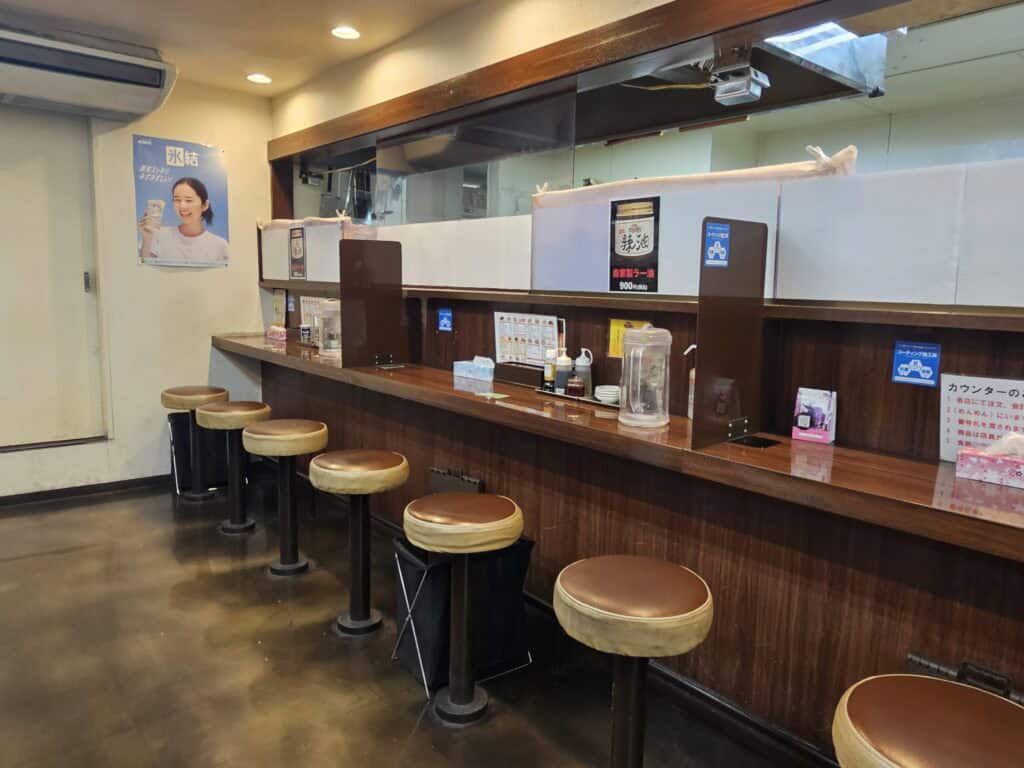
- The “Counter Hop”: There is no central register. You must walk to each specific shop’s counter (e.g., Minmin’s counter, Satsuki’s counter) to order and pay.
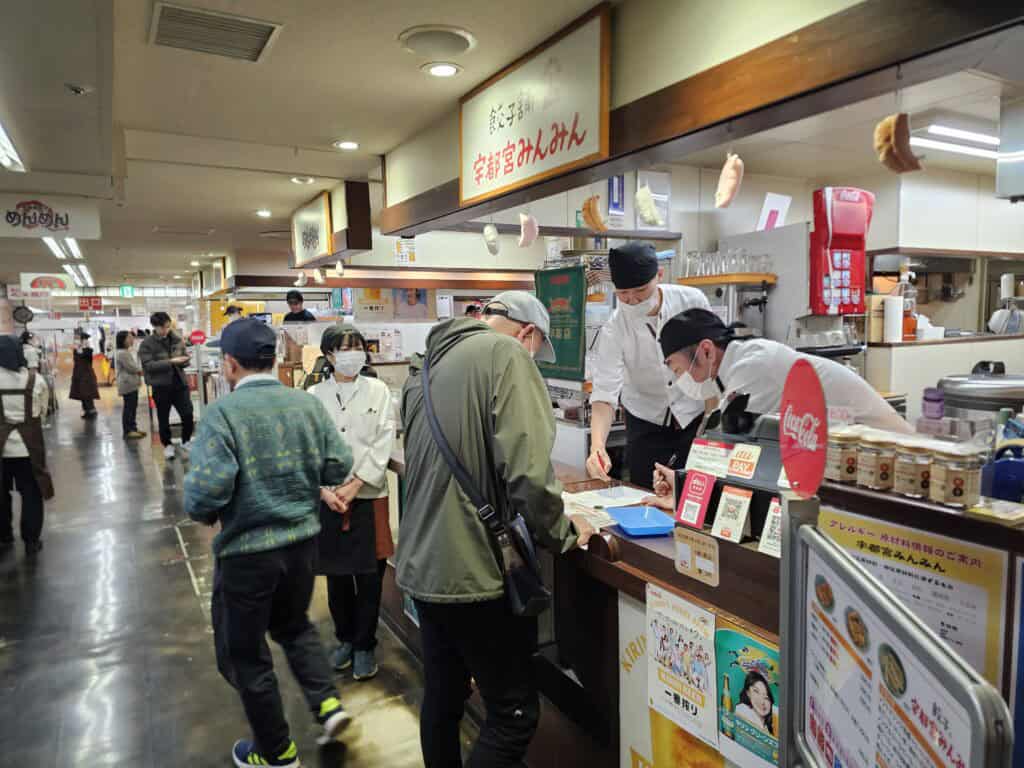
Cash Only. No credit cards.
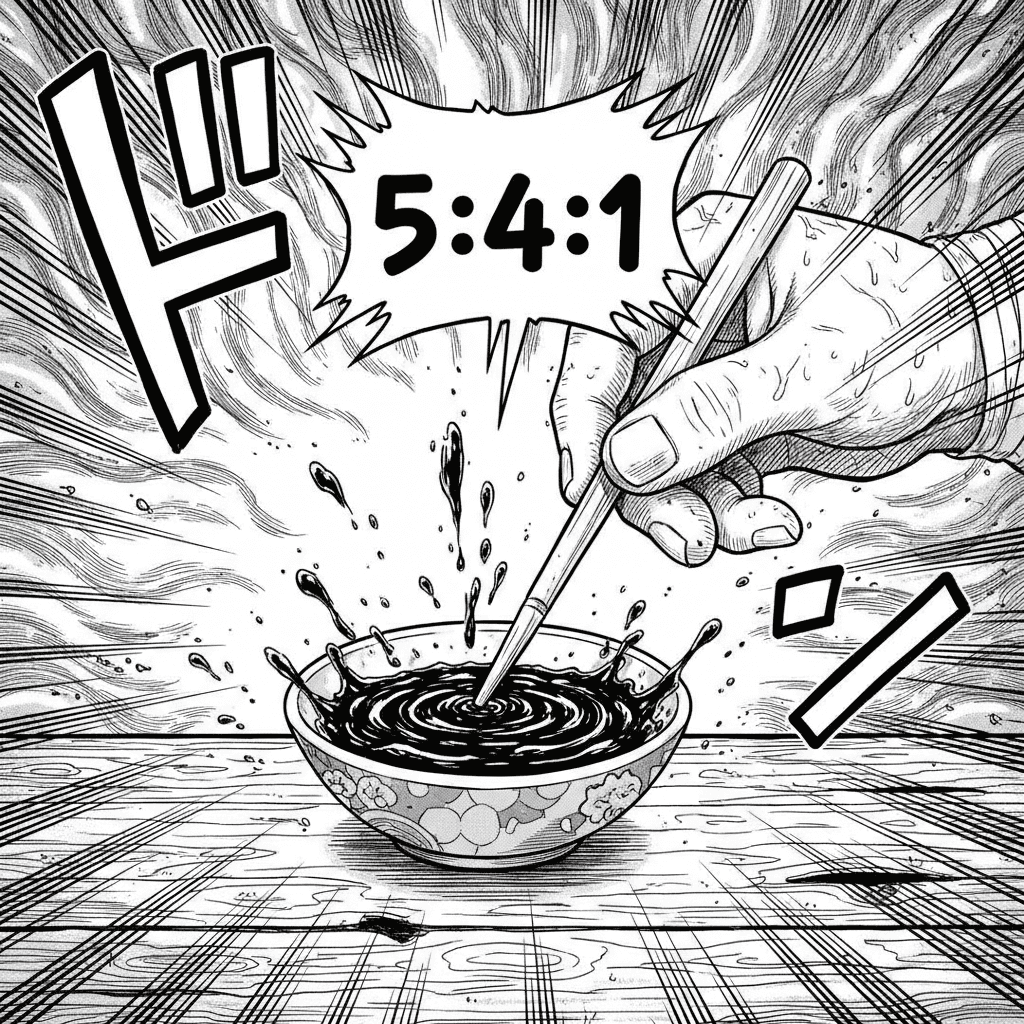
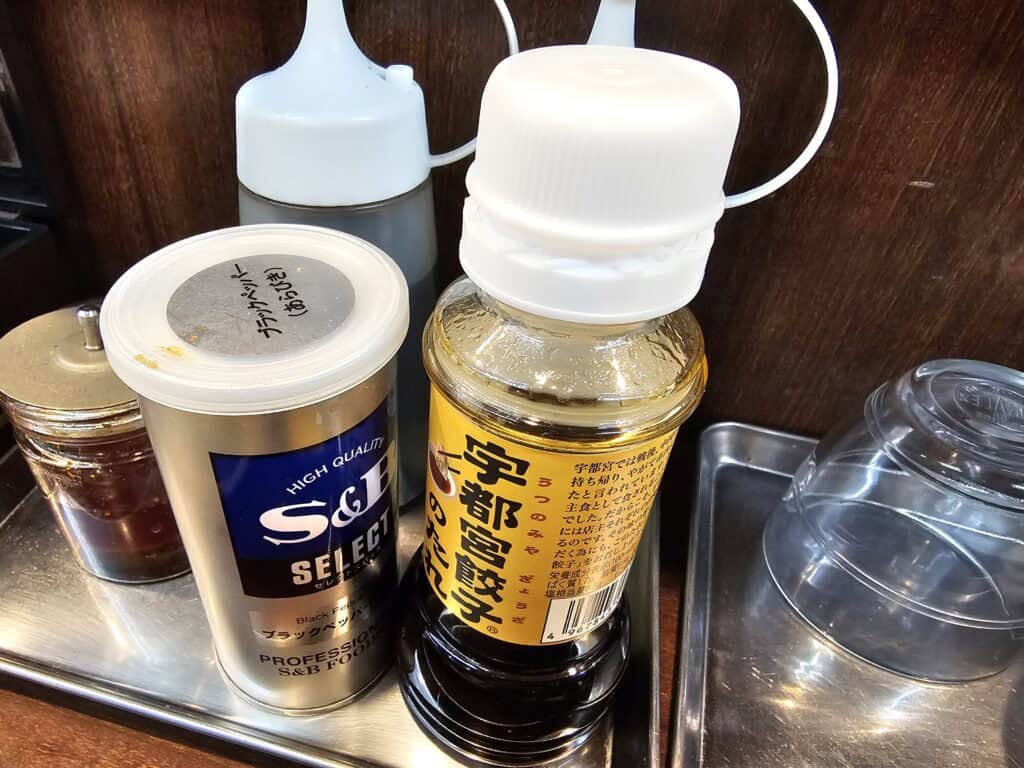
The “Golden Ratio” Sauce On the table, you will see a bottle labeled “Utsunomiya Gyoza Sauce”. Do not look for separate soy sauce and vinegar. This bottle is already pre-mixed with the perfect “Golden Ratio” of soy sauce and vinegar.
- How to make it: Pour the Sauce (5:4) + Chili Oil (5:1). That is the local style.
- Water: Self-service (pitchers are on the tables).
Clean Up: Leave your plates on the table when finished. The staff will clear them.
🎨 Image Prompt:
Style: Black and white satirical line art / Manga style. Content: A close-up of a hand carefully mixing sauce in a small dish. Mathematical formulas floating in the air showing “5:4:1”. A serious, intense atmosphere for a simple task. No text.
🚌 Getting Back: The Torii Gate Landmark
When you are full of dumplings, getting back to the station is easy.
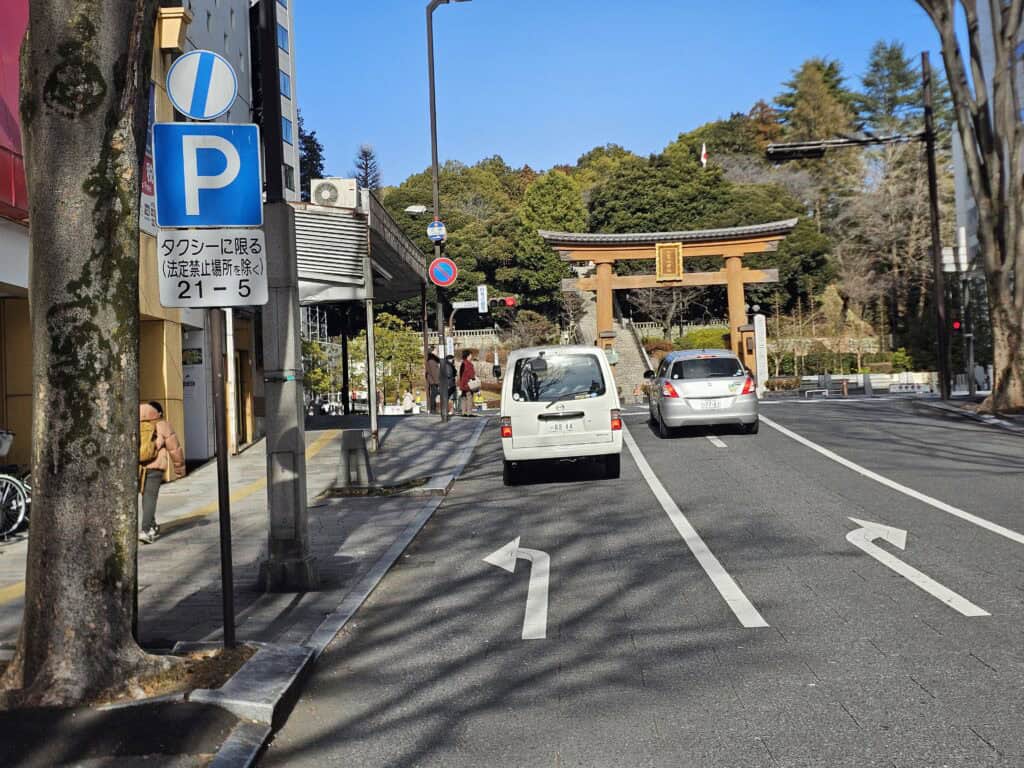
Getting Back to the Station (Easy Mode) Go back to the street with the large red Torii gate. You will see two bus stops near the gate (in front of Tochigi Bank and Docomo Shop).
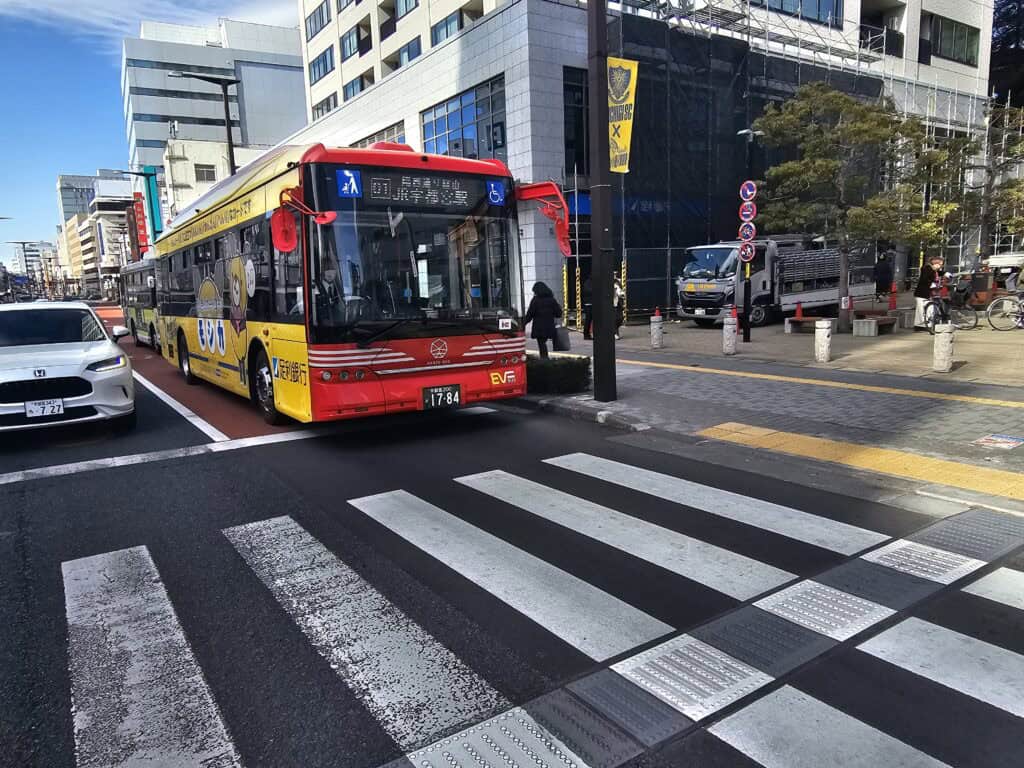
The Best News: You do not need to check the destination. Every single bus that stops here goes to JR Utsunomiya Station. They come frequently (I counted 3 buses in 5 minutes). Just hop on the first one that opens its doors.
- Fare: Still ¥190. Have your coins ready!
If you prefer, there are usually plenty of taxis waiting near the Torii gate as well.
🚆 Access: The “One-Shot” Strategy (Shinjuku vs. Ikebukuro)
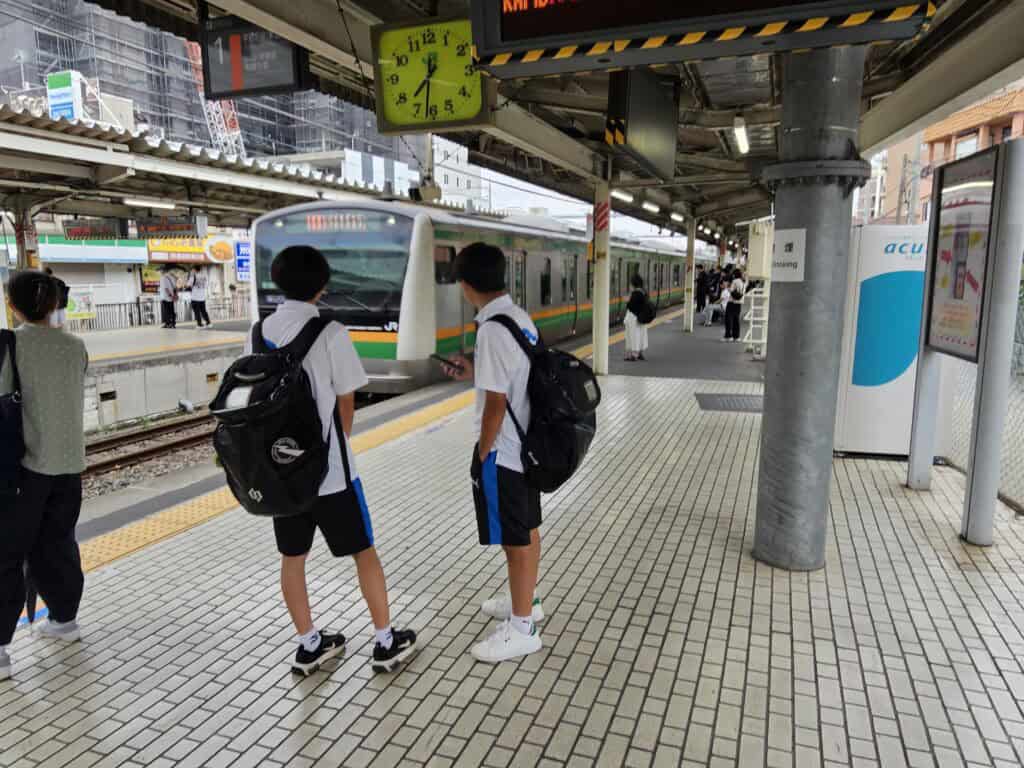
Most navigation apps might tell you to take the Shinkansen (Bullet Train) or change trains at Omiya or Akabane. Ignore them. The transfer is a hassle, and the Shinkansen is double the price.
The smartest way is the JR Utsunomiya Line. It is a direct train. Once you sit down, you don’t stand up until you reach the dumpling paradise.
- From Shinjuku: Approx. 1 hr 54 min.
- From Ikebukuro: Approx. 1 hr 48 min (6 minutes faster!).
- Cost: ¥1,980 (One way).
Kajino’s Tip: If you are staying in West Tokyo, going to Ikebukuro Station saves you a little time. The key is the “No Transfer” magic. Just make sure the destination board says “Utsunomiya” (宇都宮). Do not get on a train bound for “Odawara” or “Zushi” (that is the opposite direction!).
🚌 How to Get There: The “Baba-cho” Bus Mission (Survival Guide)
This is the trickiest part of the trip. Follow these steps carefully to avoid the “Foreigner Panic” on the local bus.
1. From Station to Bus Stop
- West Exit (2F): After exiting the ticket gates, go to the West Exit. You are currently on the 2nd floor.
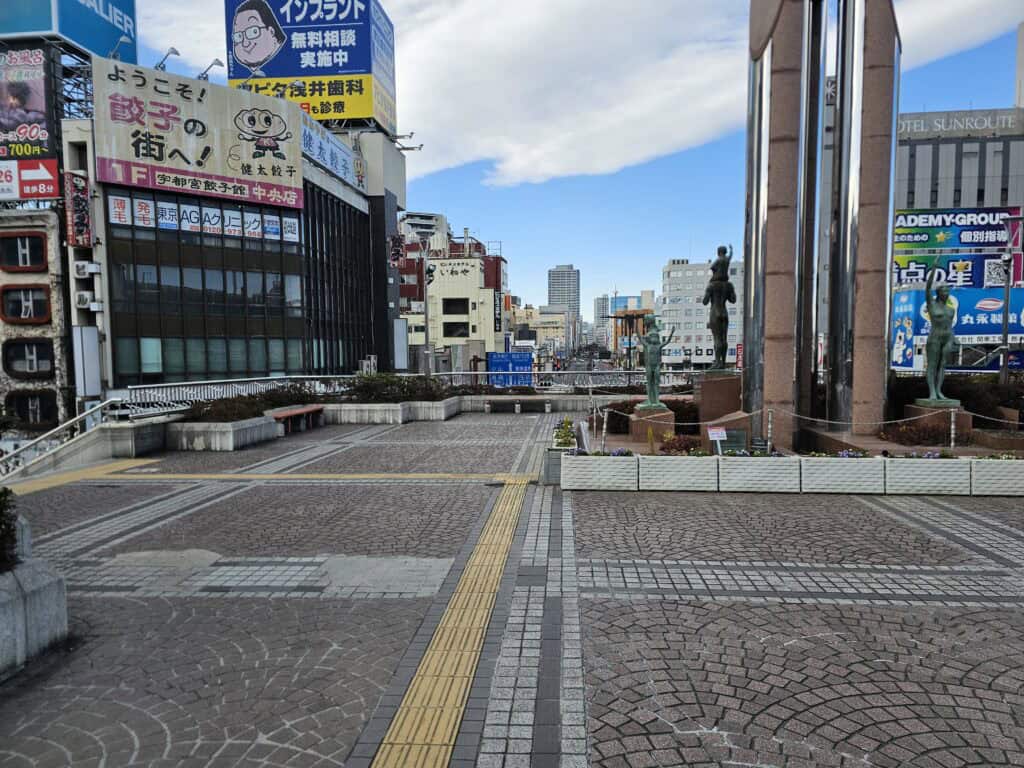
- Go Down to 1F: Go down to the ground level using the Stairs or Elevator. (Note: There is no escalator leading directly to the bus island.)
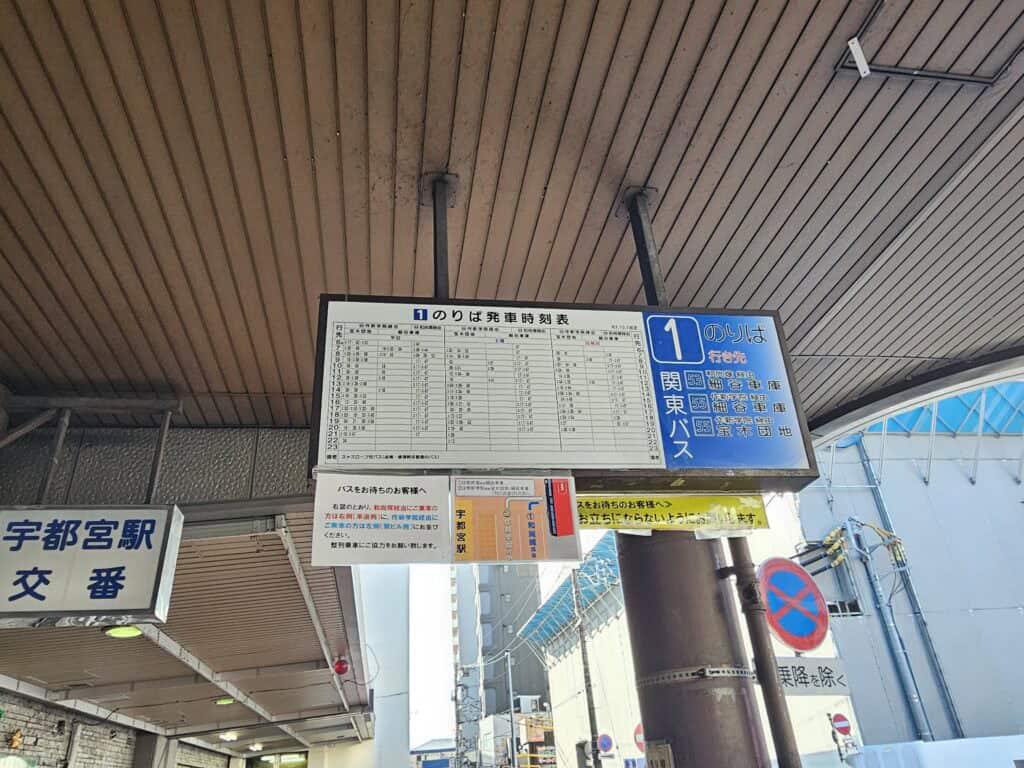
- Target Bus Stop: Go to Stop #1 or #2.
- Kajino’s Tip: These stops don’t have the usual vertical signs standing on the ground. Look up at the ceiling for the hanging number plates. Any bus from these two stops will take you to our destination.
2. Boarding (Rear Door)
- Enter: Board through the Back/Center door, not the front.
- 💳 IC Card (Suica/Pasmo): Simply tap your card on the reader. You do not need a paper ticket.
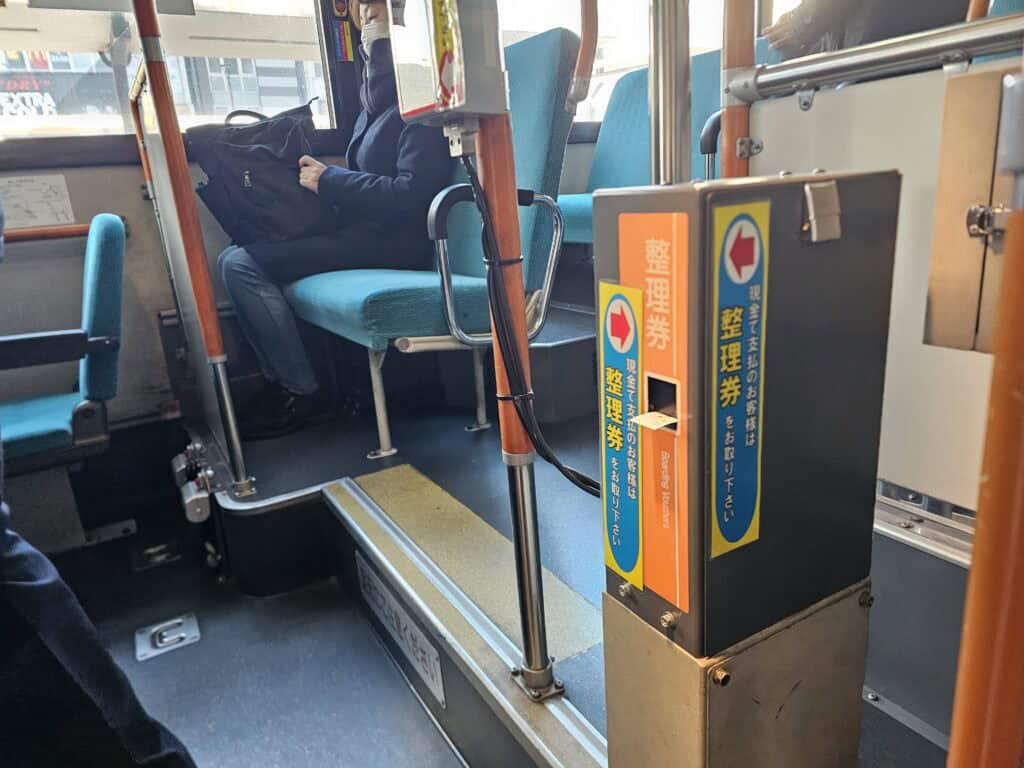
- 💵 Cash Users (CRITICAL STEP): As you enter, look for a small machine next to the door. You MUST pull a small white paper ticket. This is called a “Seiriken” (整理券).
- Why? It has a number on it (e.g., “11”). This proves where you boarded.
- The Trap: If you forget to take this ticket, the driver will not know your fare, leading to a stressful situation when you try to exit. Do not forget it! (Image: Close-up of the ticket machine and a ticket with number “11”)
3. The Ride
- Time: Less than 10 minutes (usually the 4th stop).
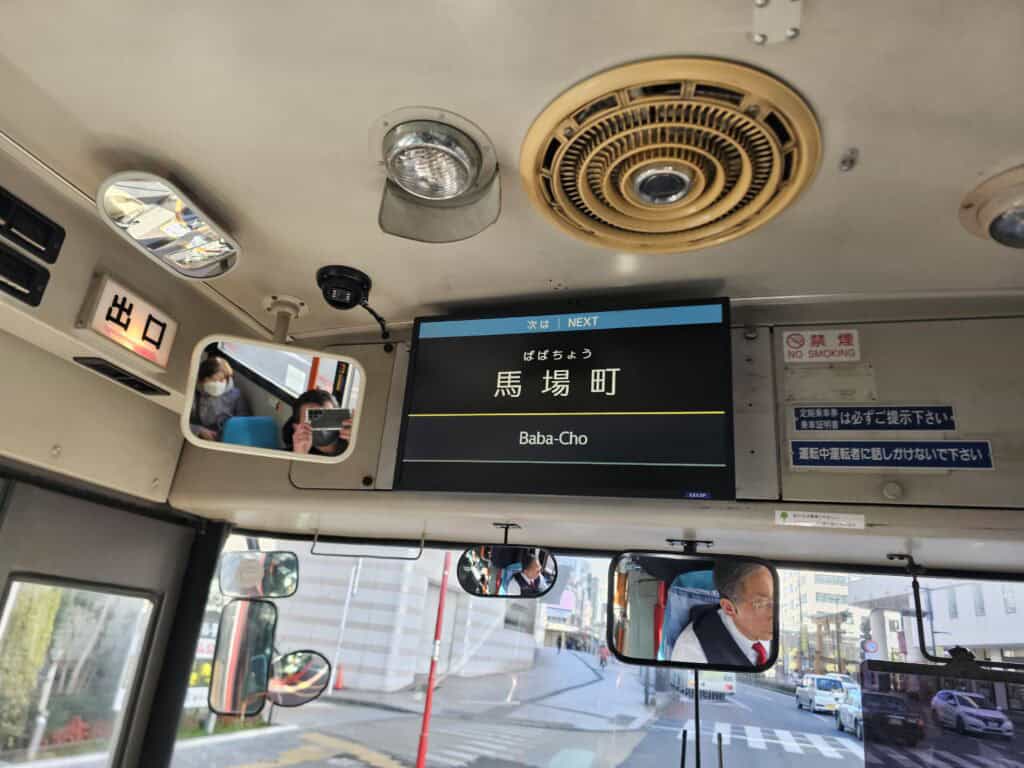
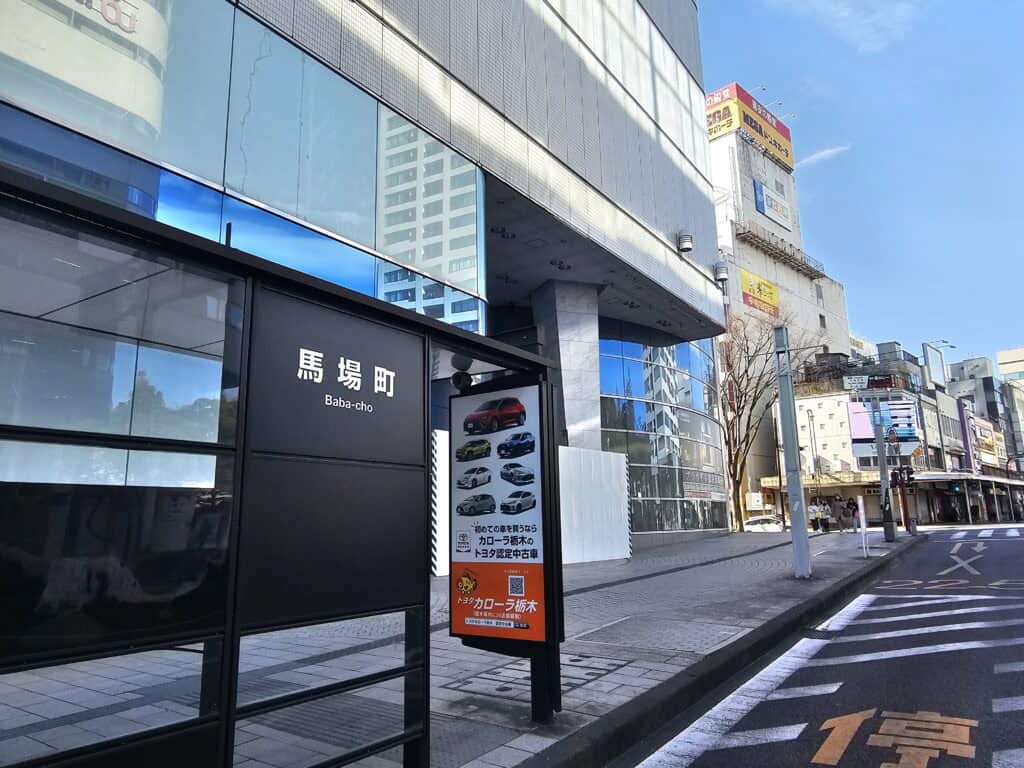
- Stop: Look at the digital screen at the front. When you see “Babacho” (馬場町) displayed, press one of the purple “Stop” buttons located on the handrails or walls.
4. Exiting & Payment (Front Door)
- Exit: Go to the front next to the driver.
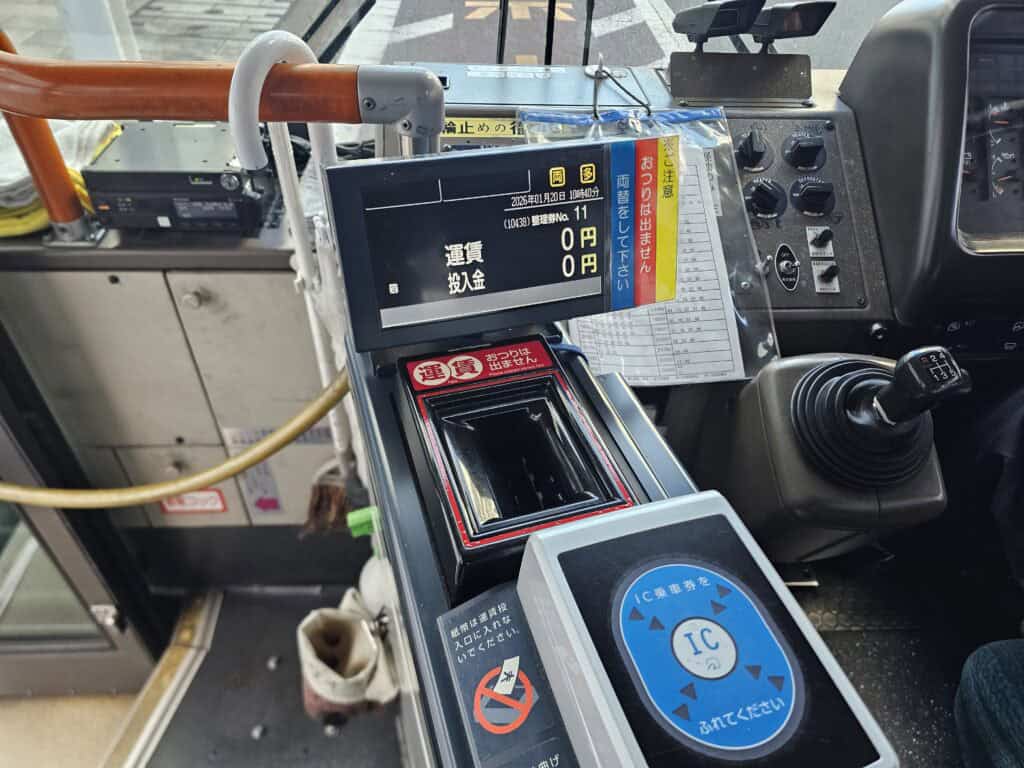
- Check Fare: Match your ticket number (e.g., “11”) with the number on the screen. It should say ¥190.
- The “Exact Change” Rule:
- Drop the Seiriken (ticket) AND the exact cash (¥190) together into the clear plastic box.
- Warning: The machine does NOT give change. If you put in ¥200, you lose ¥10.
- Need Change? If you only have ¥1,000 bills or ¥500 coins, use the “Money Changer” (両替機 / Ryogaeki) attached to the fare box before you pay. It will break your money into smaller coins. Then, pay the exact ¥190.
5. The Visual Landmark (Don Quijote)
- Look: Once you get off at Baba-cho, look down the main street. You cannot miss it. You will see a tall building with the famous yellow and red Don Quijote logo in the distance.
- Walk: It is just a 1-minute walk towards that building. Kirasse is in the basement (B1).
- 👁️ Kajino’s Behind-the-Scenes: I literally risked my life standing in the middle of traffic to verify this view! If you see the Donki tower from the bus stop, you are in the right place. Trust the view.



コメント