
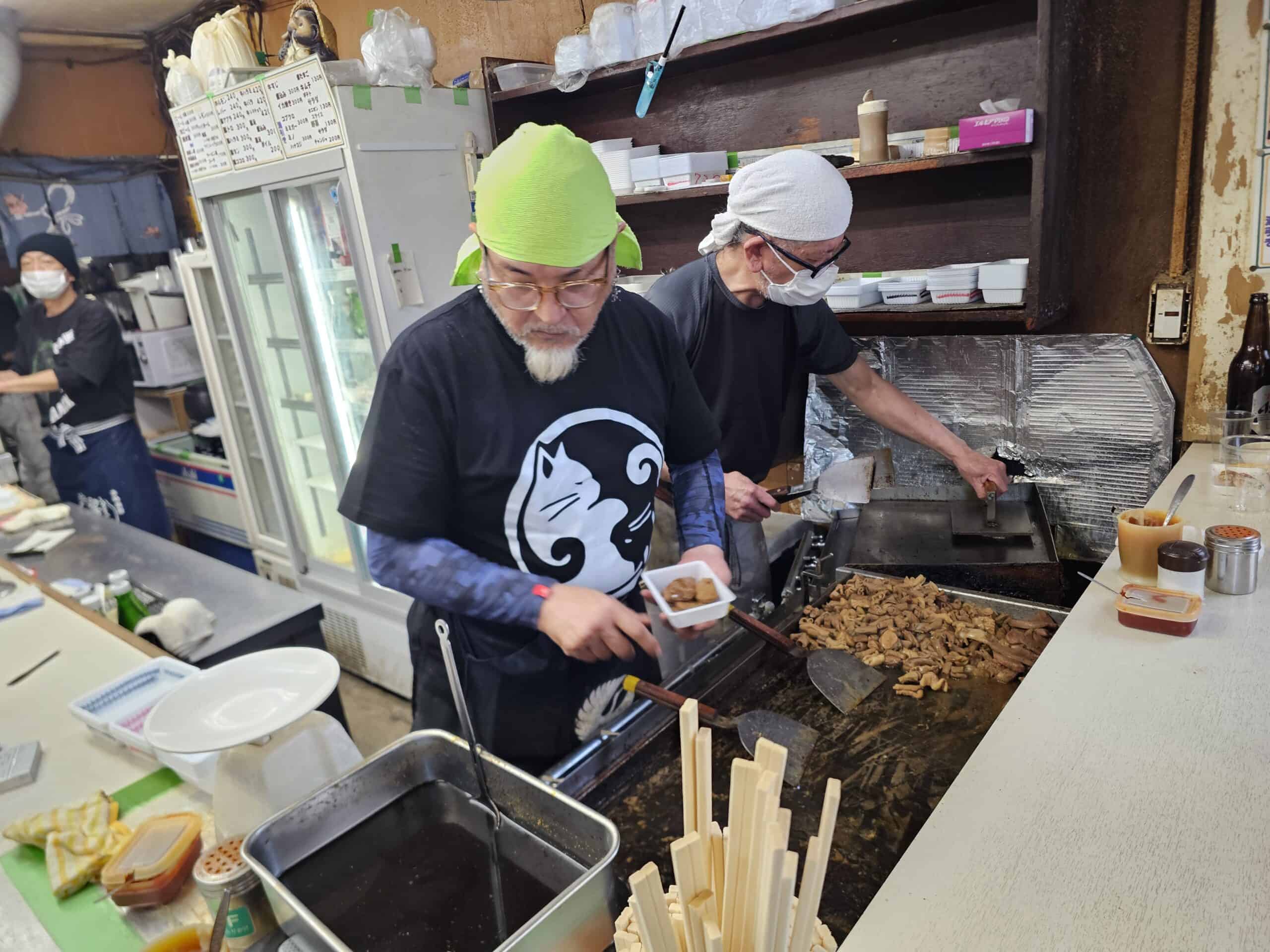
You don’t come here for the best meal.
You come here to see what’s there.
And somehow—
that’s what stays.
■Price Shock
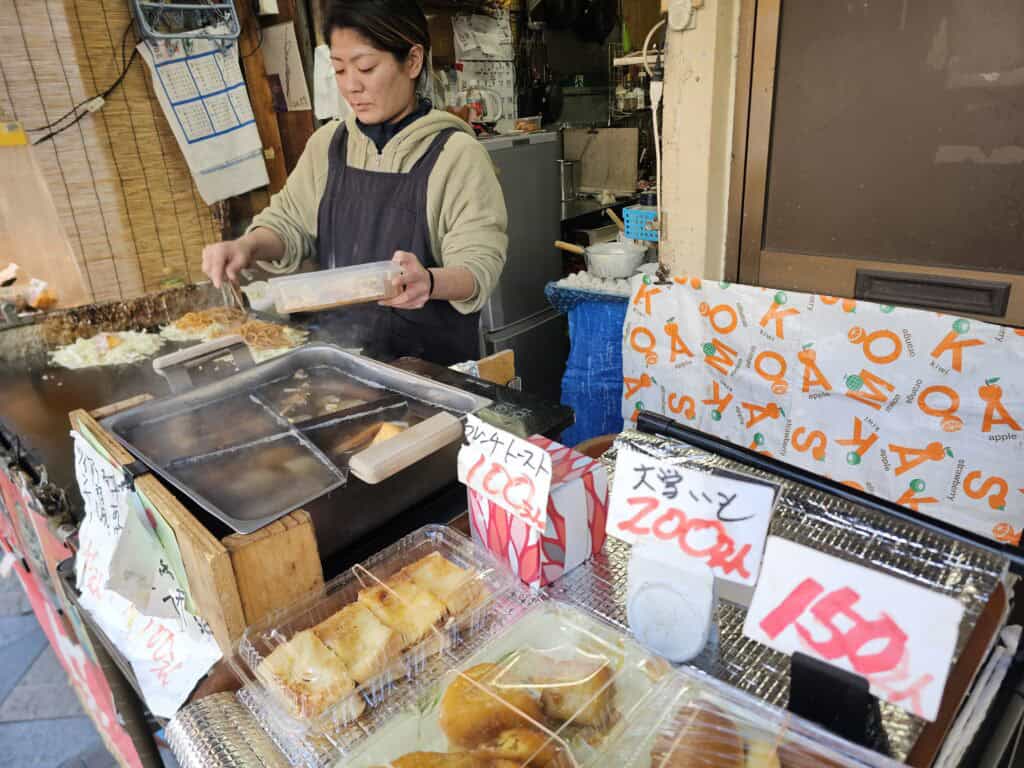
The first thing you notice here is the price.
Food doesn’t follow the usual rules.
You’ll see meals for ¥100, ¥200, ¥300—everywhere.
At first, it feels like a mistake.
But it’s not.
■Breakfast in Nishinari
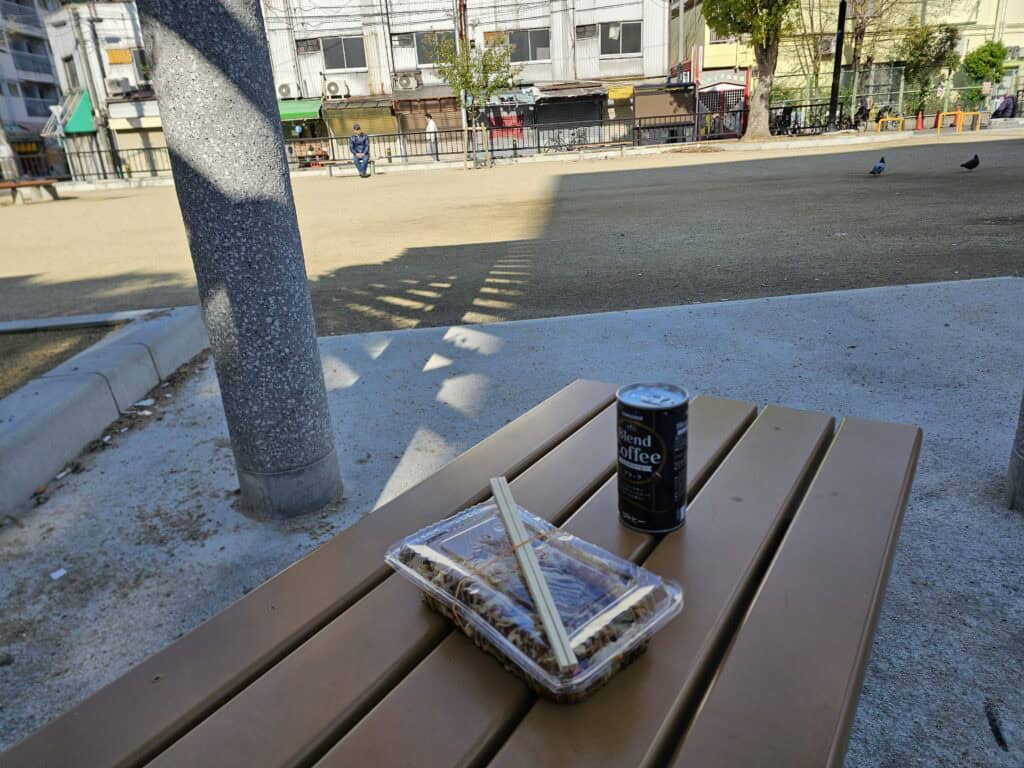
Breakfast here doesn’t happen in cafés.
It happens outside.
A boxed meal.
A canned coffee.
That was enough.
No one was rushing.
No one was taking photos.
Just eating.
Quietly.
■The Main Event
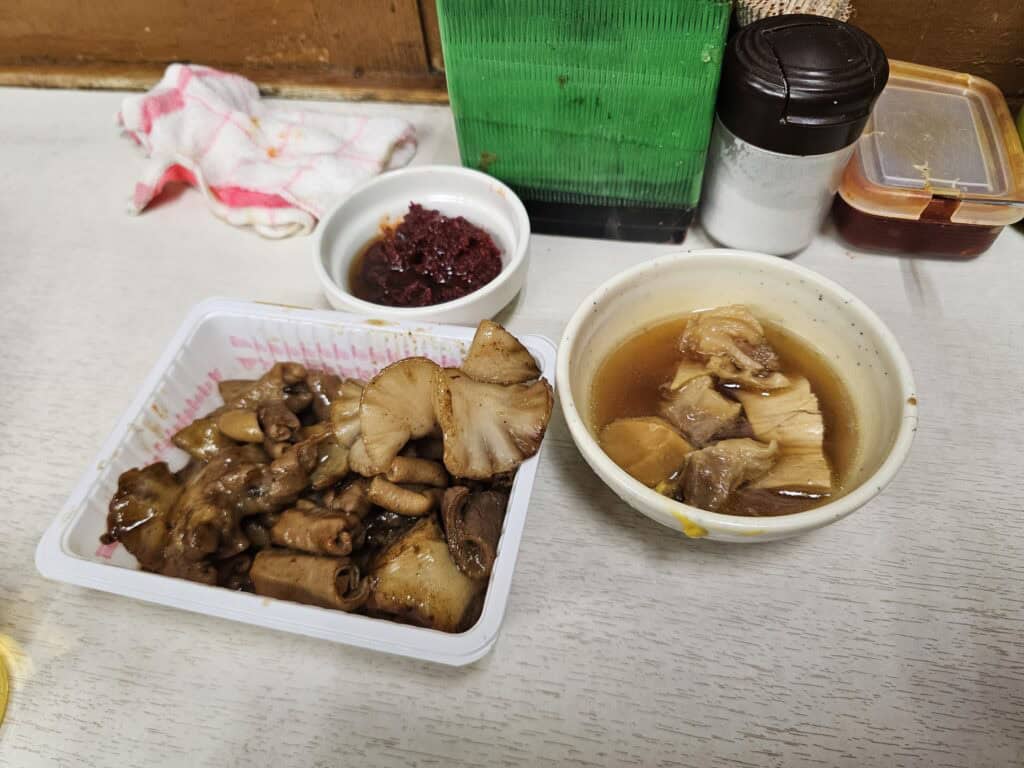
This is the reason to come.
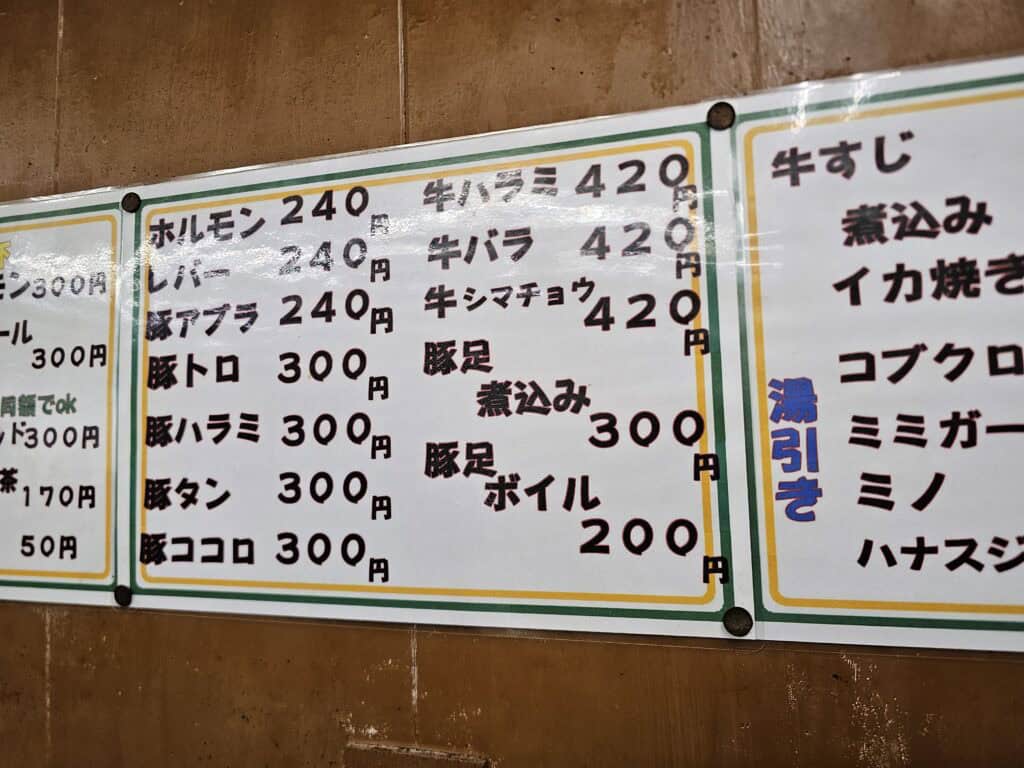
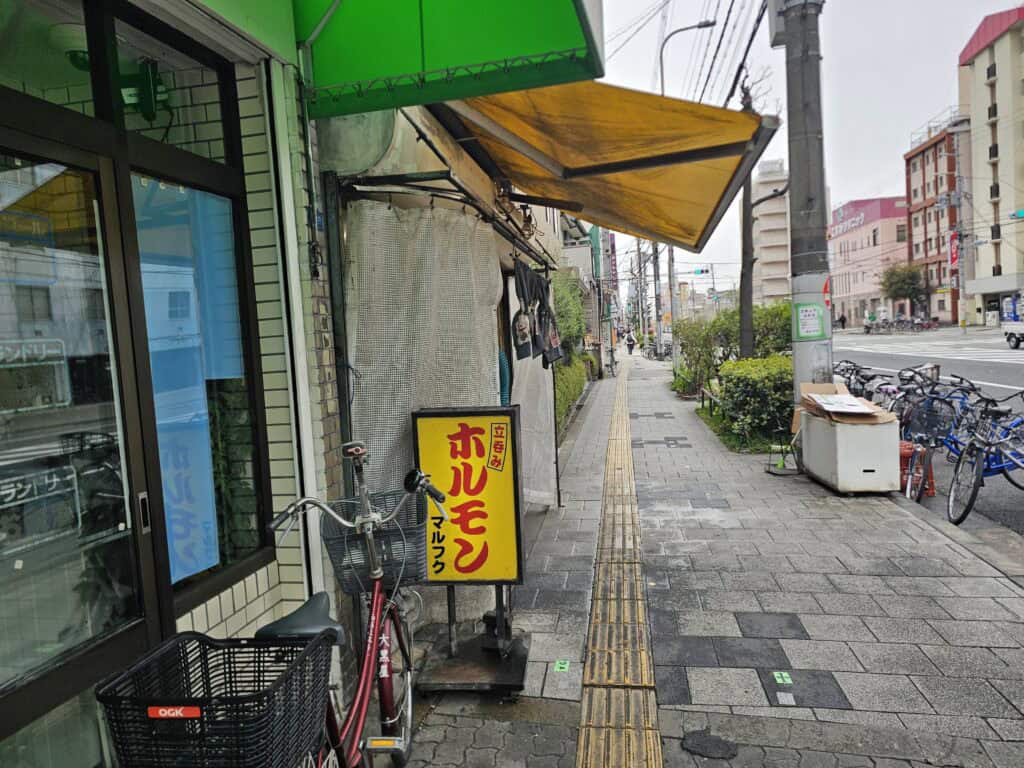
A small standing-style place serving horumon (offal), cooked right in front of you.
Most dishes are around ¥300.
Fast. Simple. No wasted motion.
The flavors are strong and direct.
Horumon. Fat. Beef cuts.
Everything comes out quickly, fresh off the grill.
It’s not refined.
But it doesn’t need to be.
This is easily one of the most memorable meals I’ve had.
This is where the day starts—
but it’s really a place for the night.
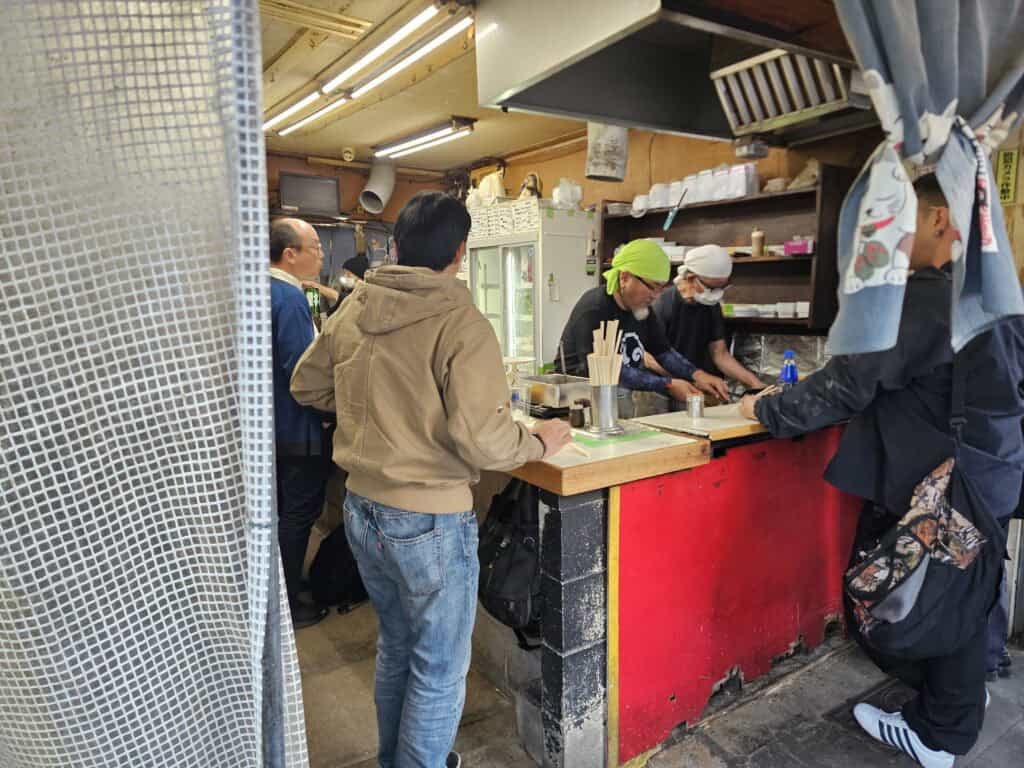
No seats. No rush.
Just stand, order, and eat.
This is how it works here.
■A Different Kind of Famous
Not far from Nishinari, you’ll find places like Yaekatsu (八重かつ).
It’s well-known, easy to access, and clearly part of the main tourist flow.
When I arrived around 1 PM, there were about seven people in line.
The wait was around 10 minutes.
By the time I left, the line had grown to around 30.
Inside, everything is clean, organized, and efficient.
The system is simple.
The service is smooth.
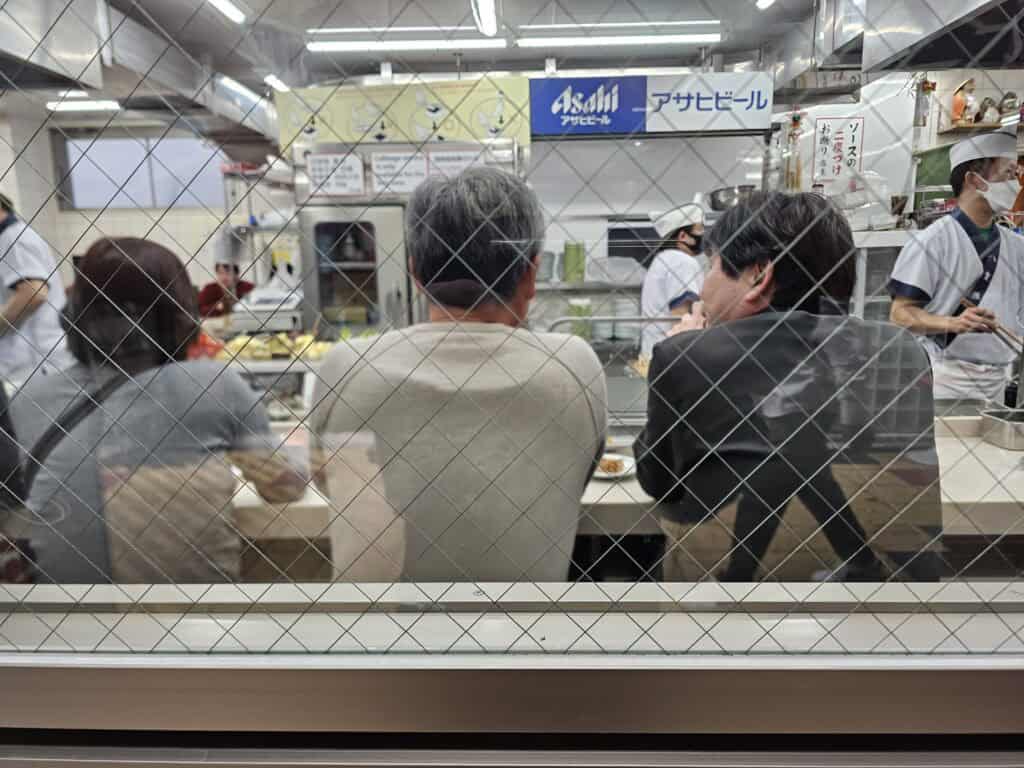
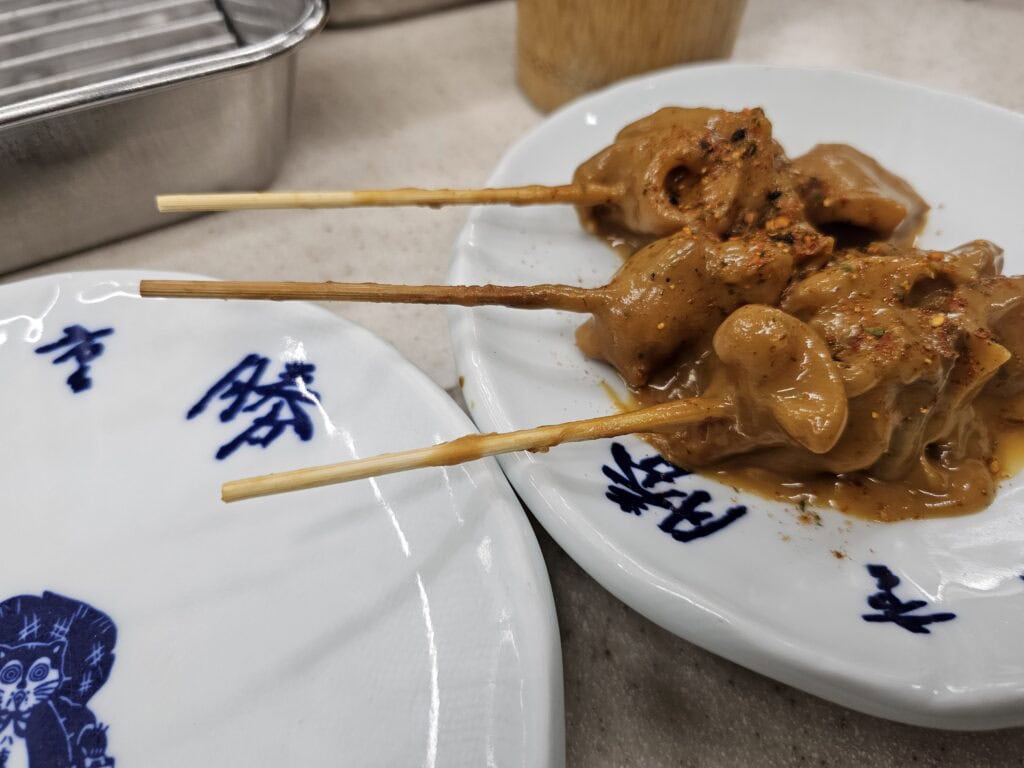
I had 11 skewers and a drink.
Total: ¥2,290.
It was good—especially the doteyaki, shishito peppers, and camembert cheese.
But after eating in Nishinari, the experience feels very different.
Here, everything is clear and structured.
It’s good.
But it feels different.
■The One I Missed
Right in front of the park, there’s a place called Nabeya(なべや).
A beef hot pot for around ¥1,100.
An oyster hot pot—with more than 20 oysters—for about ¥2,100.
This was one of the places I really wanted to try.
But when I got there, it was closed.
There was a small sign on the door—temporarily closed.
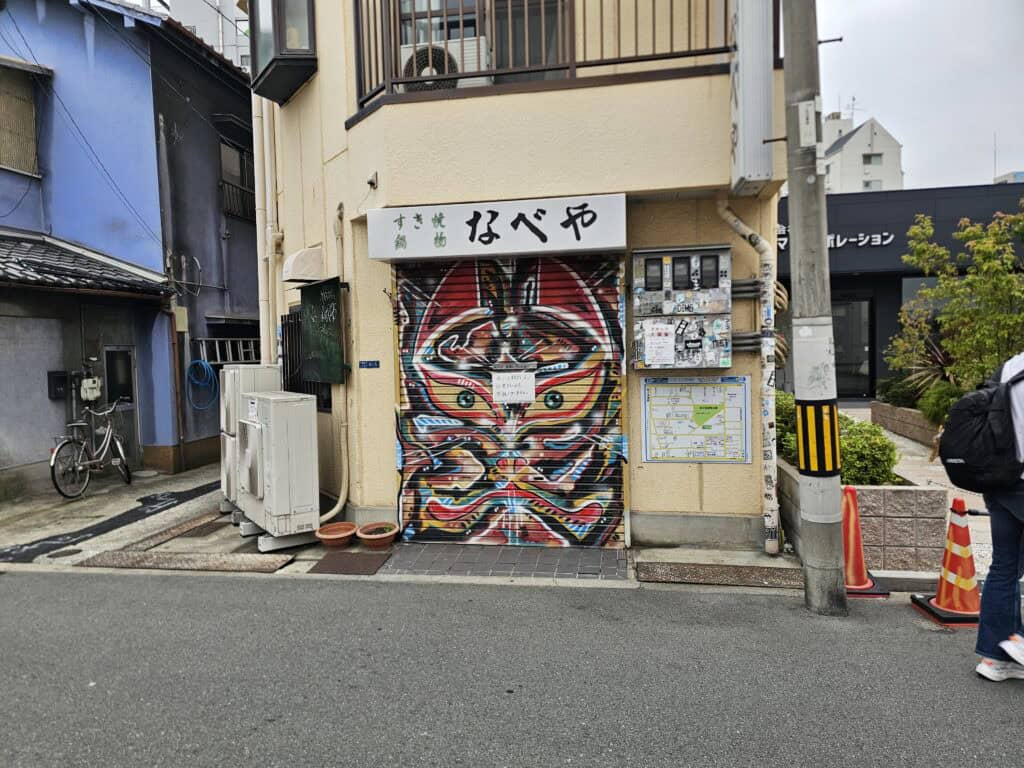
And this wasn’t the only time.
During this trip, I ran into the same situation three more times:
- A well-known takoyaki shop (no notice)
- A popular yakiniku restaurant (no notice)
- A local sento (bathhouse) (with a notice)
In all cases, Google Maps still showed them as open.
At first, it felt frustrating.
But after a while, it became clear:
Things here don’t always follow fixed schedules—or updated online information.
Instead of relying too much on plans, it’s better to stay flexible.
Walk. Look. Adjust.
That’s how Nishinari works.
You don’t always get what you planned.
That’s part of it.
■A Small Change
There’s a chain of discount supermarkets called Super Tamadae (スーパー玉出) around this area.
Not long ago, it was known for extremely cheap meals—sometimes a lunch box around ¥100–¥200.
It used to be a go-to place for budget travelers.
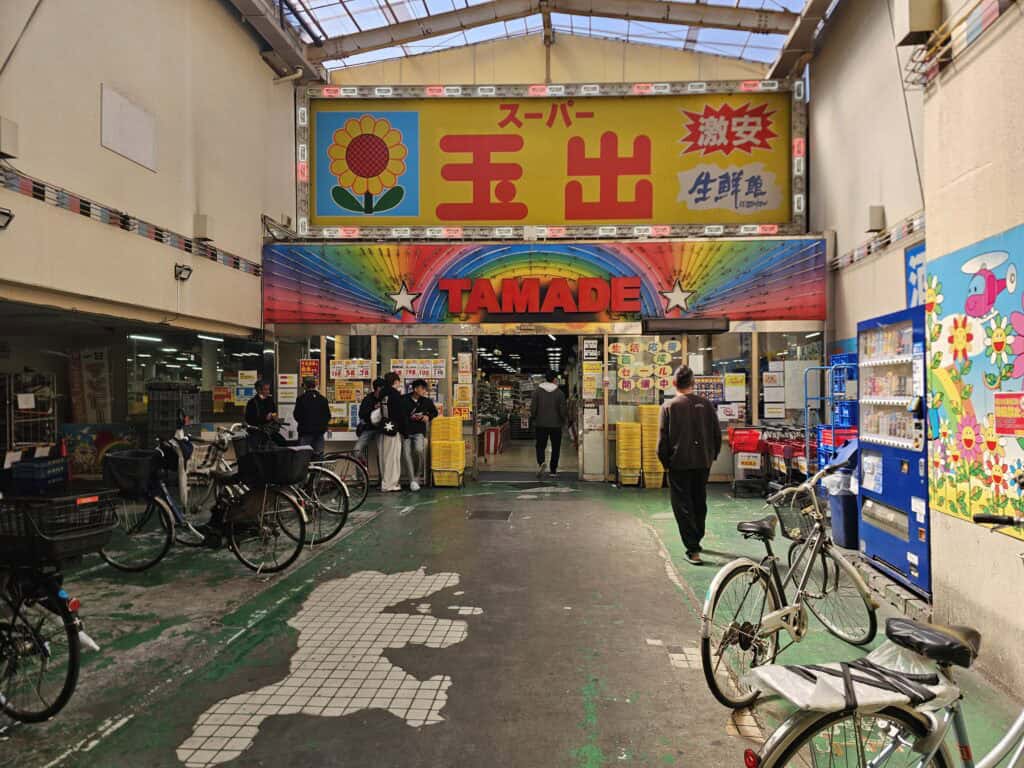
But this time, it felt different.
Still cheap—but not the same.
In a place where you can get freshly made food outside for similar prices, even something like a supermarket starts to feel different.
■Conclusion
Nishinari isn’t about finding the “best” place.
It’s about being open to what you find.
■Tokyo Smart Take
Walk.
Look.
Eat.
That’s enough.