
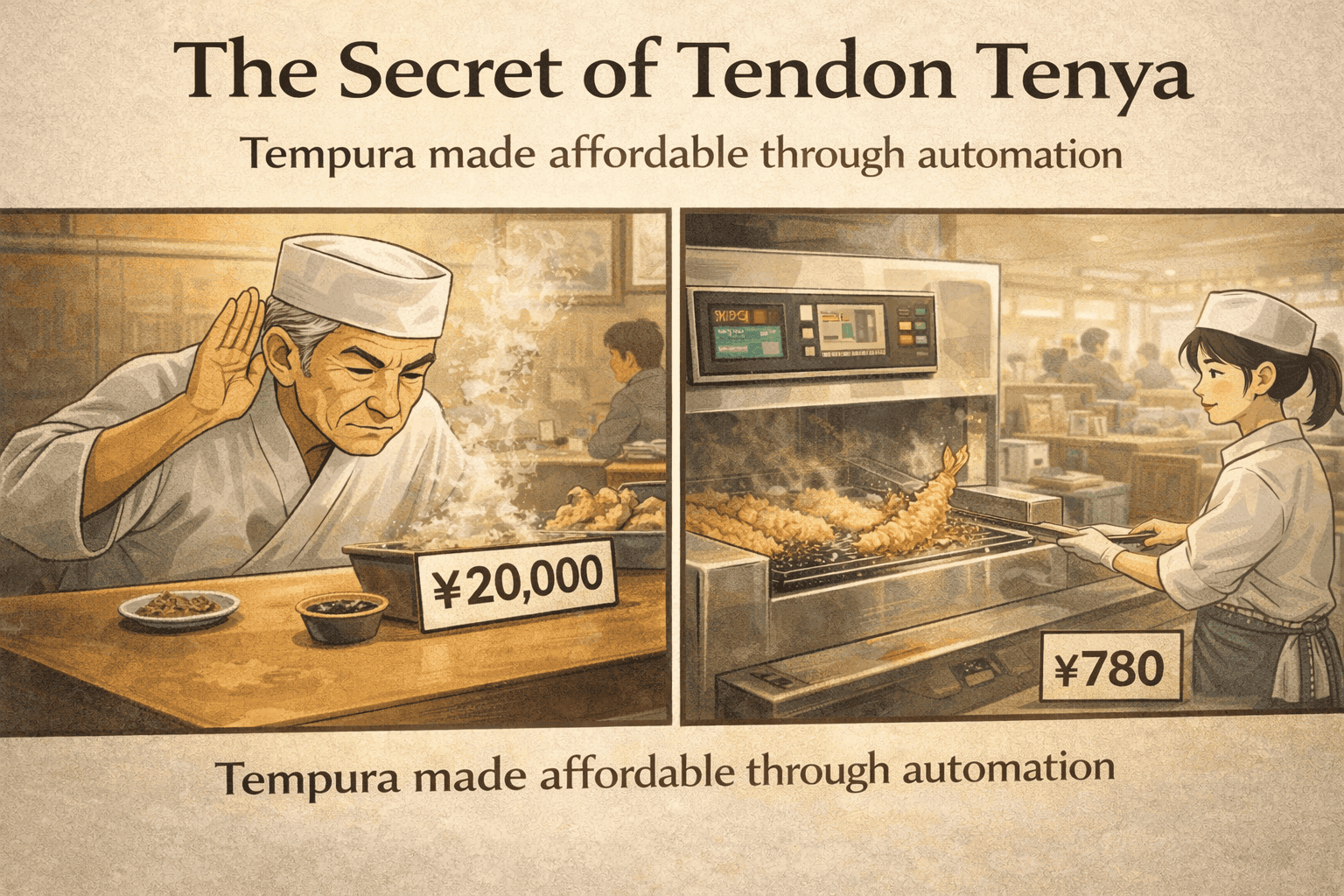
Tempura is widely known as one of Japan’s representative dishes, alongside Sushi and Ramen. However, traditionally, authentic Tempura was a high-end cuisine served at exclusive counters (Zashiki), costing over 10,000 yen ($70+). “I want to eat crispy Tempura, but I don’t want to go bankrupt.” The answer to this traveler’s dilemma is “Tendon Tenya” (天丼てんや). Here, you can enjoy a genuine Tempura Rice Bowl (Tendon) for under 1,000 yen (about $7). But why is it so cheap? Is it low quality? Absolutely not. Let me explain the “technological revolution” behind it.
👁️ Kajino’s Eye: The “McDonald’s” of Tempura?
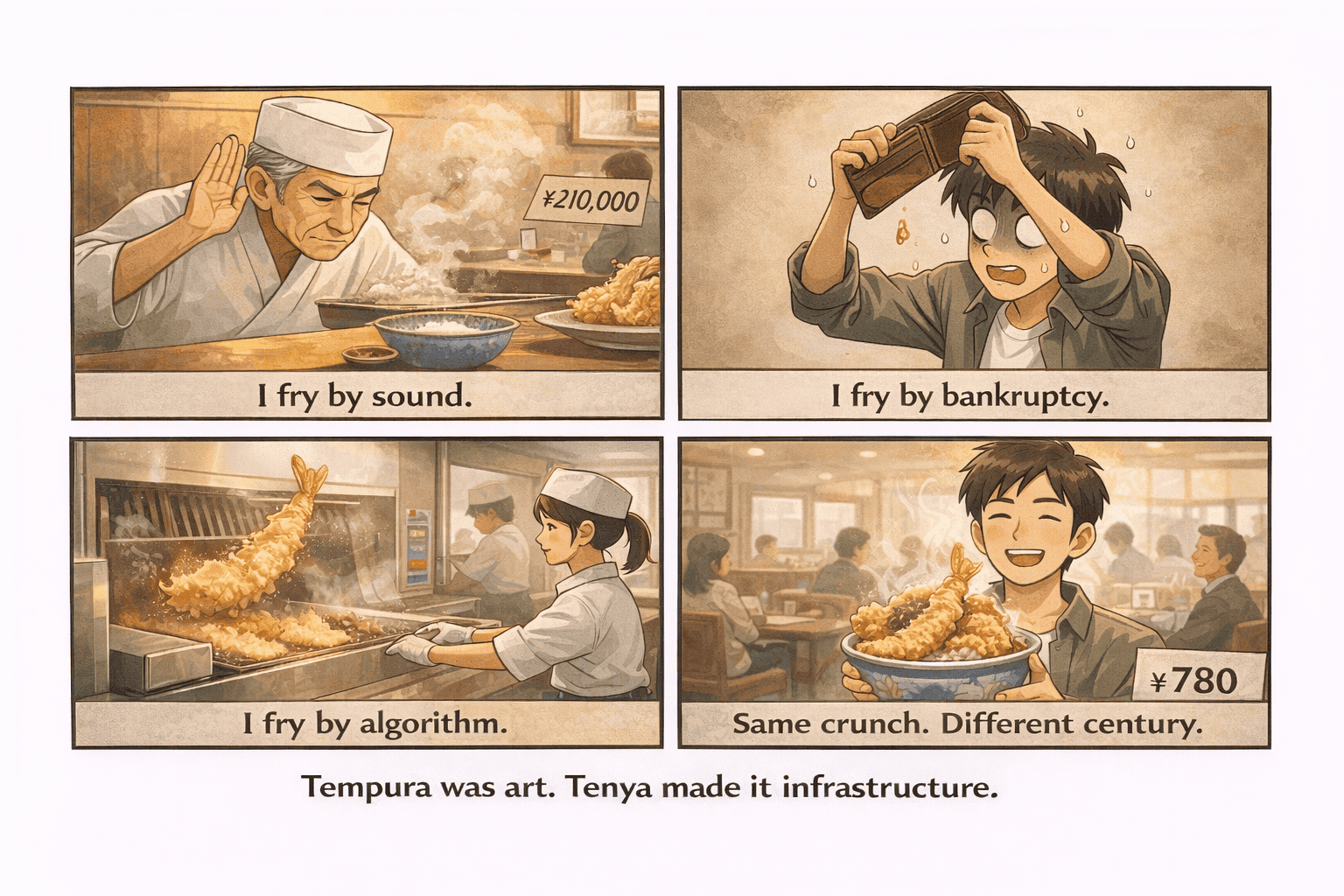
Why was Tempura expensive in the past? It wasn’t just the ingredients; it was the cost of the artisan (Shokunin). Tempura requires years of training to master ingredient selection, batter preparation, oil temperature control, and frying timing. There were simply not enough masters to open affordable chains.
The Innovation: The “Auto-Fryer” Tenya changed history by developing the “Auto-Fryer” (Conveyor-type Fryer).
- Computer Control: It automatically manages oil temperature and frying time perfectly.
- Consistency: It allows part-time staff to fry tempura with the same crispiness as a pro, without years of training.
- Cost Cutting: By reducing labor costs, they brought the price down drastically.
The Secret Origin Story Here is a piece of trivia most Japanese people don’t even know. The founder of Tenya was actually a founding member of McDonald’s Japan. He applied the advanced fryer principles of American fast food to traditional Japanese Tempura. Thanks to his vision, Tempura transformed from a “special occasion luxury” to a “common people’s daily meal.” When you eat at Tenya, you are tasting a piece of Japanese corporate history.
📖 Cultural Deep Dive: “The Sound of Oil”
To understand how amazing Tenya’s machine is, you must understand how difficult traditional Tempura is. In the legendary Japanese gourmet manga “Oishinbo” (The Gourmet), there is a famous episode called “The Sound of Oil.” It depicts how to identify a true Tempura Master:
- Hygiene Check: The protagonist eliminates chefs who use hair pomade or smoke cigarettes. Strong smells dull the chef’s senses, and bad health (teeth/nails) affects their ability to stand before hot oil for hours.
- The Final Test: A blind audio test. The chefs listen to a recording of tempura frying. They must raise their hand at the exact millisecond the sound changes—signaling the tempura is perfectly cooked.
Human Ear vs. Computer Chip A true master does not use a timer; they listen to the “voice” of the oil. Tenya replaced this superhuman hearing with computer sensors. While a 30,000 yen artisan Tempura is an art form, Tenya’s ability to replicate 80% of that quality for 5% of the price is a technological miracle.
📋 How to Order (System)
Tenya is very tourist-friendly.
- Enter: Take a seat (or buy a ticket at the vending machine near the entrance, depending on the store).
- Menu: Most stores have multilingual tablets (English, Chinese, Korean) at the table.
- Tea & Pickles: Hot tea (Hoji-cha) and Pickles on the table are free.
- Sauce: If you need more flavor, there is extra “Tare” (sweet soy sauce) on the table.
🏆 Best Menu Rankings (Based on Local Data)
- Ten-don (天丼): The classic. Shrimp, squid, white fish, pumpkin, and green beans. The absolute standard.
- All-Star Ten-don: A luxurious version adding Scallop and Maitake mushroom.
- Soba/Udon Set: You can add a small noodle soup (hot or cold) to your bowl. Highly recommended for a full stomach.
- Vegetable Ten-don: A great option for those who prefer veggies (Lotus root, Sweet potato, etc.). Note: The batter contains egg, and the sauce contains fish stock, so it is not strictly vegan.
ℹ️ Basic Info
- Hours: Usually 11:00 AM – 10:00 PM (Varies by location).
- Takeout: Available (Very popular window at the front).
- Payment: Credit cards and IC cards (Suica/Pasmo) are widely accepted.
- Google Map Keywords: “Tenya” or “Tendon Tenya”.