

Overview
Founded in 1899, Yoshinoya pioneered the modern gyudon (beef bowl) format through extensive trial and error—establishing the now-ubiquitous combination of beef, onions, and dashi broth over rice. In 1972, the chain introduced 24-hour operations, then rare in Japan, triggering nationwide expansion. The “cheap, delicious, fast” (安い、うまい、早い) slogan resonated deeply as Yoshinoya swept across Japan.
Before Yoshinoya’s 24-hour model, early risers had few options beyond standing soba and udon shops for proper breakfast. This innovation proved so successful that even coffee shops—which traditionally opened at 9 AM—began offering early morning service.
Operating Hours: 24 hours (most locations)
Holidays: Generally year-round operation, though occasional closures occur for professional cleaning (infrequent)
Budget: ¥600-¥1,000
Locations: 1,273 stores (as of December 2025)
Key Features
Menu Philosophy
Primary offerings include gyudon (beef bowl), beef plate set meals, curry rice, unagi-don (eel bowl), stir-fried pork and beef set meals, healthy breakfast sets, and sukiyaki set meals. In 2025, Yoshinoya experimentally launched beef tsukemen set meals. Unlike competitors Sukiya and Matsuya—which constantly develop new menu items through ongoing scrapping and building—Yoshinoya maintains a conservative approach, rarely expanding its repertoire. The chain introduced affordable breakfast sets in 1982.
Market Position
Though Sukiya surpassed Yoshinoya in store count in 2008 and has maintained the #1 industry position since, Yoshinoya retains strong loyalty among customers aged 40+. In rankings among customers in their 60s, Yoshinoya still outranks Sukiya.
Exceptional Lunch Value
Lunch proves particularly economical. The big three gyudon chains—Yoshinoya, Sukiya, and Matsuya—offer gyudon lunch sets with salad and miso soup, or curry lunch sets, for ¥550-¥600. This matches the price of the cheapest convenience store bento + drink combinations during lunch hours.
All-You-Can-Eat Rice (Set Meals Only)
Set meals include unlimited rice refills. Important limitation: This applies only to set meals where rice and protein are served separately (beef plate sets, grilled meat sets, etc.)—NOT to donburi-style bowls where meat sits atop rice. For maximum rice consumption, order set meals. Note that only Yoshinoya and Matsuya offer unlimited rice; Sukiya does not. While this started as an experimental feature and could end anytime, it has continued for several years.
Experience Raw Eggs
Raw eggs appear regularly at Japanese breakfast tables but remain uncommon elsewhere. Few Japanese restaurants serve them beyond gyudon shops, udon/soba establishments (including standing shops), and specialized tamago-kake-gohan restaurants (only 3-4 locations in Tokyo). Gyudon chains are the ONLY places offering raw eggs 24 hours daily. Enjoy this uniquely Japanese experience during your stay.
Non-Meat Options Available
Morning-only service (5:00 AM-11:00 AM) includes health-focused set meals combining grilled fish, natto (fermented soybeans), tofu, eggs (raw or fried), pickles, and salad. Perfect for those avoiding meat.
Taste Comparison: Matsuya vs. Yoshinoya vs. Sukiya
Chain heritage: Sukiya’s founder worked at Yoshinoya; Matsuya’s founder frequented Yoshinoya’s original Tsukiji location—both chains clearly influenced by Yoshinoya yet developed distinct flavor profiles.
Popular consensus:
- Yoshinoya: Light seasoning; tender, juicy meat
- Matsuya: Strong shoyu (soy sauce) presence with sweetness; substantial eating satisfaction
- Sukiya: Pronounced ginger flavor; thin-sliced meat pairs easily with rice
The Magic of the Pot
Yoshinoya’s cooking method involves adding meat, onions, and broth to pre-existing large pots, making the process simple enough for new part-time staff following the manual. Ingredients and broth ship from central warehouses to stores within the same area. Theoretically, all locations should taste identical.
Yet reality differs. The Yurakucho location in central Ginza is widely considered Yoshinoya’s most delicious. The mysterious reason: chemical reactions between ingredients and the cooking pot. This shop—operating for over 40 years—has never extinguished its pot’s flame. Decades of continuous simmering have created unique flavors as the pot reacts with ingredients. This phenomenon occasionally occurs at long-established sukiyaki restaurants as well.
The Yurakucho location sells 1,500-1,600 bowls daily—the highest sales volume among Yoshinoya’s 1,000+ locations.
Important Notes
Ordering System
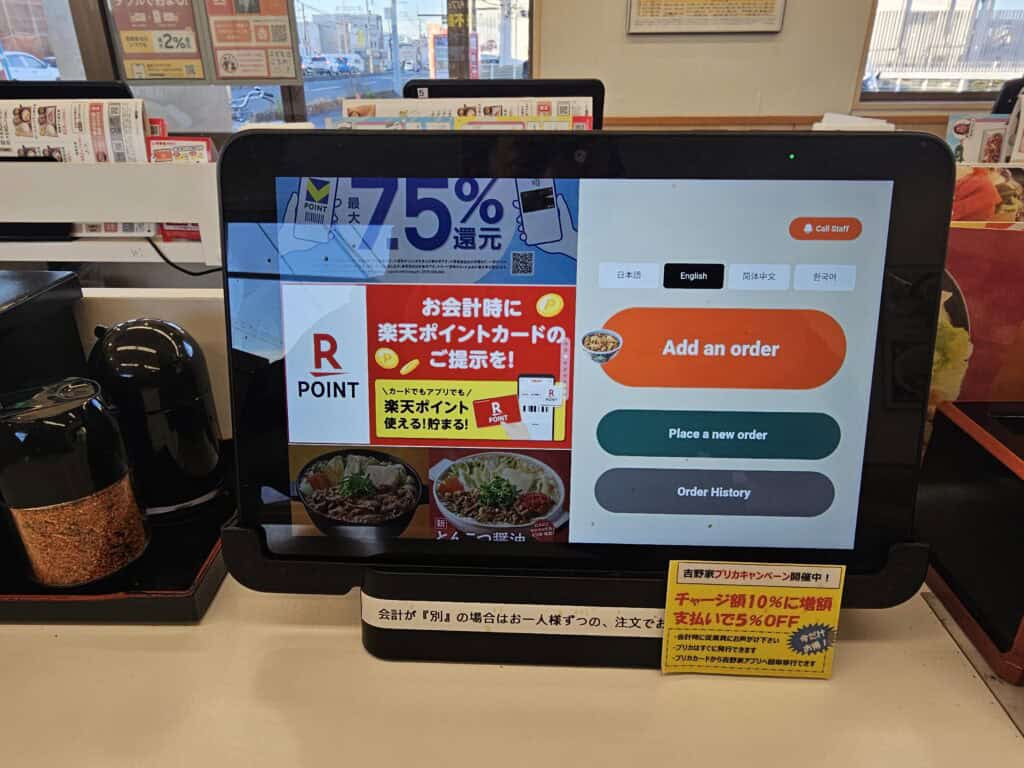
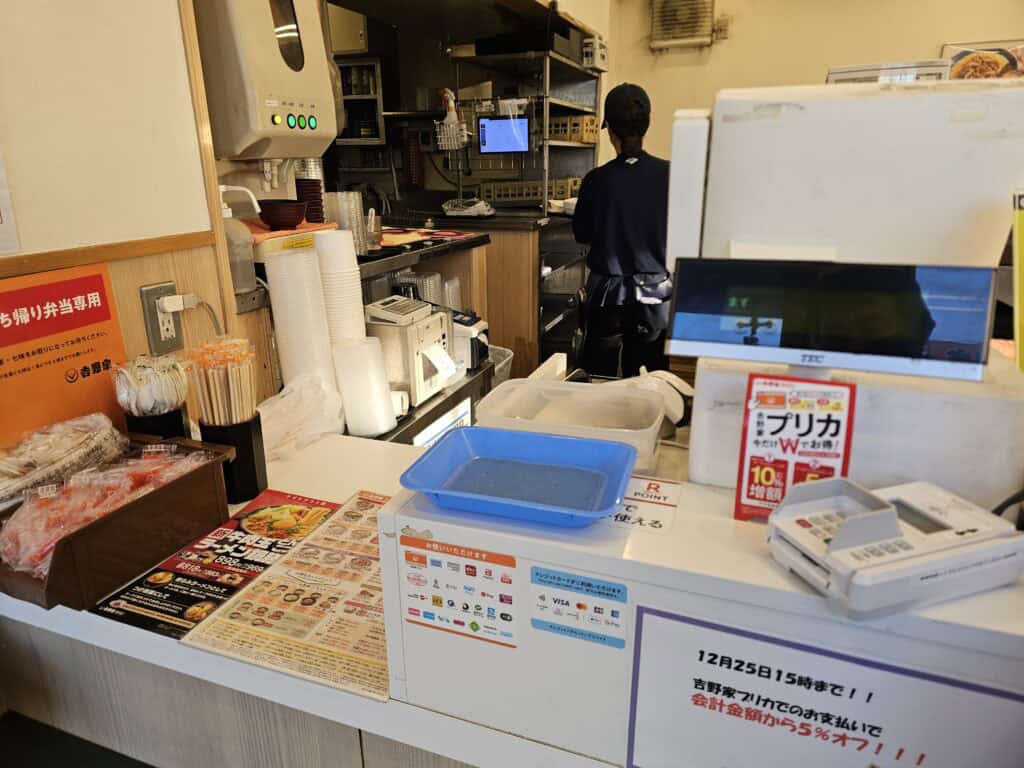
Yoshinoya has introduced tablet ordering systems with English language support. Simply select your items from the tablet at your table. The staff will bring your food along with a bill. After finishing your meal, take the bill to the cashier register to pay. **Alternative Method:** If you find the tablet confusing, you can raise your hand to call a staff member and point to the items on the popular menu list and size chart in this guide. This traditional method still works perfectly.
Atmosphere
Yoshinoya expanded during Japan’s high-growth period by opening near train stations to serve busy salarymen seeking cheap, fast meals. The atmosphere is not designed for leisurely dining. Sukiya successfully differentiated itself by targeting families with more table seating. While Yoshinoya has increased table-seat locations following Sukiya’s model, many stores still feature primarily counter seating.
🍚 Yoshinoya Bowl Size Guide
Size Options (サイズの表記)
• If you don’t specify a size, the staff will assume you want Regular (Namimori / 並盛).
• To order a different size, simply point to your desired size in the table below when ordering.
• For set meals (定食), rice refills are unlimited. When you want more rice, say “Rice Okawari” (ライスおかわり) and point to the size you want from this table.
| Size |
|---|
|
小盛
Small (Komori)
|
|
並盛
Regular (Namimori)
|
|
大盛
Large (Ōmori)
|
|
特盛
Extra Large (Tokumori)
|
|
超特盛
Super Extra Large (Chō-Tokumori)
|
Top 10 Most Popular Menu Items
Based on 762 votes on ranking portal “Minna no Ranking.” Japanese names and photos are provided—show these to staff when ordering.
Size Guide
Without specification, you receive “regular” (並). Other sizes: small (小), large (大), extra-large/tokumori (特盛), super extra-large/cho-tokumori (超特盛). Point to this chart to specify your preferred size.
Bowl and set meal prices range ¥500-¥900, except unagi-don (eel bowl) which exceeds ¥1,100.
1. Gyudon (牛丼)
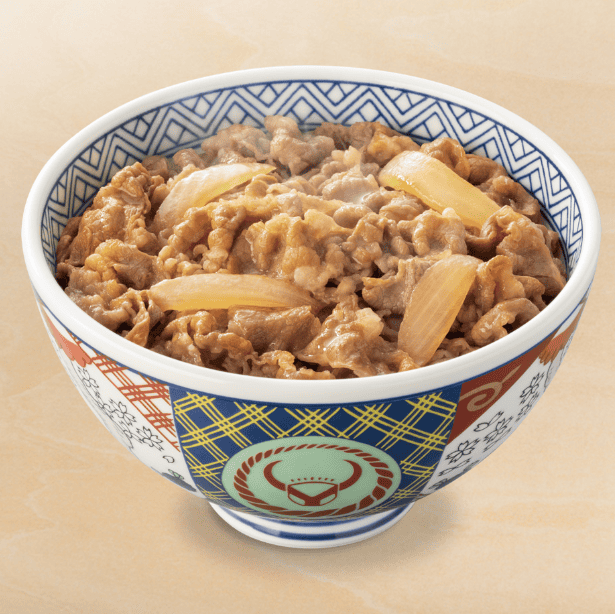
Image courtesy of Yoshinoya Co., Ltd.
Calories:
- Small: 478 kcal
- Regular: 652 kcal
- Large: 863 kcal
- Extra-Large: 1,030 kcal
- Super Extra-Large: 1,169 kcal
2. Gyu-Kalbi Don (牛カルビ丼)
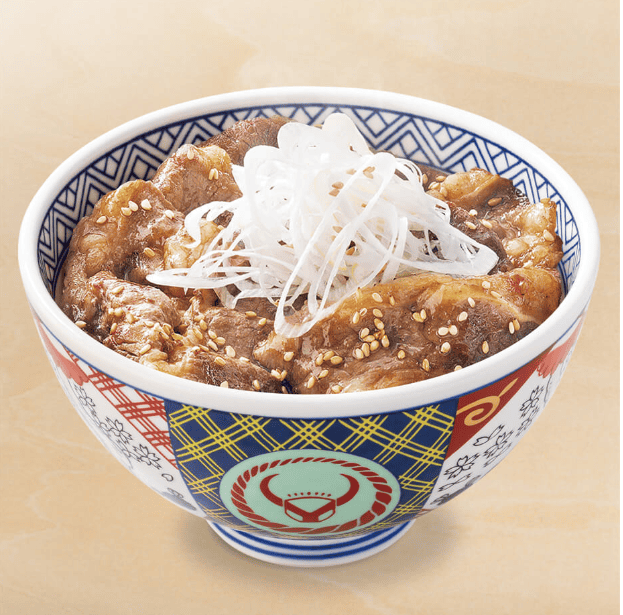
Image courtesy of Yoshinoya Co., Ltd
Calories:
- Small: 621 kcal
- Regular: 839 kcal
- Large: 1,081 kcal
- Extra-Large: 1,198 kcal
Grilled beef short rib over rice.
3. Negi-Tama Gyudon (ねぎ玉牛丼)
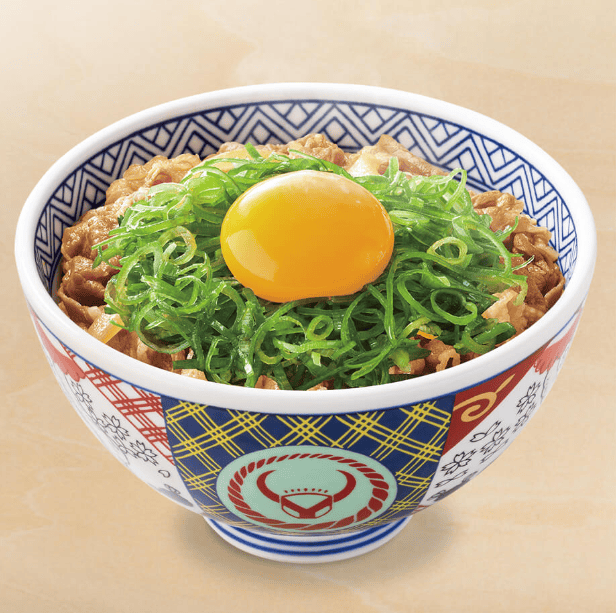
Image courtesy of Yoshinoya Co., Ltd.
Calories:
- Small: 596 kcal
- Regular: 770 kcal
- Large (Atama): 859 kcal
- Large: 981 kcal
- Extra-Large: 1,148 kcal
- Super Extra-Large: 1,287 kcal
Gyudon topped with green onions and raw egg yolk.
4. Gyu-Suki Nabe Zen (牛すき鍋膳)
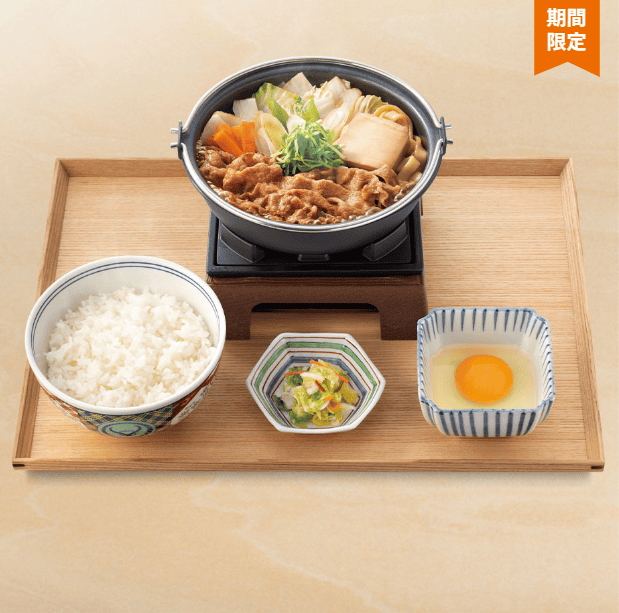
Image courtesy of Yoshinoya Co., Ltd.
Sukiyaki hot pot with rice, raw egg, and pickles. Unlimited rice refills. Not available at all locations.
Calories: 1,106 kcal
5. Tonjiru (とん汁)
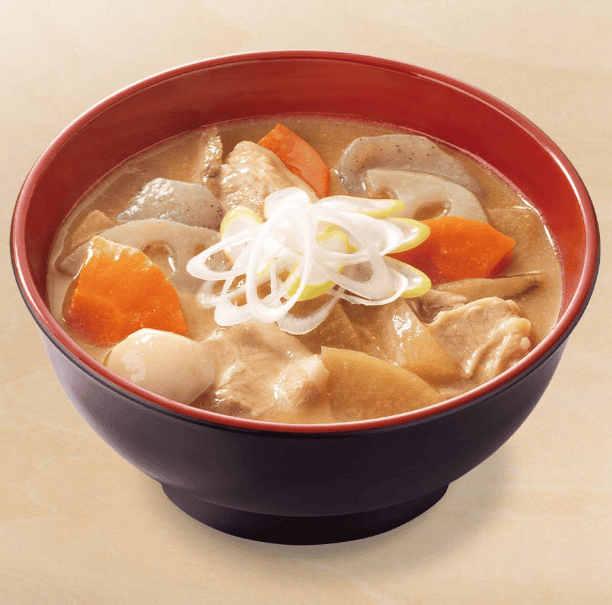
Image courtesy of Yoshinoya Co., Ltd.
Pork and vegetable soup seasoned with miso—a hearty variant of miso soup. Set meals include miso soup, but you can upgrade to tonjiru for a small additional charge.
Calories: 147 kcal
6. Gyu-Kalbi Teishoku (牛カルビ定食)
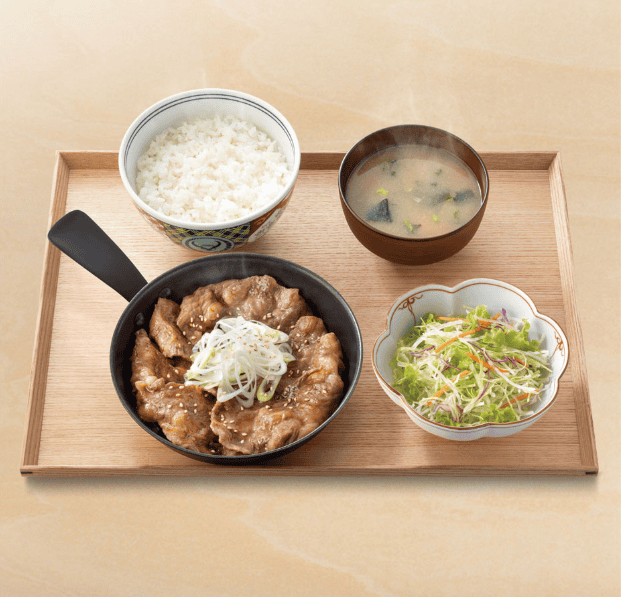
Image courtesy of Yoshinoya Co., Ltd.
Calories:
- Regular: 834 kcal
- Large: 1,111 kcal
- Extra-Large: 1,227 kcal
Sizzling beef short rib with special soy-based sauce, served hot on the pan. Includes rice, small salad, and miso soup. Unlimited rice refills.
7. Kimuchi Buta-don (キムチ豚丼)
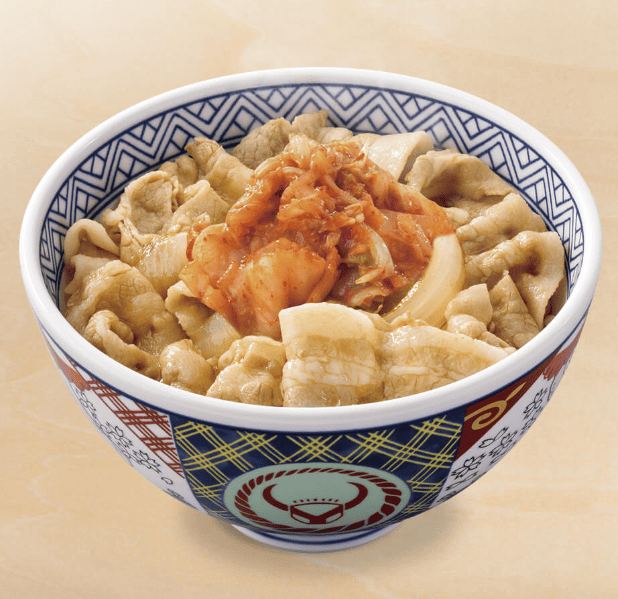
Image courtesy of Yoshinoya Co., Ltd.
Calories:
- Regular: 608 kcal
- Large: 806 kcal
- Extra-Large: 958 kcal
Pork bowl (marinated pork instead of beef—slightly cheaper and lower calorie, with refreshing flavor) topped with kimchi.
8. Gyu-Sake Teishoku (牛鮭定食)
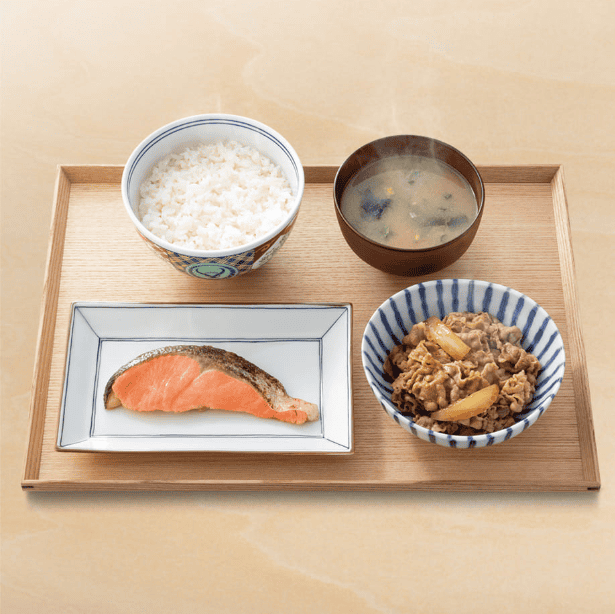
Calories: 765 kcal
Grilled salmon with small beef plate, miso soup, and rice.
9. Unagi-ju (鰻重)
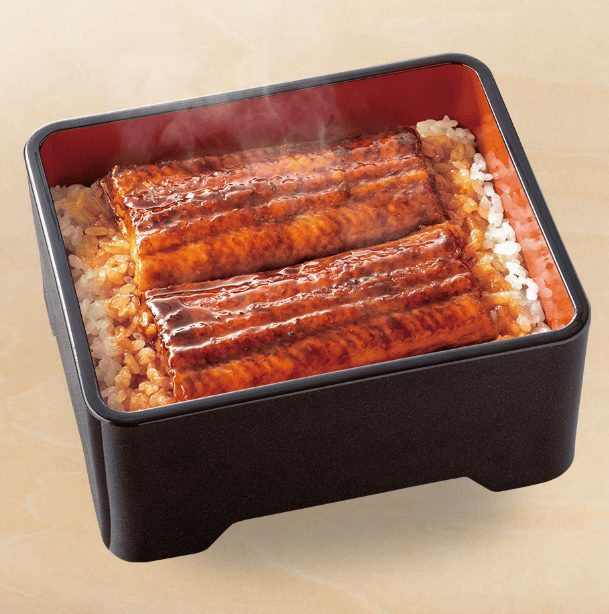
Image courtesy of Yoshinoya Co., Ltd.
Calories:
- Single portion: 670 kcal
- Double portion: 881 kcal
- Triple portion: 1,209 kcal
Eel represents one of Japan’s most prestigious foods. Domestic eel is expensive, but gyudon chains use Chinese eel to maintain affordable pricing. Eel comes as unagi-don (served in a bowl) or unagi-ju (served in a square lacquer box). Unagi-ju uses higher-grade eel portions, making it more expensive. Yoshinoya offers options to increase eel portions or add beef plate, miso soup, and pickles.
10. Kimuchi-Kalbi Don (キムチカルビ丼)
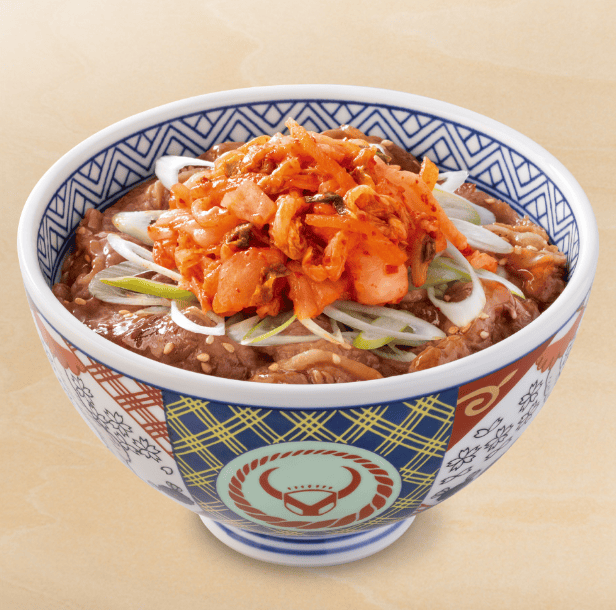
Image courtesy of Yoshinoya Co., Ltd.
Calories:
- Small: 632 kcal
- Regular: 850 kcal
- Large: 1,092 kcal
- Extra-Large: 1,209 kcal
Beef short rib bowl topped with kimchi.
🍚 Rice & Meal Size Guide
Size Options (サイズの表記)
• When ordering a set meal (定食) or specifying rice size, simply point to your desired size in the table below.
• This guide can be used at most Japanese restaurants, cafeterias, and dining halls.
• Note: Extra Large (Tokumori) is not available at many restaurants. However, Regular (Nami), Small (Sho), and Large (Ōmori) are available at almost all establishments.
| Size |
|---|
|
並
Regular (Nami)
|
|
小
Small (Sho)
|
|
大盛り
Large (Ōmori)
|
|
特盛
Extra Large (Tokumori)
|
.
Side Dishes & Morning Sets
Set meals and lunch services include side dishes and miso soup, but individual bowls (donburi) do not. Yoshinoya offers over 14-15 types of morning set meals (5:00 AM – 11:00 AM), which are cheaper than regular menu items and include unlimited rice refills. Below, we introduce 4 popular all-day side items (¥100-250) you can add to any order, followed by 3 typical morning set options.
Side Menu (All Day)
Morning Sets (5:00 AM – 11:00 AM)
Potato Salad Set (ポテトサラダセット)
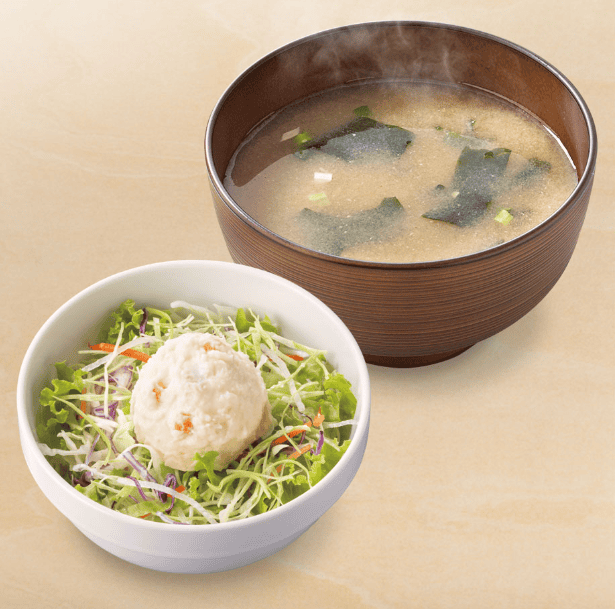
Miso soup and fresh vegetables topped with potato salad.
Raw Egg (なまたまご)
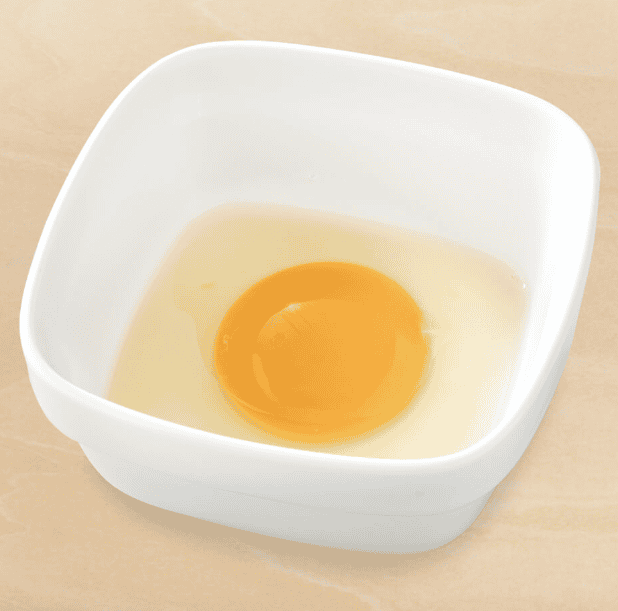
Fresh raw egg to mix into your bowl—a classic Japanese style.
Soft-Boiled Egg (半熟たまご)
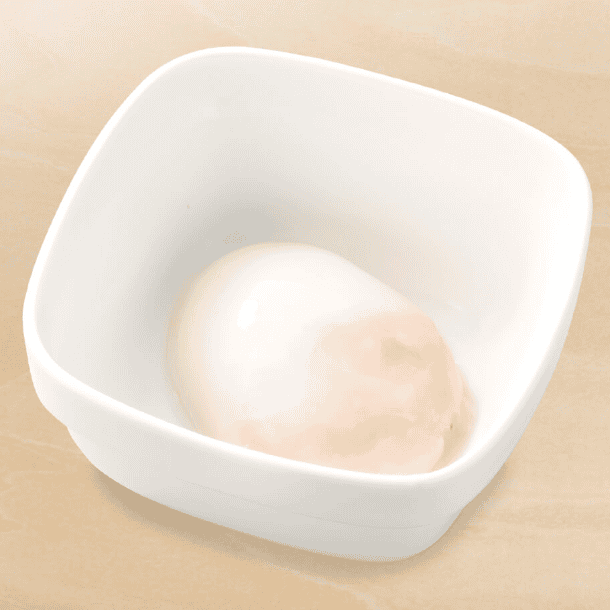
Perfectly cooked soft-boiled egg.
Fried Chicken Set (唐揚げセット)

Miso soup and Japanese-style fried chicken.
Toku-Asa Teishoku (Special Morning Set)
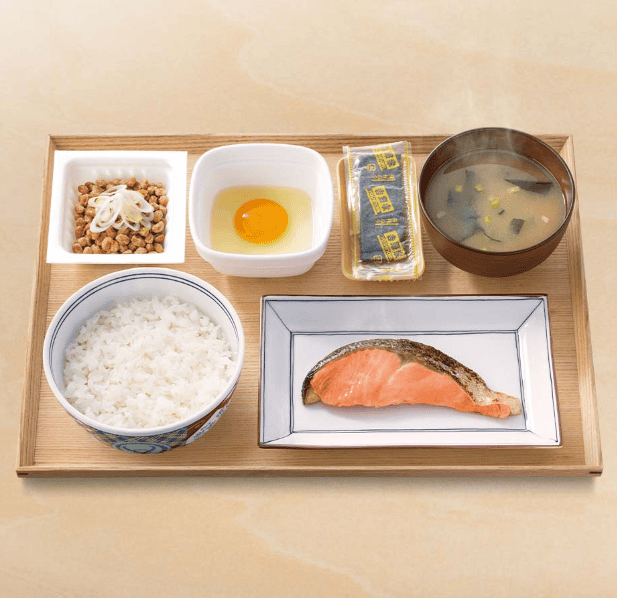
Grilled salmon fillet, natto, dried seaweed, raw egg, miso soup, and rice.
Asa-Gyu Set (Morning Beef Set)
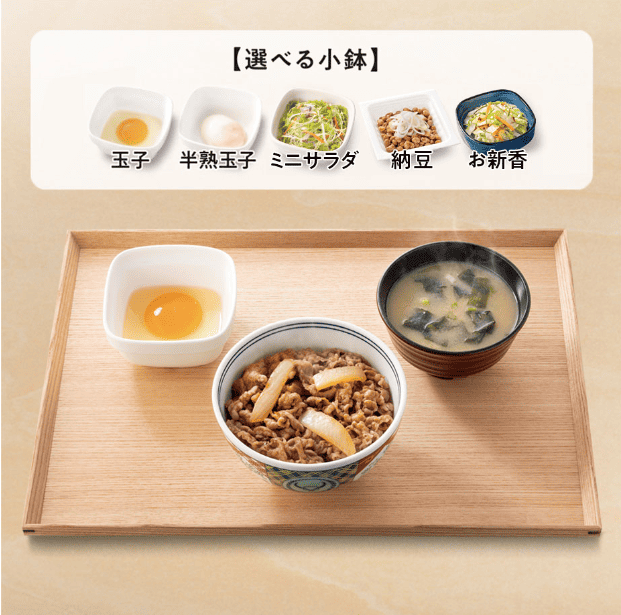
Beef bowl with miso soup and your choice of one item: raw egg, soft-boiled egg, mini salad, pickles, or natto (fermented soybeans).
Ham & Egg with Small Beef Plate Set
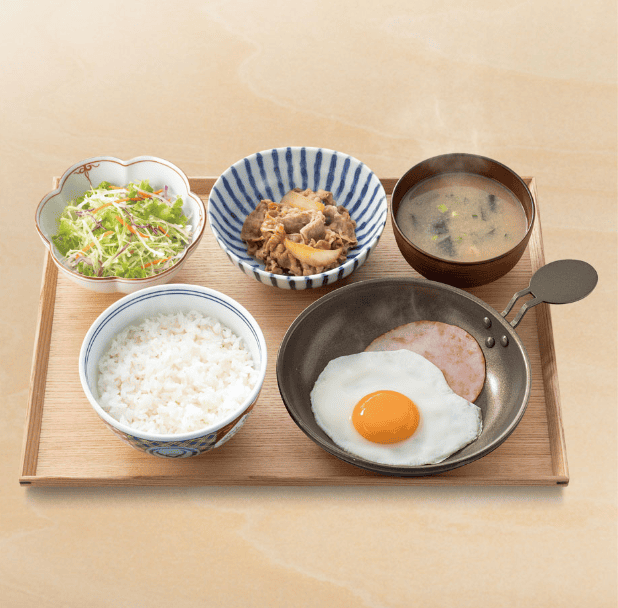
Ham and eggs with a small beef plate, mini salad, and miso soup.

コメント