
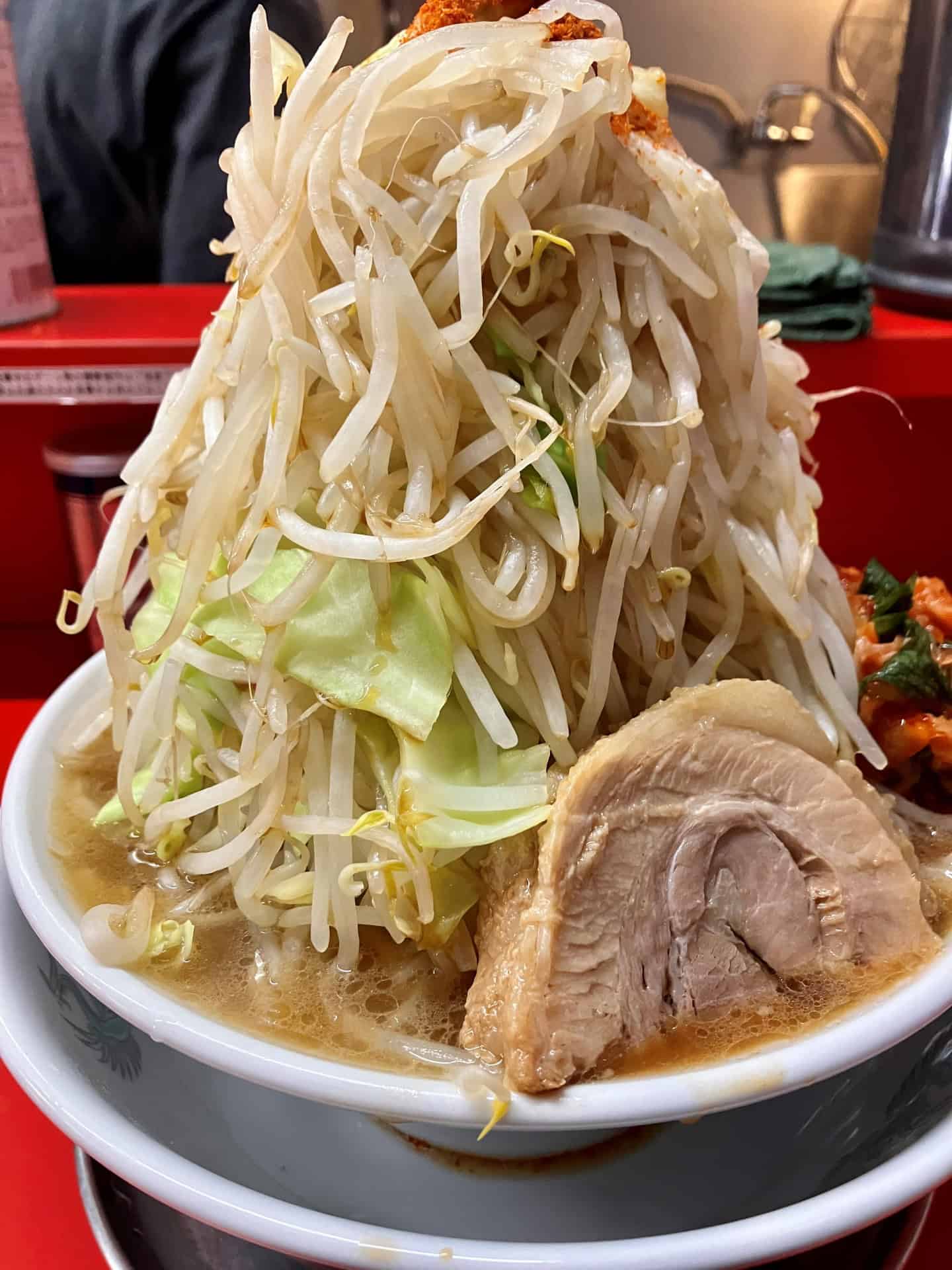
Introduction
Walking through Tokyo, you might see a long line of men standing silently in front of a yellow sign. Is it a secret club? A religious gathering? No, it’s Ramen Jiro. Selected by The Guardian(UK) as one of the “50 Best Foods to Eat in the World” in 2009, Jiro is not just a ramen shop. It is a cultural phenomenon. It is a battle between you and a mountain of carbohydrates. Warning: This is not your typical polite Japanese “Omotenashi” dining. This is the heavy metal of the ramen world.
👁️ Kajino’s Eye: It’s Not Dinner, It’s a Sport
Let me be clear: Do not go to Ramen Jiro on a date. Do not go if you want a relaxing chat. Jiro fans are called “Jirorians.” For them, eating here is a ritual.
- The Atmosphere: Imagine a library, but everyone is slurping aggressively. Silence is golden.
- The Chef: He is not a servant; he is the captain of a submarine. He commands the kitchen with a “Lot System” (cooking in batches to maintain rhythm). Don’t break his rhythm.
- The Aftermath: If you finish a bowl, you won’t need to eat until tomorrow morning.The garlic will stay with you for three days. But you will feel a strange sense of accomplishment, like finishing a marathon.
⚠️ The 5 Golden Rules of Survival
Before you enter the battlefield, you must know the code of conduct. Breaking these rules might get you a cold stare (or a lecture).
- Silence in the Line Whether eating or waiting, keep quiet. This is serious business. No chatting about your travel plans.
- No Paparazzi Photos of your own bowl are OK. Photos of the kitchen, the chef, or other customers are strictly PROHIBITED.
- Cash Only (No Big Bills) The ticket machine only accepts coins and ¥1,000 bills. Do not try to use a ¥10,000 bill. The atmosphere is too tense to ask for change. Come prepared.
- No “Group Seats” The “Lot System” is strict. If you are with three friends, you will likely be separated. Accept your fate and eat alone.
- Water Strategy Self-service water is available, but many Jiro shops have a vending machine outside. Pros buy a bottle of Oolong Tea (to wash down the grease) and bring it in. This is allowed.
🎫 How to Order (The Trap)
The menu is simple, but the sizes are a lie.
- Small Ramen (Sho / 小): Warning! This is NOT small. It contains 300g of noodles (double a normal shop) + huge pork slices + vegetables.
- Beginner Tip: Look for a “Less Noodles” (Sukaname / 200g) or “Half” (Hanbun / 150g) option if available.
- Large Ramen (Dai / 大): Do not press this button unless you are a professional eater or a sumo wrestler. Leaving food behind is a major taboo here.
- Pork (Buta/Char Siu): You can add more pork (2 slices or 5 slices). The pork is thick and heavy.
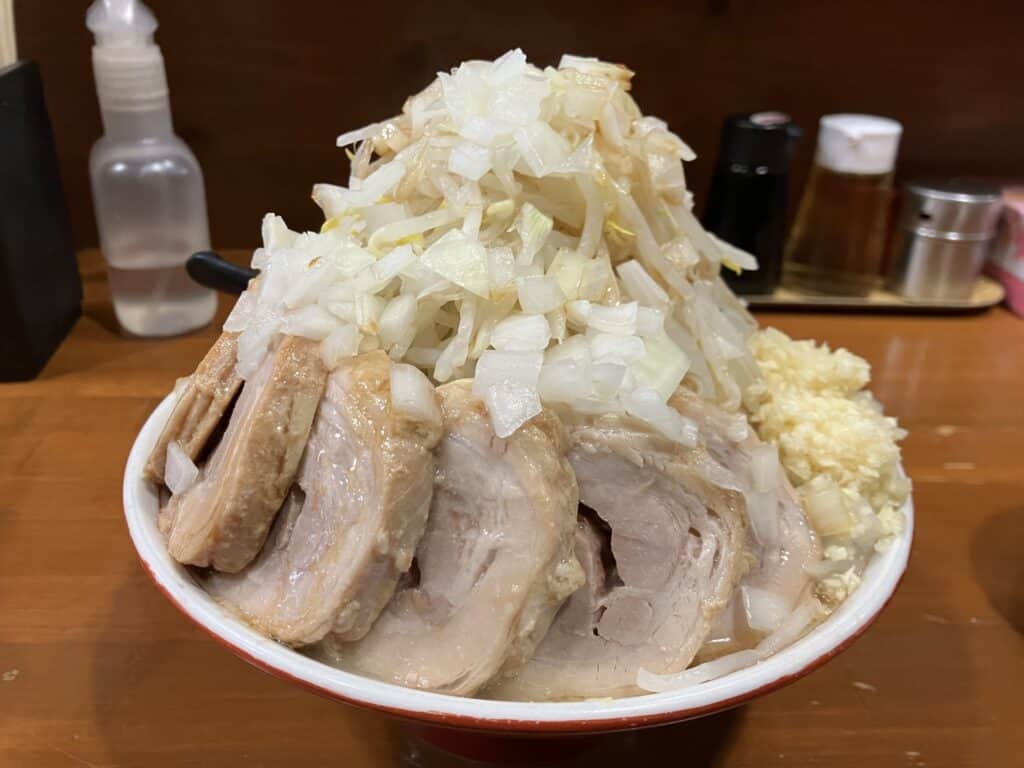
Double Buta: An absurd amount of meat.
Once seated: Place your plastic ticket on the high counter. This tells the chef how much to boil.
🗣️ The Magic Spell: “The Call” (Topping Time)

This is the most terrifying moment for beginners. Just before your ramen is served, the chef will look at you (or point) and ask: “Ninniku wa?” (How about garlic?)
This is not a Yes/No question. It is your cue to recite the “spell” for free toppings.
The 4 Elements:
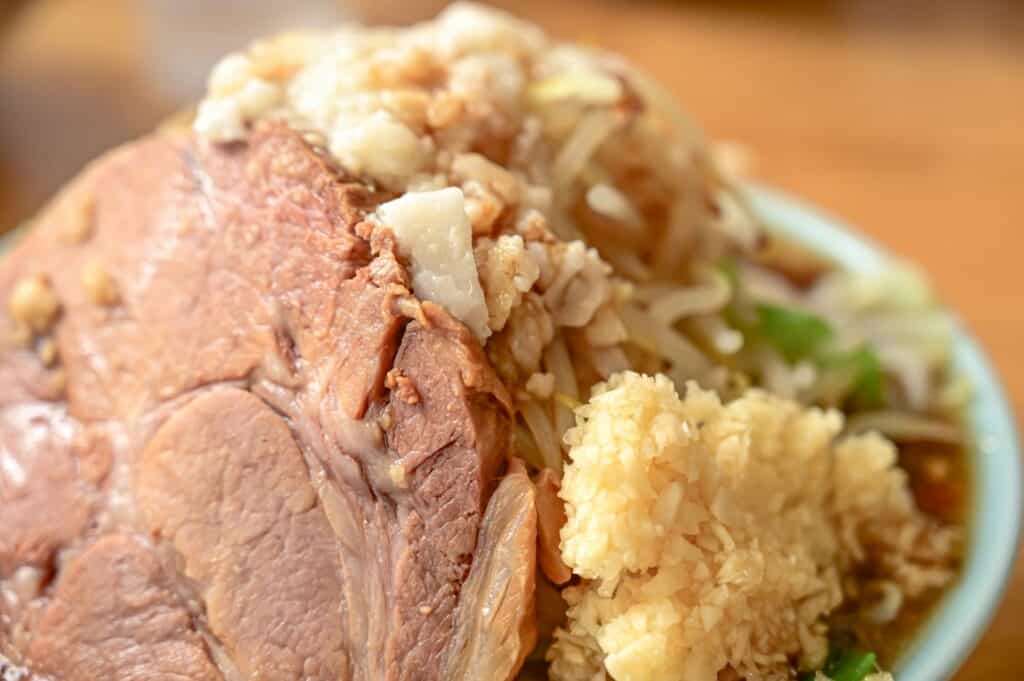
- Ninniku (Garlic): Chopped raw garlic. (Warning: It’s strong. Your stomach might grumble later).
- Yasai (Vegetables): Cabbage and bean sprouts. Standard is already a heap. “Mashi” is a mountain. “Mashi-Mashi” is Tokyo Tower.
- Abura (Back Fat): Gobs of pork fat. Adds sweetness and calories.
- Karame (Sauce): NOT spicy mustard. It means salty soy sauce. Beginners should avoid this; the soup is already salty enough.
How to Reply:
- Safe Mode: “Sono-mama” (As is). Standard veggies, standard fat, NO garlic.
- Beginner Mode: “Ninniku sukoshi, Yasai” (A little garlic, increase vegetables).
- Pro Mode: “Zenbu Mashi” (Increase everything). Good luck.
📍 Recommended Shops for the Brave
While there are more than 1,000 “Inspire” shops, here are the real “Direct” (Chokkei) deals.
1. Mita Headquarters (Mita Honten) The Holy Land. Located near Keio University. This is where it all began.
- Vibe: The original chaotic, greasy, legendary atmosphere. Usually sold out by the end of lunch time.
- Access: Tamachi Station or Mita Station. Near Tokyo Tower.
2. Ramen Jiro Jimbocho Known for having one of the highest quality soups and noodles among all Jiro shops.
- Vibe: Long queues (1-2 hours), but worth it for the taste.
- Access: Jimbocho Station. Near Akkihabara and Kanda
3. Ramen Jiro Nishidai Station Often cited as having a relatively welcoming master and excellent balance of flavor.
- Access: Nishidai Station.
4.Hibari-ga-oka: Known for being the most “balanced” and delicious broth. High rating among Jirorians.
Access: Hibarigaoka Station.
📊 Basic Info
- Budget: ¥850 – ¥1,000 (Cash Only)
- Time: 20-60 minutes (eating time + waiting time)
- System: Ticket machine