
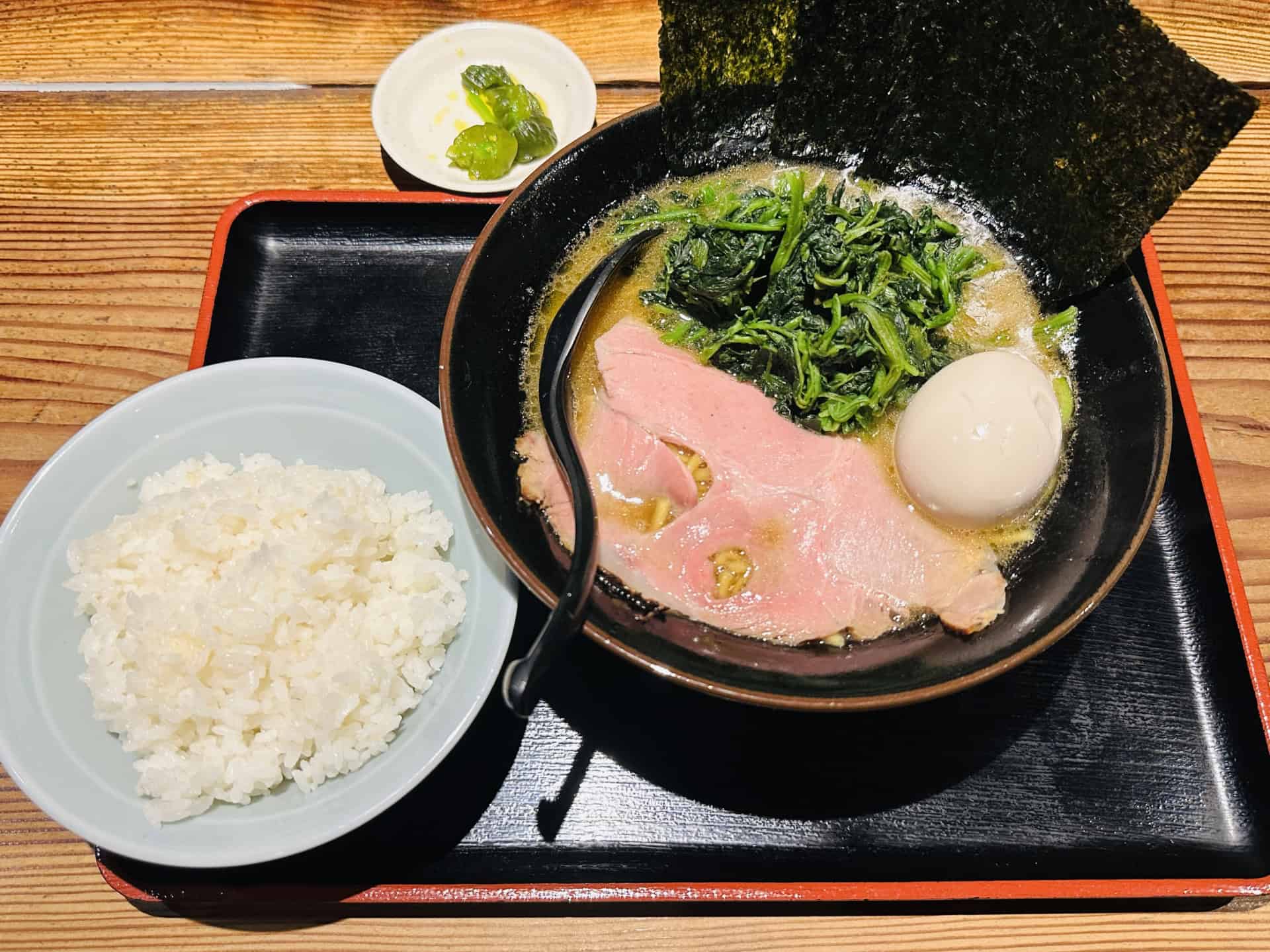
ekei (家系) ramen is one of Japan’s most influential modern ramen styles.
Born in Yokohama through the legendary shop Yoshimuraya, Iekei combines rich pork-and-chicken broth, strong soy sauce seasoning, thick straight noodles, spinach, seaweed, and rice into one highly addictive bowl.
Today, more than 2,000 shops serve Iekei-style ramen across Japan, making it one of the country’s largest ramen movements.
Unlike many large chains, most Iekei shops are not controlled by a single central kitchen system. Instead, independent owners build upon the Yoshimuraya style while adding their own techniques, soup balance, toppings, and atmosphere.
The result is a ramen culture that feels both connected and fiercely individual.
🏠 What Does “Iekei” Mean?
The word “Iekei” (家系) literally means “house style” or “family line.” It refers to ramen shops connected—directly or indirectly—to the legendary Yoshimuraya in Yokohama. Over time, the style spread across Tokyo and Kanagawa, creating hundreds of independent shops inspired by the original formula.
Unlike tightly controlled chains, Iekei evolved more like a family tree. Some shops stay very close to the original Yoshimuraya taste, while others create heavier soups, stronger soy sauce flavors, or modern interpretations. This flexibility is one reason Iekei became one of Japan’s largest ramen movements.
🍜 The Core Features of Iekei Ramen
A typical Iekei bowl combines rich pork bone broth with chicken stock and a strong soy sauce seasoning known as “tonkotsu shoyu.” The soup is thick, salty, oily, and deeply satisfying without reaching the extreme heaviness of Jiro-style ramen.
The toppings are also iconic:
- thick straight noodles
- spinach
- large sheets of seaweed
- slices of chashu pork
This balance between richness and structure is what makes Iekei addictive for many Tokyo locals.
⚙️ The Customization Culture
One of the biggest attractions of Iekei ramen is customization. Most shops allow customers to adjust three core elements:
- noodle firmness
- soup strength
- oil amount
The famous order is:
“Katame, Koime, Ome”
(Hard noodles / Strong flavor / Extra oil)
Heavy eaters and late-night salarymen love this combination, but beginners should start with the standard settings first. Every shop has slightly different soup density and salt levels, so learning each shop’s “default balance” is part of Iekei culture.
🍚 Why Rice Matters So Much
Rice and Iekei ramen are almost inseparable.
Many shops offer free rice during lunch hours, and some even provide unlimited refills. The salty pork-soy sauce soup pairs perfectly with plain white rice, especially when combined with garlic, seaweed, and chashu pork.
A classic technique is wrapping rice inside a soup-soaked sheet of seaweed before eating it. It sounds simple, but for many fans, this combination is the true heart of Iekei ramen culture.
🧄 Table Seasonings & Flavor Changes
Most Iekei shops provide a wide selection of seasonings on the counter. Common items include:
- grated garlic
- chili bean paste
- vinegar
- sesame
- black pepper
These are not just decorations. Changing the flavor halfway through the meal is considered part of the experience. Garlic adds power, vinegar cuts through the heaviness, and spicy paste completely changes the personality of the soup.
Experienced customers often create multiple flavor stages within a single bowl.
⚔️ Iekei vs. Jiro: Two Completely Different Worlds
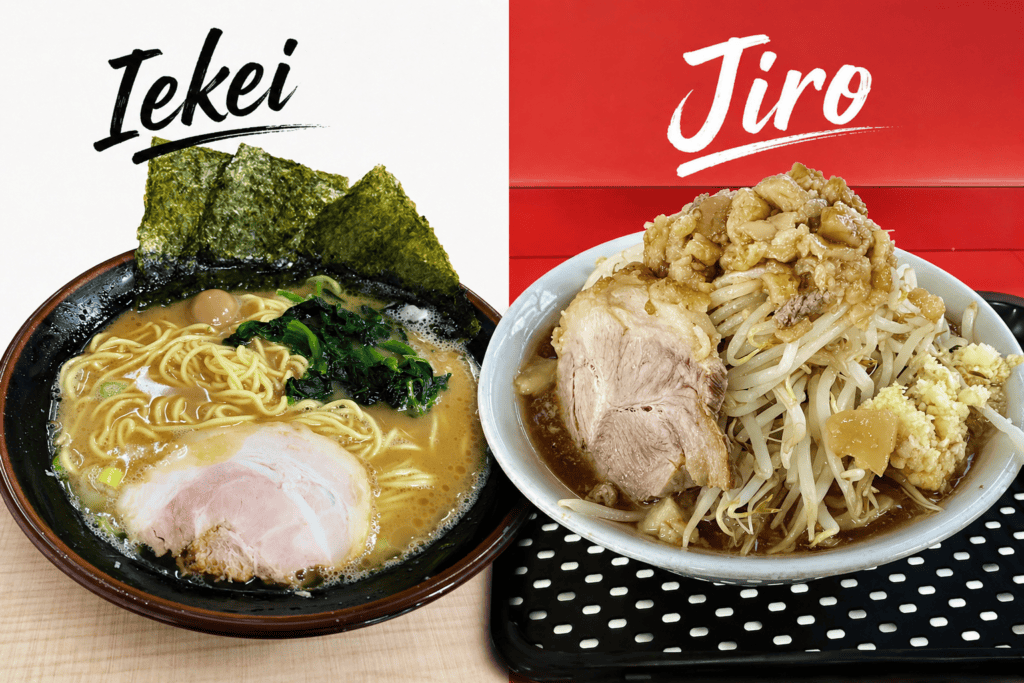
At first glance, Iekei and Jiro-style ramen may seem similar. Both use rich pork-based soups and have passionate fan communities. But the eating experience is completely different.
Jiro is extreme:
massive portions, ultra-thick noodles, giant vegetable piles, and an almost competitive atmosphere.
Iekei is more balanced and practical. The portions are manageable, the soup is smoother, and the customization system is easier for beginners. Women eating alone at Iekei shops is also common, while Jiro still maintains a more intimidating reputation.
In simple terms:
Jiro feels like a challenge.
Iekei feels like a lifestyle.
🏆 Recommended Iekei Shops in Tokyo
Tokyo has thousands of Iekei-style shops, ranging from direct Yoshimuraya lineage stores to highly creative independent interpretations.
Some of the most respected names include:
- Musashiya (Nakano)
- Menya Ryu (Ogikubo)
- IEKEI TOKYO (Suehirocho)
- Hiiki (Kamata)
- Wyz (Kanda/Akihabara)
- Otsunaya (Ikebukuro)
- Odono Shirushi (Shinbashi)
Each shop has a slightly different balance of soup richness, soy sauce intensity, noodles, and atmosphere. Exploring these differences is part of the fun.
🔰 Beginner Tips for First-Time Visitors
If this is your first Iekei experience, avoid over-customizing immediately. Start with normal settings and learn the shop’s natural flavor balance first.
A few beginner tips:
- Order rice.
- Add garlic slowly.
- Don’t drink the soup too quickly—it becomes saltier near the bottom.
- Use seaweed with rice.
- Expect strong flavors.
Most importantly, don’t overthink it. Iekei is not fine dining. It is fast, comforting, practical Tokyo ramen designed for everyday cravings.
💰 Why Iekei Still Feels Like a Bargain
Even highly respected Iekei shops often keep ramen prices between ¥700 and ¥900, making the style surprisingly affordable compared to many modern Tokyo ramen shops.
This strong cost-performance is one reason Iekei became deeply connected to everyday urban life. A bowl of rich pork-soy sauce ramen, free rice, garlic, seaweed, and a full stomach for under ¥1,000 remains one of Tokyo’s best food deals.
While Michelin-level ramen increasingly moves toward ¥1,500–¥2,000 territory, Iekei still preserves part of ramen’s original role: fast, powerful, affordable comfort food for ordinary people.
Kajino’s Eye
Iekei ramen represents a different side of Tokyo ramen culture.
It is rich but balanced.
Heavy but practical.
Fast, customizable, and deeply tied to everyday urban life.
For many Tokyo residents, Iekei is not a special-event ramen.
It is the bowl they crave after work, late at night, or whenever they need something powerful, salty, and comforting.
Once you understand the combination of soup, noodles, seaweed, garlic, and rice, it becomes easy to understand why so many people become lifelong fans.