
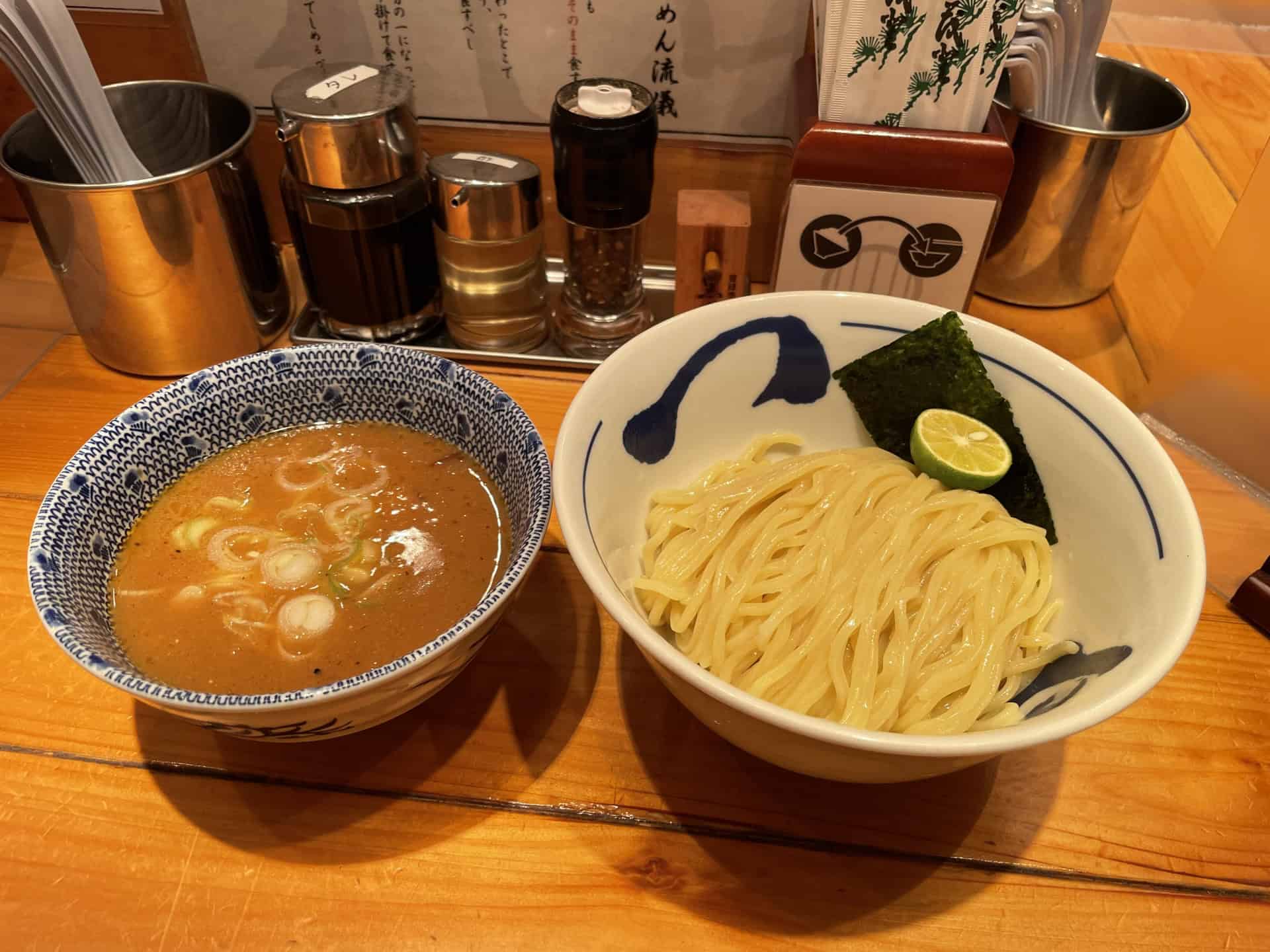
Japanese ramen developed through many regional styles.
Hakata created tonkotsu ramen.
Sapporo popularized miso ramen.
Kitakata became famous for flat curly noodles.
Most ramen styles began as local specialties before eventually spreading to Tokyo and then nationwide.
Tsukemen was different.
Instead of being born from regional tradition, tsukemen began almost accidentally as a playful staff meal created by a young ramen apprentice.
That apprentice was Kazuo Yamagishi, one of the most respected figures in modern Japanese ramen history.
Today, many of Japan’s top ramen masters still refer to him simply as “the master.”
🍜 How Tsukemen Was Born
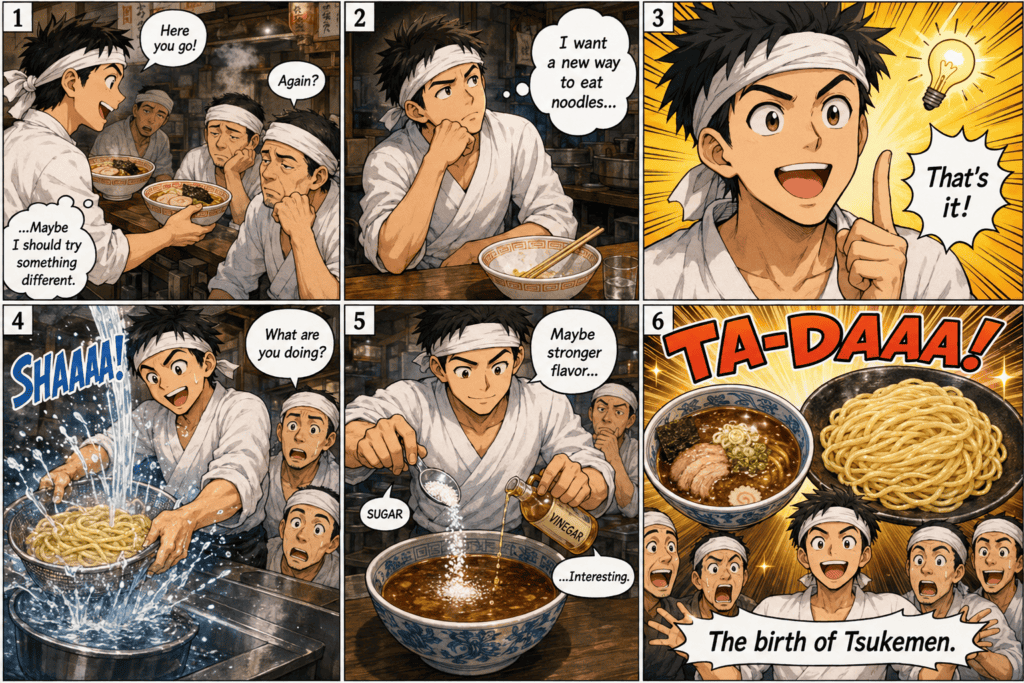
During the 1960s, Kazuo Yamagishi was training at Nakano Taishoken before later founding the legendary Higashi-Ikebukuro Taishoken.
Like many ramen apprentices of the era, he ate ramen every day as staff meals.
Eventually wanting variety, Yamagishi experimented:
he separated the noodles and soup into different bowls.
After boiling the noodles, he chilled them in cold water. To create a stronger dipping soup, he added sugar and vinegar to the broth.
The result felt completely different from ordinary ramen.
Tsukemen was born.
What started as playful experimentation eventually became one of Japan’s most influential noodle cultures.
🏙️ Why Nakano Became a Tsukemen Stronghold
Because tsukemen was first developed at Nakano Taishoken, Nakano remains strongly connected to tsukemen culture even today.
The area still contains many highly respected tsukemen specialists ranging from traditional Taishoken-style bowls to modern heavy seafood-pork dipping soups.
For travelers wanting to seriously explore tsukemen culture, Nakano remains one of Tokyo’s best starting points.
⚠️ Be Careful with Portion Sizes
Standard ramen portions in Japan are usually around 150g of noodles.
Even small bowls at Ramen Jiro often contain 200–300g before boiling, making them difficult for many adults to finish.
Tsukemen shops, however, often start at 300g as the standard size.
Free upgrades to 400g or even 500g are extremely common.
Why does it feel easier?
Because tsukemen noodles are chilled in cold water after boiling. This creates firmer texture, smoother swallowing, and less expansion in the stomach compared to hot ramen noodles.
Even so, 500g is a serious amount of food.
Foreign visitors regularly underestimate tsukemen portion sizes, so beginners should order carefully.
🏠 The Secret Behind Tsukemen’s Strong Cost Performance
Tsukemen and ramen are usually sold at similar prices.
However, tsukemen often contains two or even three times more noodles.
How does this work financially?
One major reason is homemade noodles.
Many tsukemen specialists invest in their own noodle-making machines instead of buying noodles from external factories. By producing noodles in-house, costs become significantly lower while allowing shops to create unique textures, thickness, elasticity, and wheat flavor.
As a result, tsukemen culture places enormous importance on noodles themselves—not just the soup.
For serious fans, comparing noodle texture between shops becomes part of the experience.
🍲 Don’t Forget “Soup Wari”
After finishing the noodles, many tsukemen shops offer “soup wari.”
This means hot broth is added to the remaining dipping sauce.
Because tsukemen soup is intentionally stronger and saltier than normal ramen broth, many customers dilute it at the end and drink it like soup.
For many Japanese ramen fans, soup wari is considered the final stage of the full tsukemen experience.
🏆 Recommended Tsukemen Shops in Tokyo
Recommended shops include:
- Rokurinsha (Tokyo Station)
- Menya Itto (Shin-Koiwa)
- Tsukemen Michi (Kameari)
- Tsukemen Yasubee (Ikebukuro)
- Nidaime Enji (Nakano)
- Daimon (Nakano)
- Nakano Taishoken (Nakano)
- Men no Bo Toride (Shibuya)
- Taishoken Maruichi (Shinjuku)
- Higashi-Ikebukuro Taishoken Main Store (Ikebukuro)
These shops represent different generations and interpretations of Tokyo tsukemen culture, from traditional Taishoken roots to modern ultra-thick seafood-pork styles.
🔰 Beginner Tips for First-Time Visitors
If this is your first tsukemen experience:
- don’t automatically order the largest noodle size
- eat the noodles quickly before they dry out
- try the noodles alone first to taste the wheat flavor
- use soup wari at the end
- expect stronger flavors than normal ramen
Tsukemen is not simply “ramen with separated noodles.”
It is one of Tokyo’s most influential original food cultures—born from experimentation, practicality, and a ramen master’s desire to avoid eating the same bowl every day.